
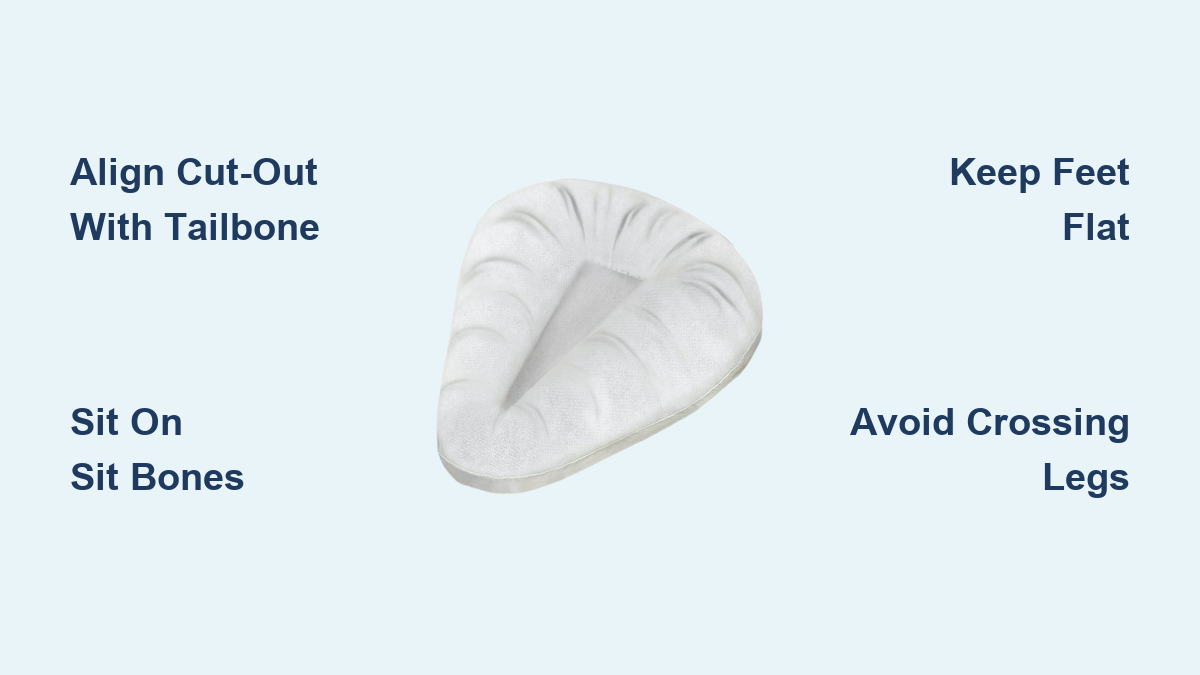
If sharp, radiating pain shoots down your leg every time you sit down, you are likely dealing with sciatica, a condition that affects the longest nerve in your body. The sciatic nerve runs from your lower back, through your buttocks, and down each leg, and compression or irritation of this nerve can make sitting feel unbearable. A sciatica pillow, also called a coccyx cushion or orthopedic seat wedge, is designed specifically to relieve pressure on your tailbone and the surrounding nerves. However, simply placing it on your chair is not enough. Incorrect positioning can render the cushion useless or even worsen your symptoms.
This guide walks you through exactly how to sit on a sciatica pillow for maximum pain relief and improved posture. You will learn proper positioning techniques, common mistakes to avoid, how to choose the right cushion for your needs, and when to combine the pillow with other relief strategies. Whether you work at a desk, drive long hours, or travel frequently, these steps will help you sit smarter and pain-free.
Position the Cushion Correctly

The foundation of effective sciatica pillow use is proper placement on your seat. Without correct alignment, you will not experience the pressure relief the cushion is designed to provide.
Align the Cut-Out with Your Tailbone
The most critical step is positioning the gap directly under your coccyx, or tailbone. Most sciatica cushions feature a U-shaped or V-shaped cut-out at the back. This design removes pressure from the sensitive tailbone and sacral area, allowing those structures to float freely within the space.
To position it correctly, place the cushion flat and centered on a firm, stable chair. Ensure the open section faces toward the backrest of the chair. When you sit down, your tailbone should land within the gap, not on the foam. Sit down slowly to verify the alignment. If the cut-out is positioned too far forward, under your thighs or knees, it defeats the entire purpose and can actually increase pressure on your legs, leading to numbness or continued pain.
Use a Non-Slip Base for Stability
High-quality sciatica pillows often include a non-slip rubber bottom that prevents the cushion from sliding forward when you sit or shift. This feature ensures consistent alignment throughout use. If your cushion lacks this, place it on a textured mat or use double-sided tape to keep it in place, especially in cars or on leather seats.
Adjust for One-Sided Sciatica Pain

If your sciatica affects only one side of your body, you can fine-tune the cushion position to target that specific area and increase pressure relief.
Target the Affected Side
When pain radiates down only your right or left leg, rotate the cushion slightly so the cut-out aligns with the painful gluteal region. For right-sided pain, shift the gap slightly to the right. For left-sided pain, angle it toward the left. This subtle adjustment increases pressure relief on the compressed sciatic nerve and the piriformis muscle on that side, which is particularly helpful for those with piriformis syndrome where muscle spasms pinch the nerve.
Sit with Proper Posture
Correct posture amplifies the cushion’s benefits and protects your spine from additional strain. Poor posture while using a sciatica pillow can undermine even the best-designed cushion.
Center Your Weight on Your Sit Bones
Once seated, ensure your ischial tuberosities, commonly called sit bones, rest fully on the supportive foam on either side of the cut-out. These bony prominences are designed to bear your body weight when sitting. Avoid perching too far forward, backward, or to one side, as this throws off balance and reintroduces pressure to your tailbone.
Checklist for correct seating includes keeping your hips centered over the cushion’s widest point, ensuring your tailbone is suspended in the gap, and distributing weight evenly on both sit bones. Your body should feel balanced and supported, not tilted or unstable.
Support Your Lower Back
Lean fully into the backrest of your chair. A supported spine reduces strain on the lumbar discs, which in turn decreases pressure on the sciatic nerve. If your chair lacks built-in lumbar support, use a rolled towel or lumbar roll placed at the natural curve of your lower back. Alternatively, choose a sciatica pillow with integrated lumbar support or a wedge design that encourages proper alignment. This combination maintains your spine’s natural inward curve, known as lumbar lordosis, promoting healthier sitting mechanics.
Keep Your Feet Flat and Knees at 90 to 110 Degrees
Proper leg positioning supports pelvic stability and completes the proper sitting posture. Keep your feet flat on the floor with your knees bent at 90 to 110 degrees. Your hips should sit slightly higher than your knees, which the cushion elevation helps achieve. If the cushion raises your seat too high, use a footrest or adjustable footstool to maintain alignment. In cars, test brake and accelerator reach before driving to ensure safety.
Avoid Crossing Your Legs
Crossing your legs rotates the pelvis, tightens the piriformis muscle, and increases tension on the sciatic nerve, especially on the affected side. Keep both feet grounded and knees aligned with hips to preserve neutral spinal alignment. This simple habit prevents additional nerve compression and supports the cushion’s effectiveness.
Optimize for Different Seating Environments
The way you use your sciatica pillow should adapt to where you are sitting, whether at home, in the office, or on the road.
Office or Home Chair Setup
Use the sciatica pillow on a firm, upright chair with a solid seat base and backrest. Soft, sagging office chairs compress under weight, reducing the cushion’s effectiveness. Avoid plush sofas or recliners unless you place a rigid board or plywood sheet underneath to create a firm base.
Pair the cushion with a footrest if your thighs elevate above hip level due to cushion thickness. Choose models with ventilation channels or ripple foam for breathability during long work sessions. These features prevent heat buildup and keep you comfortable throughout the workday.
Car Seat Application
Car seats often slope downward, causing hip drop and increased lower back strain. A sciatica pillow, especially an 11-degree wedge model, helps level the pelvis and improve posture while driving. Use a smaller-sized cushion for bucket seats, which is ideal for taxi drivers, delivery personnel, or anyone with long commutes.
Ensure the cut-out remains aligned with your tailbone, even during turns or bumps. Test pedal reach and headroom after installation before driving. Many users report significant relief during long drives, calling it a game-changer for pain management on the road.
Airplane and Public Transit Use
Long-haul flights or train rides can trigger sciatica flare-ups due to prolonged static sitting. A lightweight, portable sciatica pillow with a carry handle or travel pouch is ideal for these situations. Bring the cushion in your carry-on and use it consistently from boarding to arrival. Combine it with neck support and a lumbar roll for full spinal alignment during long journeys.
Travel-specific models are often inflatable or made from compact memory foam, making them easy to pack without sacrificing support. These options ensure you maintain proper posture and pain relief even when traveling far from home.
Choose the Right Sciatica Pillow
Selecting the appropriate cushion is just as important as positioning it correctly. The wrong pillow can undermine your efforts regardless of how carefully you sit.
Select the Best Shape
The U-shaped or V-shaped wedge is the recommended design for sciatica relief. It provides superior pressure relief, better weight distribution, and promotes proper pelvic tilt. The circular doughnut shape, once popular, is now discouraged by clinicians because it increases pelvic floor pressure, destabilizes posture, and may actually worsen symptoms.
Pick the Right Material
Memory foam contours to your body and offers excellent pressure relief for long-term sitting, though it may retain heat. High-density foam provides firm, durable support and resists compression, making it ideal for heavier users. Gel or semi-liquid gel offers cooling and even pressure distribution, though it is heavier. Air-inflatable cushions are portable and adjustable but less stable with a risk of puncture.
For home or office use, dual-layer memory foam with a firm base and soft top provides the best balance of comfort and support.
Consider Thickness and Size
Cushions in the 3 to 4 inch range work best for standard chairs and limited seat height. Thicker cushions in the 5 to 7 inch range are better for severe pain, heavier individuals, or therapeutic lift. Thicker cushions promote greater anterior pelvic tilt, enhancing lumbar support and reducing disc pressure.
Look for Key Features
Essential features include a non-slip bottom to prevent sliding, a removable machine-washable cover for hygiene, ventilation channels to reduce heat and moisture, and two size options for different seating environments. Standard size works well for home and office, while small size suits car and travel use.
Avoid Common Mistakes
Even with the best intentions, users often make errors that reduce the cushion’s effectiveness or worsen symptoms.
Do Not Place the Cut-Out Under Your Thighs
One of the most frequent errors is positioning the gap too far forward, under the thighs or knees. This fails to relieve tailbone pressure and can cause leg numbness. Always ensure the gap is at the back, aligned with your spine.
Do Not Slouch or Hunch Forward
Leaning forward increases disc pressure and compresses nerve roots. Sit upright with your back supported. If you find yourself slumping, adjust your chair height or add lumbar support to maintain proper alignment.
Do Not Use on Soft Furniture Without Reinforcement
Placing a sciatica pillow on a plush sofa causes it to sink, negating its ergonomic benefits. Place a rigid board or plywood sheet under the cushion to create a firm base before sitting.
Do Not Stack Extra Pillows
Layering additional cushions disrupts weight distribution and defeats the pressure-relief design. Use only the sciatica pillow without any extras.
Do Not Use Inconsistently
Many users report symptom return after stopping use. For lasting benefit, use the pillow every time you sit, especially during flare-ups or recovery periods. Consistency maximizes the cushion’s therapeutic value.
Combine with Other Pain Relief Strategies
A sciatica pillow addresses sitting discomfort, but combining it with other approaches accelerates relief and supports long-term recovery.
Apply Heat or Cold Therapy
Enhance relief by pairing the cushion with ice packs to reduce inflammation, applied for 15 to 20 minutes at a time. Heating pads relax tight muscles and improve blood flow. Some sciatica pillows include removable gel inserts that can be warmed or frozen for targeted therapy.
Take Frequent Movement Breaks
Even with a cushion, prolonged sitting worsens sciatica. Follow health guidelines to stand, stretch, or walk every 30 to 60 minutes. Simple stretches like knee-to-chest, seated spinal twist, and hamstring stretch support circulation, reduce nerve irritation, and promote healing.
Practice Sciatic Nerve Glides
Also known as neurodynamic mobilizations, these gentle exercises help floss the sciatic nerve, improving mobility and reducing stiffness. Perform them under guidance from a physical therapist. One example involves sitting tall with one leg extended, pointing and flexing the foot while gently tilting your head forward and back, repeating 10 times per side.
Do Piriformis and Hamstring Stretches
Tight muscles contribute to nerve compression. The piriformis stretch involves lying on your back, crossing one ankle over the opposite knee, and pulling the thigh toward your chest. For hamstring stretches, sit on the edge of a chair, extend one leg, and lean forward slightly.
When to Expect Results
Understanding the timeline helps set realistic expectations and motivates consistent use.
Immediate Relief
Most users report increased sitting tolerance and reduced pain within the first few days of consistent use. The sensation is often described as a sigh of relief once properly positioned. You may notice you can sit longer without the constant urge to shift or stand.
Gradual Improvement
For chronic cases, symptom reduction may take 1 to 2 weeks of consistent use. Many notice the cushion is working only when they stop using it and experience a rapid return of pain. This contrast confirms the cushion’s effectiveness and highlights why consistent use matters.
Maintain and Replace Your Pillow
Proper care extends the cushion’s lifespan and ensures continued effectiveness.
Clean Regularly
Use a cushion with a removable, machine-washable cover. Clean it weekly if used daily to prevent odor and bacteria buildup. Regular cleaning also maintains the foam’s integrity and appearance.
Replace When Foam Degrades
Over time, foam can lose resilience or develop permanent indentations. Replace the cushion when it feels flat or lumpy, when you feel the hard base underneath, or when pain returns despite correct use. Most high-quality cushions last 12 to 24 months with daily use.
Know the Limitations
A sciatica pillow is a symptom management tool, not a cure for underlying conditions. It does not fix herniated discs, spinal stenosis, or nerve damage. If pain persists or worsens despite proper cushion use, consult a healthcare provider. You may need physical therapy, imaging like MRI or X-ray, medication such as NSAIDs or muscle relaxants, or injections or surgical evaluation.
Key Takeaways for Using Your Sciatica Pillow
Proper placement is the most critical factor in achieving relief. Align the cut-out directly under your tailbone, not under your thighs or knees. Use the pillow on supportive chairs with backrests, and avoid soft furniture unless reinforced with a rigid board.
Maintain good posture by sitting upright, keeping your feet flat, and avoiding leg crossing. Do not layer extra cushions, as this disrupts the pressure-relief design. Choose U-shaped or V-shaped designs over doughnut styles, and select thickness based on your body type and seating environment.
Combine cushion use with movement breaks every 30 to 60 minutes, and incorporate stretching and heat or cold therapy for enhanced relief. Clean the cushion regularly and replace it when foam degrades or loses resilience.
A properly used sciatica pillow can transform your daily comfort, but its success depends on correct placement, good posture, and consistent use. When used wisely alongside other conservative treatments, it becomes a powerful tool for reclaiming your comfort, mobility, and daily function.
Frequently Asked Questions About Using a Sciatica Pillow
How long does it take to feel relief from a sciatica pillow?
Most users feel immediate relief within the first few days of consistent use. You may notice you can sit longer without pain or the urge to shift positions constantly. For chronic sciatica, gradual improvement continues over 1 to 2 weeks.
Can I use a sciatica pillow on any chair?
Use it on firm, supportive chairs with backrests. Avoid soft sofas or recliners unless you place a rigid board underneath to prevent sinking. The cushion works best on office chairs, car seats, and dining chairs.
Should I use the pillow while driving?
Yes, a sciatica pillow is highly effective in cars, especially for long drives. Use a smaller-sized cushion for bucket seats, and ensure you can still reach the pedals comfortably. Test brake and accelerator reach before driving.
Can I use a sciatica pillow if I have pain on only one side?
Yes, rotate the cushion slightly so the cut-out aligns with the affected gluteal region. This targets pressure relief to the side where the sciatic nerve is compressed.
How often should I replace my sciatica pillow?
Replace it when foam loses resilience, develops permanent indentations, or when pain returns despite correct positioning. Most high-quality cushions last 12 to 24 months with daily use.