
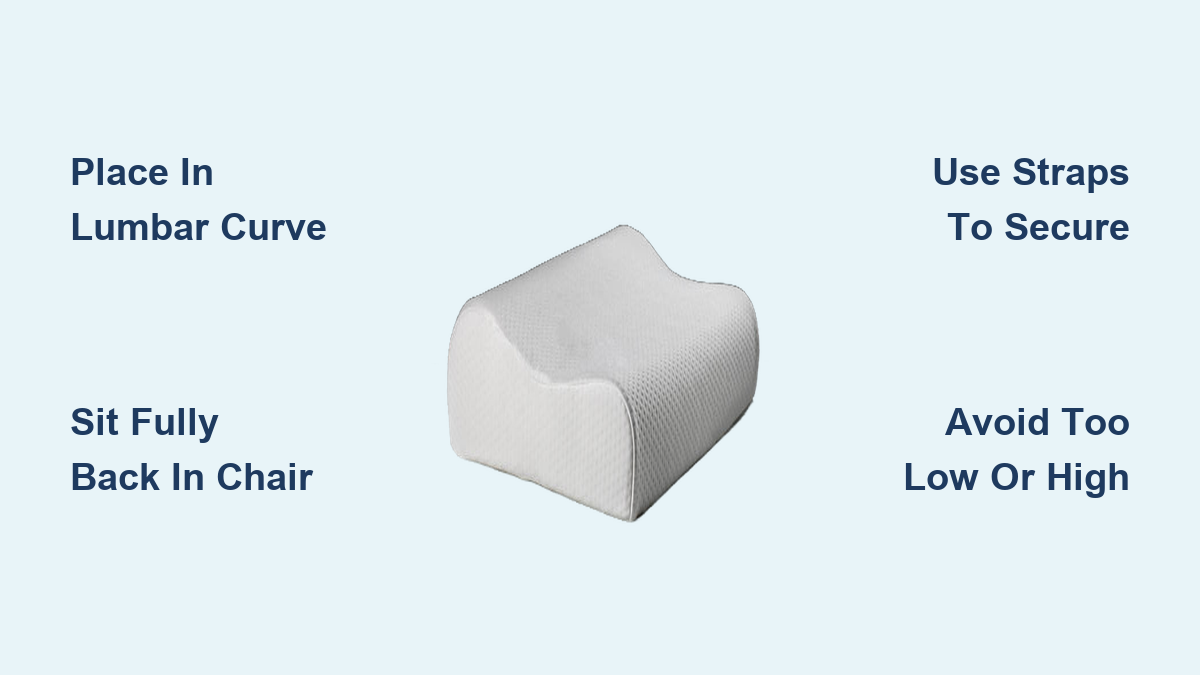
Lower back pain affects millions, especially those who sit for long hours. If you’re wondering how to use a back pillow correctly, it is not just about comfort. It is about supporting your spine’s natural curve and preventing long-term damage. A well-placed lumbar pillow restores the lumbar lordosis, the inward C-shaped curve of your lower spine, which is critical for balance, posture, and disc health.
Without proper support, sitting flattens this curve, increasing pressure on spinal discs by up to 40%. Over time, this leads to muscle fatigue, disc degeneration, and chronic pain. But with the right technique, a back pillow can reduce strain by 30 to 40%, improve breathing, digestion, and even focus. This guide shows you exactly where and how to place your back pillow for real biomechanical benefits.
Locate Your Natural Lumbar Curve Before Placing the Pillow
Before placing a back pillow, you must find the correct spot on your spine. This ensures support reaches where it matters most.
Feel for the Inward Dip
Sit upright in a chair with your feet flat on the floor. Place one hand at the small of your back, just above your belt line. You should feel a slight inward curve. This is your true lumbar lordosis. It sits higher than your tailbone and lower than your ribcage.
Visual cue: When seated upright, this area naturally gaps from most chair backs. Your pillow should fill that space.
Avoid Common Placement Errors
Placing the pillow too low on the sacrum encourages slouching and increases disc pressure. Placing it too high in the mid-back rounds your shoulders and strains your neck. The correct position aligns with the inward dip, supporting the lumbar vertebrae, specifically L3 through L5.
Pro tip: Mark the spot with a sticky note the first few times you use your pillow to build muscle memory.
Position the Back Pillow Correctly for Maximum Support
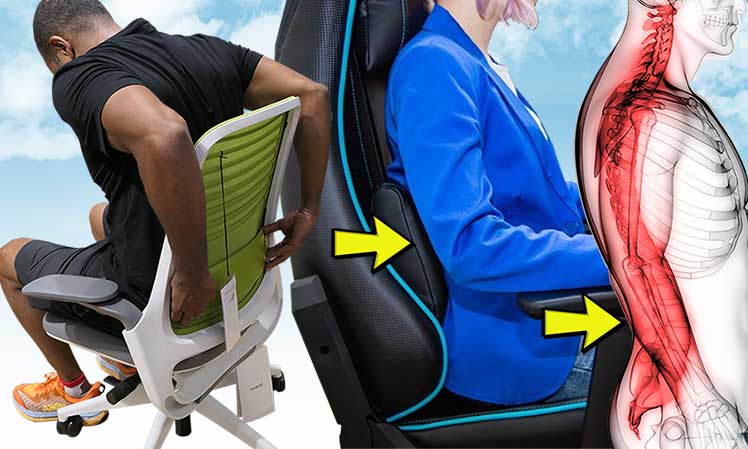
Placement matters more than brand or material. Even the best pillow will not help if it sits in the wrong place.
Align with the Low-Back Curve
Slide the pillow into the gap between your lower back and the chair. The thickest part should press gently into the lumbar curve. For contoured or teardrop pillows, orient the wider base downward to match the spine shape.
Check contact: Your lower back should make firm, continuous contact with the pillow. No gaps should exist between your spine and the support.
Secure It to Prevent Slipping
Use adjustable straps to fasten the pillow to the top of the chair back. Tighten until it stays in place when you shift or lean forward. Choose models with non-slip backing or rubberized fabric to prevent sliding.
Fix slippage: If straps are not enough, place a rubber shelf liner behind the pillow for extra grip.
Sit Properly to Get the Most From Your Back Pillow
A pillow only works if your posture supports it. Sitting incorrectly undermines even perfect placement.
Sit All the Way Back in Your Chair
Slide your hips and buttocks fully against the chair back. This prevents posterior pelvic tilt, which occurs when your hips roll backward and flatten your spine. Push down through your heels to engage your core muscles and stabilize your pelvis.
Maintain Neutral Spine Alignment
Keep your hips and knees at 90 degrees with feet flat on the floor. Your shoulders should stay relaxed, not hunched or forward. Your head stacks over your spine with ears aligned over shoulders. Avoid crossing your legs or leaning to one side.
Quick check: Every 30 minutes, reset your posture. Stand up, stretch, then sit back with full back contact.
Optimize Back Pillow Use for Different Chairs

Not all seats support your spine. Adapt your back pillow use based on the seating type.
Office Chairs
Use a firm, supportive lumbar pillow with a memory foam or latex core. Pair it with adjustable armrests set at elbow height to reduce shoulder strain. Set your chair height so your thighs are parallel to the floor. Add a footrest if your feet do not reach the ground.
Bonus benefit: Upright posture improves lung capacity and focus during long work sessions.
Car Seats
Most car seats slope downward, dropping your hips below your knees and promoting slouching. Fix this by placing a cushion or folded towel under your seat to elevate your hips. Then insert the lumbar pillow just above your waistband. Use the built-in lumbar adjustment alongside your portable pillow if your car has one.
Pro tip: Keep a compact inflatable pillow in your glovebox for long drives.
Sofas and Dining Chairs
These often lack support and encourage poor posture. Use a portable lumbar pillow during meals or TV time. On deep sofas, avoid placing the pillow too far back. Keep it aligned with your lower spine.
Watch out: Large cushions that push your upper body forward increase neck strain.
Airplane and Transit Seats
Choose a slim, strap-equipped back pillow for travel. Place it high in the lumbar region, not on your tailbone. Combine it with a neck pillow and foot elevation for full-body comfort during long trips.
Travel hack: Inflatable pillows pack into a pocket and let you adjust firmness mid-flight.
Use a Back Pillow While Sleeping for Better Spinal Alignment
Though designed for sitting, lumbar pillows can enhance spinal alignment during sleep when used properly.
Support Lower Back When Sleeping on Your Back
Lie flat on your back. Slide a small, firm lumbar roll under your lower back. This maintains the natural lordotic curve, especially on soft mattresses. This method works best for people with morning stiffness or disc-related pain.
Elevate Your Knees for Pain Relief
Place the pillow under your knees while lying on your back. Slight knee flexion reduces tension in your lower back. This is ideal for those with sciatica, tight hamstrings, or disc herniation.
Caution: Avoid this position if you have circulation issues or DVT risk.
Double the Pillow as Neck Support
A softer lumbar pillow can support your head or neck. Use it like a standard pillow, ensuring your neck stays in line with your spine. Avoid excessive height that strains your cervical vertebrae.
Tip: Rotate it vertically if needed for better neck contouring.
Prevent Flexion-Intolerant Back Pain With Proper Positioning
Some conditions worsen with forward bending. A back pillow helps protect sensitive spines when used correctly.
Recognize Flexion-Intolerant Pain
Pain increases when leaning forward, such as when typing or driving. Relief comes from standing tall or gently arching backward. This type of pain is common in disc herniation, spinal stenosis, and degenerative disc disease.
How the Pillow Helps
The pillow keeps your spine in a neutral or slightly extended position. It prevents collapse into a flexed posture. This reduces pressure on nerves and discs.
Critical: Placing the pillow too low mimics a flexed spine and worsens pain instead of relieving it.
Avoid These Common Back Pillow Mistakes
Even small errors reduce effectiveness or cause harm. Watch out for these issues.
Wrong Placement Creates New Problems
| Mistake | Consequence | Fix |
|---|---|---|
| Pillow too low on sacrum | Increases spinal flexion, aggravates pain | Move up to natural lumbar curve |
| Pillow too high on mid-back | Rounds upper back, strains neck | Reposition lower near belt line |
Poor Pillow Choice Undermines Support
A pillow that is too soft flattens under weight and offers no real support. A pillow that is too firm forces an unnatural arch and causes discomfort. The ideal choice is medium-firm with a high-density memory foam or latex core.
Quick test: Can you slide your hand behind your lower back? If yes, the pillow is not firm enough or is misplaced.
Choose the Right Back Pillow for Your Needs
Not all lumbar pillows are equal. Pick one that fits your body and lifestyle.
Match Shape to Your Spine
Teardrop or contoured designs offer the best anatomical fit. Cylindrical rolls provide uniform support and are easy to secure. Inflatable options allow adjustable firmness and work great for travel.
Prioritize Material Quality
Memory foam conforms to your shape and stays durable. Latex is naturally supportive and resists compression. Gel-infused options cool your back during extended use. Avoid low-density fiberfill because it flattens quickly.
Look for Key Features
Choose pillows with adjustable straps and non-slip backing. Removable, washable covers in cotton or moisture-wicking fabric add hygiene. Lightweight, portable designs work across multiple locations. A dual-layer design with a firm core and soft outer delivers the best results.
Top pick: A contoured memory foam pillow with breathable fabric and secure straps.
Try Budget-Friendly Alternatives When You Need Them
No pillow available? No problem. Use what you have around the home.
DIY Lumbar Support Options
A rolled towel placed horizontally in the lumbar curve works as a temporary fix. A cervical pillow rotated vertically can support your lower back. A small firm sofa cushion in a narrow size also functions as lumbar support.
Hack: Secure a rolled towel with a belt or bungee cord to keep it in place.
Limitation: These lack the long-term durability and precision of purpose-built pillows.
Maintain Your Back Pillow for Long-Term Performance
A clean, well-cared-for pillow performs better and lasts longer.
Clean the Cover Regularly
Remove and wash the cover per the manufacturer’s instructions. Most require cold gentle cycle or dry cleaning only. Air dry completely before reattaching to the pillow.
Care for the Foam Core
Never soak or machine wash the foam. Spot clean with a damp cloth and mild soap. Avoid direct sunlight or heat, which can degrade memory foam over time.
Know When to Replace
Replace your pillow if the foam is permanently flattened, loses shape, or no longer provides support. Check the cover for fraying or staining. High-quality pillows typically last 1 to 2 years with daily use.
Boost Your Overall Health Beyond Back Pain Relief
Using a back pillow is not just about pain relief. It improves whole-body function.
Physical Benefits You Will Notice
Proper lumbar support reduces lower back strain by maintaining neutral spine positioning. Improved posture enhances breathing capacity because upright positioning increases lung function. Better digestion results from reduced abdominal compression. Improved circulation comes from better diaphragmatic breathing.
Evidence: Studies show lumbar supports improve posture and comfort during prolonged sitting.
Cognitive and Lifestyle Gains
Less pain means better focus and higher productivity. Good posture supports healthier sleep. It encourages better positioning in daily activities. It also prevents neck, shoulder, and hip pain from compensation patterns.
Bonus: Good posture is linked to improved mood and confidence.
Key Takeaways for Using a Back Pillow Effectively
Consistency turns good technique into lasting spinal health. Place your pillow high in the lumbar curve, not on your tailbone. Sit fully back in your chair before adjusting. Keep your hips above your knees on sloping seats. Use straps to prevent slippage. Maintain 90-degree joints and neutral head position. Extend use to sleep by supporting your back or elevating your legs. Choose firm, contoured pillows with breathable covers. Wash the cover regularly but never soak the foam. Listen to your body. Discomfort means adjust or replace the pillow. Use it daily because prevention beats treatment.
A back pillow is more than comfort. It is a tool for spinal resilience. Whether you are working, driving, or relaxing, proper use protects your spine, boosts energy, and prevents injury.
Your spine will thank you.
Frequently Asked Questions About Using a Back Pillow
Where exactly should a back pillow be placed?
Place the back pillow in the natural inward curve of your lower spine, just above your belt line. This aligns with the lumbar vertebrae (L3 through L5). The pillow should fill the gap between your lower back and the chair without pushing you forward.
Can I use a back pillow while sleeping?
Yes. Back sleepers can place a small lumbar roll under their lower back to maintain the spine’s natural curve. You can also place the pillow under your knees to reduce lower back tension. Avoid large pillows under knees if you have circulation issues.
How do I know if my back pillow is in the wrong position?
If you feel increased pain, slouching, or pressure in the wrong area, the pillow is misplaced. Common signs include neck strain from a pillow placed too high or increased lower back pain from placement too low. Adjust until your lower back makes firm, continuous contact.
What type of back pillow provides the best support?
A contoured or teardrop-shaped pillow with high-density memory foam or latex offers the best support. Look for a firm core with a soft outer layer. Adjustable straps and non-slip backing keep it secure during use.
How often should I replace my back pillow?
Replace your back pillow every 1 to 2 years with daily use. Signs it needs replacing include permanently flattened foam, loss of shape, reduced support, or worn covers. Regular cleaning extends its lifespan.
Can a back pillow help with sciatica pain?
Yes. A lumbar pillow can help manage sciatica by maintaining neutral spine alignment and reducing pressure on the sciatic nerve. Placing the pillow under your knees while lying down can also relieve tension. However, consult a healthcare provider for persistent sciatica.