
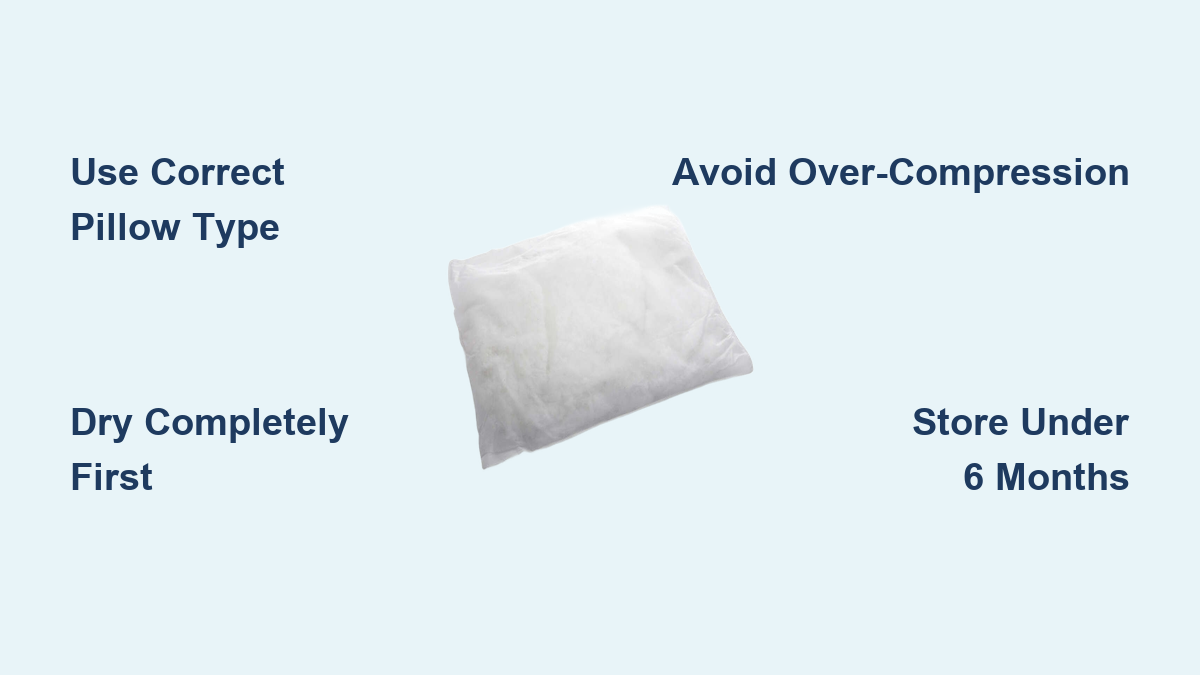
Vacuum sealing pillows is one of the most effective ways to free up closet space and protect your bedding from dust, allergens, and moisture. Whether you’re storing seasonal pillows, moving to a smaller home, or decluttering your bedroom, knowing how to vacuum pillow properly ensures you don’t damage your investment. This guide covers exactly which pillows can be sealed, the step-by-step process, and common mistakes that ruin pillows.
Which Pillows Can Be Vacuum Sealed (and Which Cannot)

Not all pillows handle compression the same way. The filling material determines whether vacuum sealing will preserve or destroy your pillow.
Pillows Safe for Vacuum Sealing
These materials bounce back well after compression and are ideal candidates for vacuum storage.
- Polyester fiberfill: Lightweight and resilient, this budget-friendly fill recovers quickly when fluffed
- Down and feather: Naturally compressible and luxurious, but must be completely dry before sealing
- Synthetic microfiber or hollowfibre: Designed to mimic down, these hold up well under pressure
- Cotton: Suitable for short-term storage only; prolonged compression may damage fiber resilience
Pro Tip: Squeeze the pillow. If it springs back immediately, it’s safe for vacuum sealing.
Pillows Never to Vacuum Seal
Foam-based pillows suffer permanent damage from compression and should never be vacuum sealed.
- Memory foam: The open-cell structure collapses under pressure, causing permanent loss of support
- Latex foam: Prone to cracking and hardening when compressed beyond factory limits
Warning: Vacuum sealing memory foam voids most manufacturer warranties. Store these flat in breathable bags instead.
Choosing the Right Vacuum Storage Bag
The bag you select determines whether your vacuum seal holds for months or fails within weeks.
Best Features to Look For
- Double-lock seal: Zipper combined with valve system prevents air from re-entering
- Reinforced seams: Withstands suction pressure without splitting
- Puncture-resistant material: Multi-layer PE+PA construction lasts longer
- Valve compatibility: Works with standard vacuum hoses or electric pumps
- Correct size: Small (20″ x 30″) for standard pillows, large (28″ x 40″) for queen/king
Best Value: Mid-range bags ($18 for a 4-pack) with 120-180 micron thickness offer the best balance of durability and cost.
Bags to Avoid
- Thin, single-layer plastic bags that burst under suction
- Bags without airtight valves that lose compression within days
- Used bags with degraded seals after 3-5 uses
Preparing Your Pillow Before Sealing
Sealing a dirty or damp pillow traps moisture, oils, and allergens inside, creating mold and odors.
Complete Preparation Steps
- Check care labels and follow washing instructions
- Machine wash or spot clean as needed, especially for regularly used pillows
- Dry completely: Tumble dry on low with dryer balls or air dry for 24-48 hours
- Test for moisture: Press the center firmly with no dampness remaining
- Fluff the pillow by shaking to redistribute filling evenly
Critical Warning: Never seal a pillow that isn’t 100% dry. Even slight moisture causes musty smells and irreversible damage.
Step-by-Step Vacuum Sealing Process
Proper technique ensures even compression and prevents trapped air pockets that ruin the seal.
Inserting and Sealing the Bag
- Lay the bag flat and open it fully
- Place the pillow inside flat and centered, not folded or rolled
- Smooth out wrinkles to eliminate air traps
- Leave space around the pillow for uniform suction
- Close the zipper slowly, ensuring no fabric is caught in the seal
- Open the valve before attaching the vacuum
Visual Check: A properly sealed zipper lies flat with no bulges or gaps.
Removing the Air
- Attach the vacuum hose to the valve with a snug fit
- Turn on suction and allow air to exit gradually
- Stop when the pillow is compact but not completely flattened
- Close the valve immediately once air stops flowing
Time Estimate: 2-5 minutes per pillow using a standard vacuum cleaner.
Never over-compress: Excessive pressure damages delicate fibers and reduces loft recovery.
Proper Storage Conditions for Sealed Bags
Even perfect seals fail when storage conditions are wrong.
Ideal Environment
- Cool, dry, dark location such as a linen closet or under-bed bin
- Consistent temperature between 20-25°C
- Low humidity below 60%
Places to Avoid
- Attics: Heat degrades plastic and causes bag deterioration
- Basements: High humidity risks mold growth inside sealed bags
- Direct sunlight: UV rays weaken bag material and cause cracking
Handling Tips
- Store bags flat, not upright
- Stack no more than 10 kg total weight on top
- Label each bag with pillow type and date
- Add silica gel packets to absorb residual moisture
Optional Enhancement: Add a lavender sachet or cedar block before sealing to deter pests and freshen the pillow.
Maximum Storage Duration Guidelines
Extended compression causes irreversible damage even in safe pillow types.
Why Six Months Matters
- Beyond 6 months, fibers break down and lose resilience
- Loft recovery drops significantly after long storage
- Risk of permanent flatness increases substantially
Long-Term Storage Strategy
- Rotate or unseal every 3 months to relieve one-sided pressure
- Refluff and reseal to maintain pillow health
- Inspect for bag reinflation, mustiness, or pest signs
Test Data: Polyester pillows stored over 12 months lose up to 25% of original fluffiness.
How to Restore a Pillow After Unsealing
Vacuum-sealed pillows won’t bounce back instantly. Use these methods to revive them.
Effective Restoration Techniques
Shake and Massage
Hold the pillow at both ends and shake vigorously for 30 seconds. Knead with palms to break up clumps. Works best for fiberfill, down, and synthetic fills.
Dryer with Tennis Balls
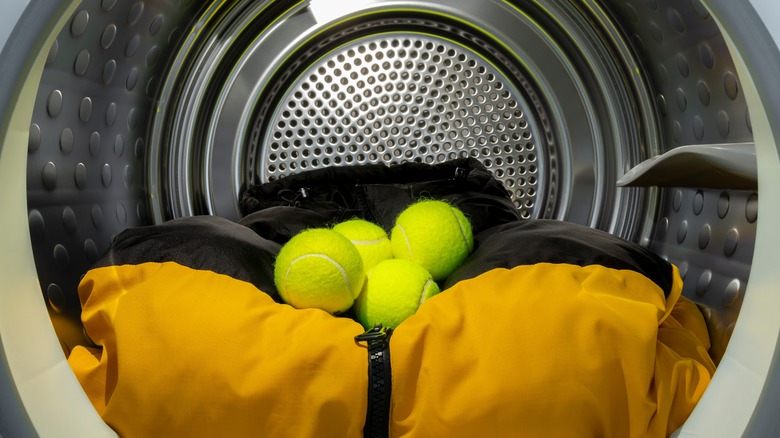
Place pillow in dryer with 2-3 clean tennis balls. Use low heat for 10-15 minutes. This separates matted fibers and restores loft quickly. Ideal for down and microfiber.
Air It Out
Let the pillow sit in a ventilated room for 4-24 hours. Allows gradual re-expansion and eliminates stale odors. Works for all pillow types.
Sunlight and Fresh Air
Place outside for 2-4 hours, avoiding prolonged direct sun. UV kills dust mites and warmth helps fibers expand. Best for down and natural fills.
Steam Refresh
Lightly pass a handheld steamer over the surface without saturating. Relaxes compressed fibers and sanitizes. Do not soak the pillow.
Recovery Times: Polyester recovers full loft in 30 minutes. Down takes 2-24 hours depending on humidity.
Safe Storage Alternatives for Memory Foam Pillows
Memory foam requires different treatment since vacuum sealing destroys it.
Recommended Methods
Breathable Cotton Storage Bag
Allows airflow while blocking dust and light. Prevents moisture buildup that damages foam.
Pillowcase + Sealed Bin
Keep pillow in a clean case inside a plastic bin with desiccants. Protects against spills and insects.
Open-Air Shelf Storage
Store flat in a ventilated closet. Avoid enclosed, humid spaces.
Never fold or roll memory foam pillows. Creases cause permanent cell damage that cannot be repaired.
Common Mistakes to Avoid When Vacuum Sealing
Small errors can ruin your pillow or waste your storage effort.
Top Errors and Solutions
| Mistake | Consequence | Solution |
|---|---|---|
| Sealing a damp pillow | Mold, mildew, odor | Always dry 100% before sealing |
| Over-compressing | Fiber damage, permanent flatness | Stop suction when compact but not crushed |
| Using cheap bags | Air leaks within weeks | Invest in double-seal, thick-material bags |
| Storing too long | Permanent loss of loft | Limit to 6 months maximum |
| Stacking heavy items | Seal failure, deformation | Stack lightly, store flat |
Pro Tip: Test the seal by pressing on the bag. If it slowly reinflates, the valve or zipper has failed.
Expected Results: Space Savings and Performance Metrics
Vacuum sealing works, but knowing what to expect helps you plan accordingly.
What You’ll Achieve
- Volume reduction of up to 75% compared to original size
- Compression time of 2-5 minutes per pillow
- Seal longevity of 6-12 months in ideal conditions
- Safe temperature range from -10°C to 60°C
Example: A standard queen pillow (20″ x 30″) shrinks from about 8 inches thick to just 2-3 inches when sealed.
Frequently Asked Questions About Vacuum Sealing Pillows
Can I vacuum seal my down pillow?
Yes, down pillows seal well and recover their loft after proper fluffing. Ensure the pillow is completely dry before sealing to prevent odor and mold. Plan for 2-24 hours of recovery time after unsealing.
How long can pillows stay vacuum sealed?
Maximum storage time is 6 months. Beyond this period, fibers break down and pillows lose significant loft and comfort. Rotate or fluff stored pillows every 3 months for best results.
Will vacuum sealing damage my pillow?
Only if you seal the wrong type (memory foam or latex) or make mistakes like sealing damp pillows or over-compressing. Following the proper steps keeps pillows safe and recoverable.
How do I fix a flat pillow after vacuum storage?
Use the dryer with tennis balls method for fastest results. Shake and massage the pillow manually, or let it air out in a ventilated room for several hours. Down pillows may need up to 24 hours to fully recover.
Is vacuum sealing safe for memory foam pillows?
No. Never vacuum seal memory foam or latex pillows. The compression destroys their internal structure permanently. Store these pillows flat in breathable cotton bags or pillowcases instead.
Key Takeaways for Vacuum Sealing Pillows
Vacuum sealing is a powerful space-saving technique when applied correctly to the right pillows. Polyester fiberfill, down, feather, and synthetic pillows respond well to compression and recover their loft with proper fluffing. Memory foam and latex pillows must be stored using alternative methods to prevent permanent damage.
Always clean and dry pillows completely before sealing, choose quality vacuum storage bags with double-lock seals, and limit storage time to six months maximum. Inspect bags periodically for air leaks or moisture buildup, and restore pillows using the dryer method or manual fluffing after unsealing.
By following these guidelines, you can reduce pillow storage volume by up to 75% while maintaining comfort and extending the life of your bedding investment.