
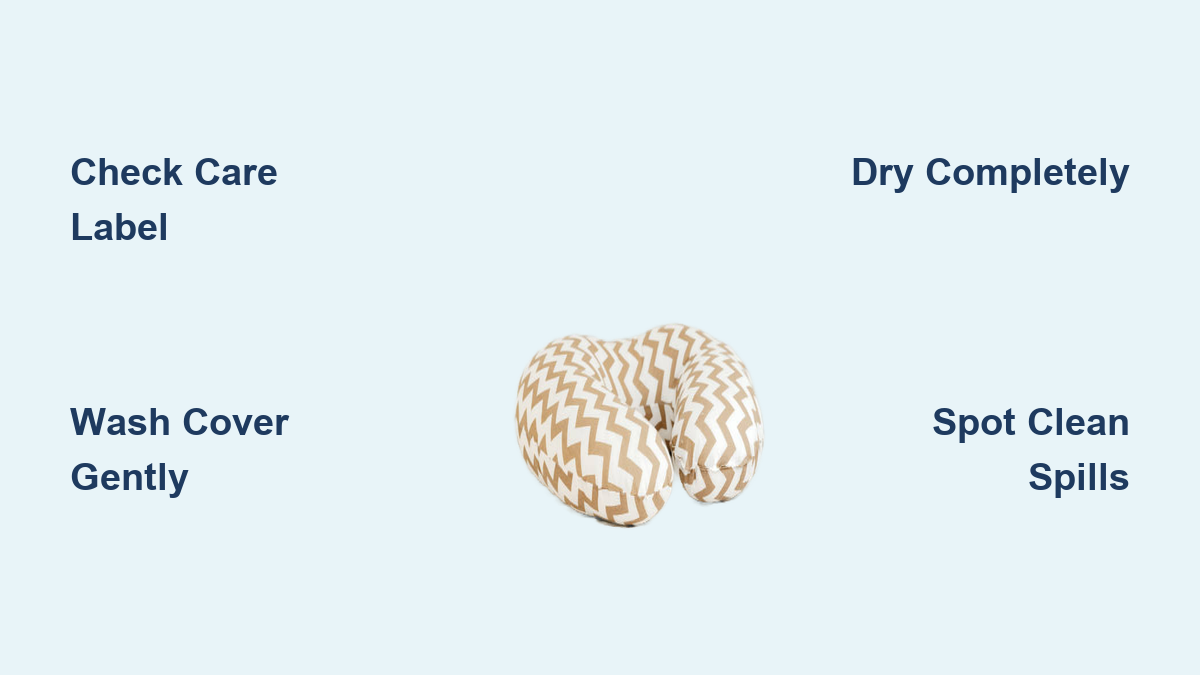
Nursing pillows are a parent’s best friend during feeding, tummy time, and early sitting stages, but they also take a beating. Constant exposure to spit-up, drool, milk leaks, and baby oils means regular cleaning is essential. If you’re wondering how to clean a nursing pillow safely without ruining its shape or voiding the warranty, you’re not alone. Many caregivers accidentally damage their pillows by using hot water, bleach, or tossing them into the dryer on high heat. This guide delivers a clear, step-by-step plan based on manufacturer instructions and real-world use, so you can keep your nursing pillow fresh, safe, and in top condition. You’ll learn exactly when and how to wash the cover, whether the insert can go in the machine, and how to dry it properly to prevent mold and lumps.
Check the Care Label First
Before doing anything, find the care label. It’s usually stitched into the cover or base of the pillow. This tag holds the key to safe cleaning and can prevent costly mistakes.
Why Labels Matter
Manufacturers like Boppy, My Brest Friend, and Little Grape Land each have specific rules. Ignoring them can void the warranty, damage the filling, or cause shrinkage and odor buildup.
Pro Tip: Take a photo of the label before removing tags. You’ll have it forever, even if the tag wears off.
If the label is missing, assume the insert is not machine washable. When in doubt, spot clean only.
Remove and Wash the Cover
Most nursing pillows have a removable slipcover, which should be washed more often than the insert.
Machine Wash the Cover Safely
- Cycle: Gentle or delicate
- Water temperature: 30°C (85°F) or lower
- Detergent: Mild, fragrance-free, baby-safe
- Never use: Fabric softener or chlorine bleach
Wash the cover separately or with similar soft items to avoid zipper snags or pilling.
Visual cue: If the fabric looks faded or stretched, you may be using too much detergent or heat.
After washing, tumble dry on low heat or air dry flat. Avoid direct sunlight to prevent fading.
Wash the Pillow Insert (If Allowed)
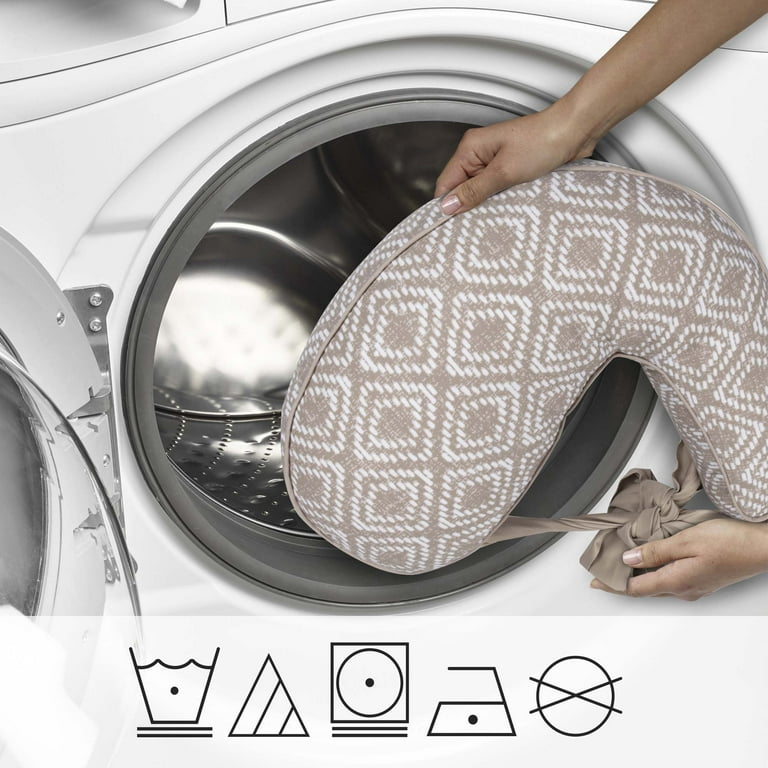
Not all inserts can be machine washed. Only wash the core if the label says yes.
Is Your Insert Machine Washable?
- Boppy and My Brest Friend: Yes, front-load machine recommended
- Little Grape Land: No, spot clean only
- Tushbaby and travel models: Often no, check the label
Safe Insert Washing Steps
- Wash the insert alone with no other laundry
- Use cold or lukewarm water
- Select the gentle cycle
- Use mild liquid detergent
- Never add bleach or softener
Front-load machines are gentler and reduce stress on the pillow’s structure.
Warning: Soaking the insert can cause mildew and clumping. Never submerge it.
Dry the Pillow Completely
Improper drying is the number one reason for musty smells and ruined pillows.
Tumble Drying (If Permitted)
- Heat setting: Low or delicate only
- Time: 1.5 to 3 hours
- Add a tennis ball in a clean pillowcase to break up clumps
- Check often and ensure it is 100% dry before storing
Air Drying (Safest for Sensitive Models)
- Lay flat on a drying rack or clean towel
- Keep in a well-ventilated area
- Avoid direct sunlight, as UV rays weaken fibers
- Rotate every few hours for even drying
- Do not hang, as it stretches the shape
Test for dryness: Press deep into the center. If it feels cool or damp, keep drying.
Spot Clean Between Washes
Most spills do not require a full wash. Spot cleaning keeps the pillow fresh and extends time between machine washes.
Quick Spot Cleaning Steps
- Blot fresh spills with a dry cloth
- Mix warm water with a drop of baby-safe soap
- Dampen a cloth and dab the stain (do not rub)
- Use a soft toothbrush for textured areas
- Wipe with a clean, damp cloth to rinse
- Air dry completely
On-the-Go Cleaning Hacks
- Use baby wipes for instant clean-up
- Keep a travel-sized spray bottle with water and mild soap
- Drape a burp cloth over the pillow during feeding
Pro Tip: Treat stains immediately. Dried milk and food are harder to remove and can attract bacteria.
Deep Clean for Odors and Germs
Use deep cleaning after illness, heavy soiling, or if the pillow smells musty.
Deodorize with Baking Soda
- Sprinkle baking soda evenly over the surface
- Let sit for 20 to 30 minutes
- Shake off or vacuum gently
- Air dry if needed
Baking soda absorbs odors naturally without chemicals.
Sun-Dry for Sanitizing (Optional)
- Place in indirect sunlight for 2 to 4 hours
- UV light helps kill bacteria
- Do not overexpose, as it can fade or weaken fabric
Never use essential oils or vinegar, as they can irritate baby’s skin or damage fibers.
Know What NOT to Do
Avoid these common mistakes that ruin nursing pillows.
- Chlorine bleach weakens fibers and leaves toxic residue
- Fabric softener coats fibers and reduces breathability
- High heat melts filling and causes shrinkage
- Ironing risks scorching or melting
- Dry cleaning uses harsh solvents that degrade foam
- Wringing or twisting distorts the shape
- Hanging to dry stretches the fabric
One mistake can shorten your pillow’s life by months.
Prevent Soiling with Protective Habits
The best way to reduce cleaning is to prevent messes before they happen.
Use Extra Slipcovers
- Buy 2 to 3 washable covers
- Swap them daily or after spills
- Wash used ones immediately
This acts like a uniform system, ensuring you always have a clean one ready.
Wipe After Each Use
- Use baby-safe disinfecting wipes
- Focus on high-contact areas
- Takes 10 seconds but prevents buildup
Store Properly
- Keep in a cool, dry place
- Use a breathable cotton bag, never plastic
- Ensure it is fully dry before storing
- Avoid damp areas like bathrooms
Mold starts in 24 to 48 hours if stored damp.
Replace When Needed
Even with perfect care, nursing pillows wear out. Know when it is time to retire yours.
Signs It Is Time to Replace
- Persistent odor after cleaning
- Lumpy or flat filling that will not fluff
- Tears, fraying, or broken seams
- Zipper will not close
- Baby no longer fits (typically after 9 to 12 months)
Safety first: A damaged pillow can pose a suffocation risk during supervised use.
Check warranty terms. Boppy, for example, offers a 1-year warranty but excludes damage from improper cleaning.
Clean by Model: Quick Reference
Boppy and My Brest Friend
- Cover: Machine wash gentle cycle
- Insert: Machine wash (front-load), low heat dry
- Add tennis ball to dryer
- No bleach, no softener
Little Grape Land
- Cover: Machine wash gentle
- Insert: Spot clean only, do not machine wash
- Air dry flat
- No machine washing
Tushbaby and Travel Pillows
- Cover: Remove and wash if possible
- Insert: Spot clean only
- Machine washing may void warranty
- Air dry only
Always verify your model, as designs vary even within brands.
Follow a Cleaning Schedule
How often you clean depends on use.
| Situation | Cleaning Frequency |
|---|---|
| Daily use, no spills | Spot clean weekly; full wash every 4 to 6 weeks |
| Frequent spit-up or leaks | Wash every 1 to 2 weeks |
| Baby has reflux | Wash every 7 to 10 days |
| After illness | Wash immediately |
| Light or occasional use | Clean every 4 to 8 weeks |
Even without visible mess, air the pillow out weekly to prevent odor buildup.
Frequently Asked Questions About Cleaning a Nursing Pillow
Can I machine wash my Boppy nursing pillow?
Yes, both the cover and the insert are machine washable. Use a gentle cycle with cold or lukewarm water and mild detergent. Front-load machines are recommended to protect the pillow’s structure. Tumble dry on low heat.
How do I clean a Little Grape Land nursing pillow?
The cover is machine washable on a gentle cycle, but the insert must be spot cleaned only. Never submerge the insert in water. Air dry both pieces flat away from direct sunlight.
Why does my nursing pillow smell after washing?
The most common cause is incomplete drying. Moisture trapped inside the filling leads to mold and mildew. Always ensure the pillow is 100% dry before storing or using again. Press deep into the center to check for dampness.
Can I use bleach on my nursing pillow?
No, never use chlorine bleach. It weakens fibers, damages the filling, and can leave toxic residues that irritate baby’s skin. Use non-chlorine bleach only if absolutely necessary, and only on the cover.
How do I get stains out of a nursing pillow?
Blot spills immediately with a clean cloth. Mix warm water with mild baby-safe detergent, dampen a cloth, and gently dab the stain. Use a soft toothbrush for textured areas. Rinse with a clean, damp cloth and air dry completely.
How often should I clean my nursing pillow?
Clean weekly with spot treatments and perform a full wash every 2 to 4 weeks for daily use. Wash more frequently if your baby has reflux or frequent spit-up. Always wash immediately after illness.
Key Takeaways for Maintaining Your Nursing Pillow
Cleaning your nursing pillow does not have to be stressful. By following the care label, washing covers regularly, spot cleaning spills fast, and drying completely, you will keep it hygienic and functional. Whether you have a Boppy, Little Grape Land, or another brand, the key is consistency and caution. Always check the manufacturer’s instructions before washing the insert, as some models require spot cleaning only. Use mild, fragrance-free detergents and avoid high heat to preserve the pillow’s shape and filling. Store in a cool, dry place and ensure complete dryness before putting it away to prevent mold and odors. Protect your investment, your baby’s health, and your peace of mind with smart, simple care.