
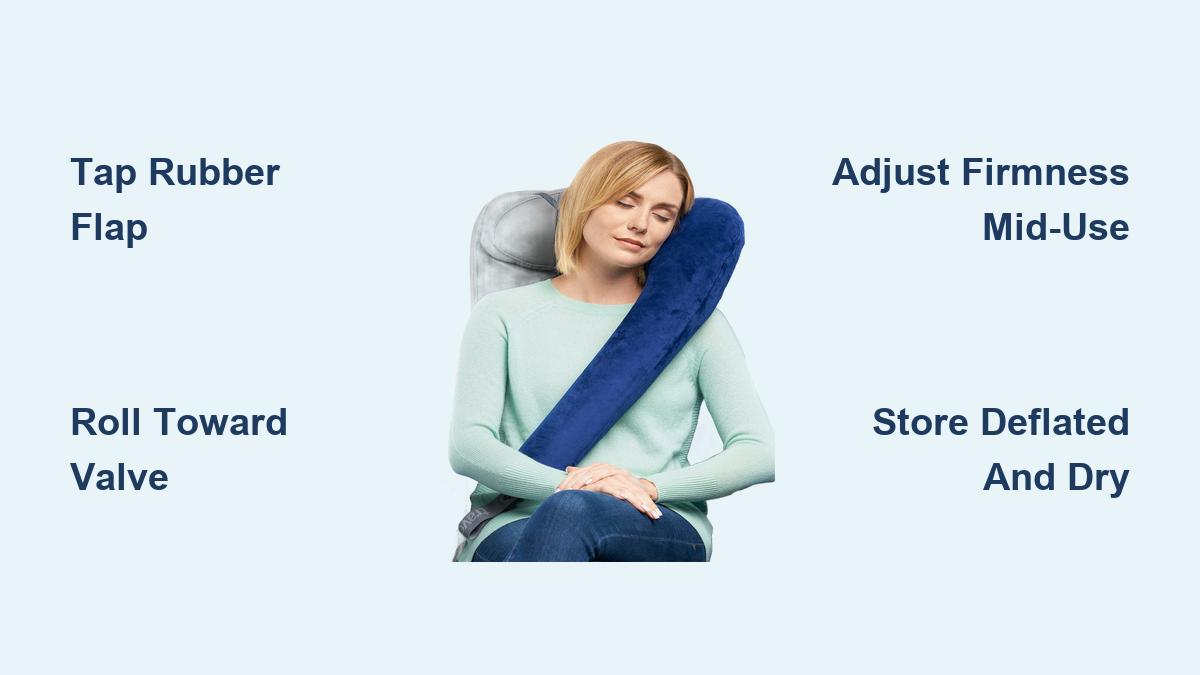
You’ve just landed after a long flight, and your travel pillow has done its job. Now it’s time to pack it away, and you’re wondering how to deflate a travel pillow quickly and efficiently. Many travelers struggle with bulky, half-deflated pillows that won’t fit back into their pouch. The good news is deflating your travel pillow is simple once you know the right technique. This guide walks you through the exact steps to fully or partially deflate your pillow in under 30 seconds, adjust firmness on the go, and store it properly for your next trip.
Locate the Deflation Valve
Every Travelrest travel pillow features a smart dual-function valve designed for both inflation and deflation. This small circular mechanism is typically located on the side or back of the pillow and is covered by a protective plastic cap.
Identify the Rubber Flap Center
Flip the pillow over and remove the cap to expose the valve. At the center of the valve, you’ll see a soft rubber flap. This is the key to deflation. Do not pull or twist it. Instead, prepare to tap it lightly. This flap acts as a one-way air release system, sealing tightly during use and opening only when manually triggered.
Tap to Open the Valve
To start deflating, tap the rubber flap gently with your fingertip. You should hear a soft hiss as air begins to escape. The flap disengages the seal just enough to let air out, but won’t release everything at once. This allows for controlled deflation whether you want to adjust firmness or fully collapse the pillow.
Pro Tip: Use a quick, light tap, not a press. Pressing down may block airflow. A flick or tap is all it takes to activate the release.
Fully Deflate the Pillow

Once the valve is open, the next step is to remove the remaining air efficiently so the pillow folds compactly.
Roll From Edges to Valve
After tapping the flap, place your hands at the outer edges of the pillow and roll it tightly toward the valve. This forces trapped air toward the open release point. Rolling instead of squeezing prevents air pockets and speeds up deflation.
Start at the top or sides and apply even pressure as you roll while keeping the valve unobstructed. This method helps expel nearly all air in under 20 seconds, making the pillow flat and packable.
Fold or Compress for Storage
Once air is released, fold the pillow into thirds or roll it tightly. Store it in the included pouch or clip it to your bag. Ensure the valve cap is securely replaced to protect against dust.
Note: The pillow’s stretchable nylon blend is designed to expand and contract without damage, so aggressive rolling won’t harm the fabric.
Adjust Firmness Mid-Use
One of the biggest advantages of the Travelrest pillow is the ability to fine-tune support without fully deflating.
Tap Briefly for Softness
If your pillow feels too firm during a flight or car ride, support your head with one hand. Use the other to tap the rubber flap just once or twice. Release small bursts of air until comfort is achieved. This is especially helpful when adjusting to reclined positions or changes in cabin pressure.
Avoid Over-Deflating
Don’t tap repeatedly without pausing. Air continues to escape briefly after each tap. Wait 2 to 3 seconds to assess firmness before releasing more. This prevents going from too firm to too flat in seconds.
Expert Note: Many users report better sleep when slightly under-inflated. A softer pillow conforms to the neck curve, reducing pressure points.
Understand Valve Behavior
Knowing how the valve works helps you avoid confusion about air loss during storage.
Normal Air Seepage Explained
Even when sealed, the rubber flap may allow a small amount of air to escape over time. This passive leakage is normal and not a sign of a defect. It occurs because the valve is designed for easy manual release, which slightly compromises absolute airtightness.
You may need to reinflate by 10 to 20 percent before next use. This behavior is consistent across all Travelrest units. No action is required unless air loss is rapid.
When to Check for Leaks
If your pillow deflates completely within minutes of inflation without tapping the valve, inspect for punctures in the fabric. Check seams and high-wear areas. Also check for debris stuck under the rubber flap. Look for bent or cracked valve housing. Clean the valve with a dry cloth and retest. If air escapes without tapping, there may be internal damage.
Clean and Maintain the Valve
A well-maintained valve ensures reliable deflation every time.
Keep Valve Area Dry and Clean
After use, especially in humid environments, wipe the valve and flap with a dry cloth. Ensure no moisture or saliva residue remains. Let it air-dry before storing. Moisture can promote mold or stiffen the rubber flap, affecting performance.
Avoid Inserting Objects
Never use pins, toothpicks, or tools to clear the valve. The design is self-regulating. Inserting objects may tear the rubber flap or dislodge internal components.
Common Mistake: Some users try to hold open the valve by wedging something under the flap. This damages the seal and leads to permanent leaks.
Optimize Storage for Longevity
Proper storage keeps your travel pillow compact and ready for action.
Store Deflated and Dry
Always store the pillow fully deflated and clean. Extended storage while inflated may stretch the fabric and reduce elasticity over time. Use the attached clip or pouch. Keep away from sharp objects in your bag. Avoid extreme temperatures such as hot car trunks.
Check Before Next Trip
Before your next journey, inspect for wear or odors. Test inflation and deflation. Re-inflate as needed. A quick 30-second check prevents surprises at your destination.
Troubleshoot Common Issues

Even simple devices can act up. Here’s how to fix typical deflation problems.
No Air Release After Tapping
If tapping the flap does nothing, ensure the cap is completely removed. Confirm you’re tapping the center of the flap, not the housing. Try tapping more firmly but don’t press. If still unresponsive, the flap may be stuck due to moisture or debris. Gently wipe and let dry.
Pillow Deflates Too Fast During Use
If air escapes without tapping, check for punctures. Submerge in water and look for bubbles. Inspect the flap for tears or warping. Clean around the valve base. If damaged, contact the manufacturer. Most models have a warranty.
Difficulty Reaching Desired Firmness
Some users struggle to balance softness and support. Try this approach. Fully inflate the pillow. Tap valve once and wait 3 seconds. Test firmness with head support. Repeat until ideal comfort is reached.
Pro Tip: Start firm and release air gradually. It’s easier to let air out than to re-inflate mid-flight.
Frequently Asked Questions About Deflating Travel Pillows
How do I deflate a Travelrest travel pillow quickly?
Locate the valve on the pillow and tap the rubber flap in the center gently with your fingertip. This opens the valve mechanism, allowing air to escape. For faster deflation, roll the pillow from the edges toward the valve while the flap is open.
Why does my travel pillow lose air even when not in use?
The rubber flap valve may allow a small amount of air to escape over time. This passive leakage is normal and does not indicate a defect. You may need to reinflate by 10 to 20 percent before each use.
Can I adjust the firmness without fully deflating the pillow?
Yes. Tap the rubber flap briefly to release small amounts of air while supporting your head. This allows you to customize firmness during use without completely deflating the pillow.
What should I do if tapping the valve doesn’t release any air?
Ensure the protective cap is fully removed. Confirm you’re tapping the center rubber flap, not the plastic housing. Try a firmer tap. If still unresponsive, the flap may be stuck due to moisture. Clean and dry it thoroughly.
Is it normal for air to escape while the pillow is stored?
Yes, a slow air seepage over several hours or days is normal behavior for this type of valve. Always reinflate slightly before your next use to ensure optimal firmness.
Key Takeaways for Deflating Your Travel Pillow
Now that you know exactly how to deflate a travel pillow like a pro, you can maximize comfort and convenience on every journey. The Travelrest pillow’s smart valve design makes it easy to adjust, collapse, and pack in seconds. No tools or hassle required.
The deflation process relies on a simple tap of the rubber flap followed by rolling from the edges toward the valve. This takes less than 30 seconds and allows for full or partial deflation depending on your needs. The same technique works for mid-flight firmness adjustments.
Remember to store your pillow fully deflated and dry to maintain its elasticity. Keep the valve clean and avoid inserting objects into it. With proper care, your travel pillow will last for dozens of trips.