
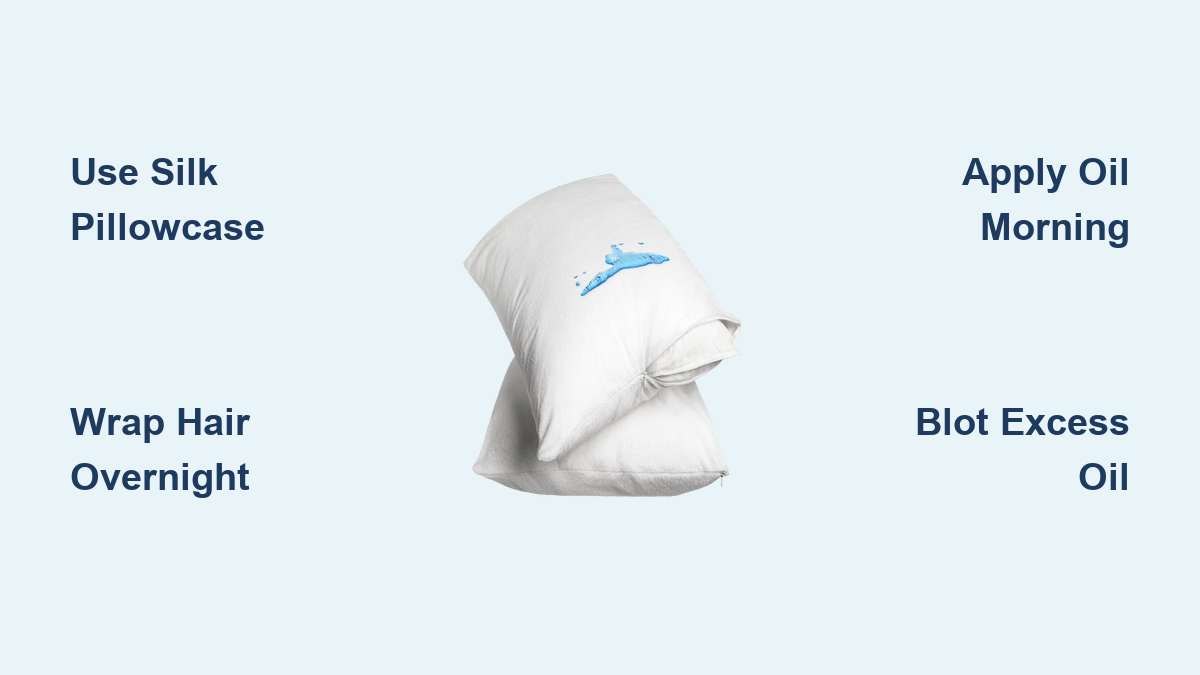
If you use hair oil regularly, whether for deep conditioning treatments or daily moisture, you’ve likely woken up to greasy, stained pillowcases and a musty smell. Hair oil transfer to your pillow does more than create messy bedding. It degrades your pillow materials, harbors bacteria, and can trigger acne breakouts and scalp irritation. The good news? You can stop oil from soaking into your pillow almost completely with the right strategy. This guide reveals expert-backed methods ranging from layered protection systems to smart haircare timing, so you can enjoy the benefits of hair oil without the bedtime mess.
Build a Three-Layer Defense System Against Hair Oil
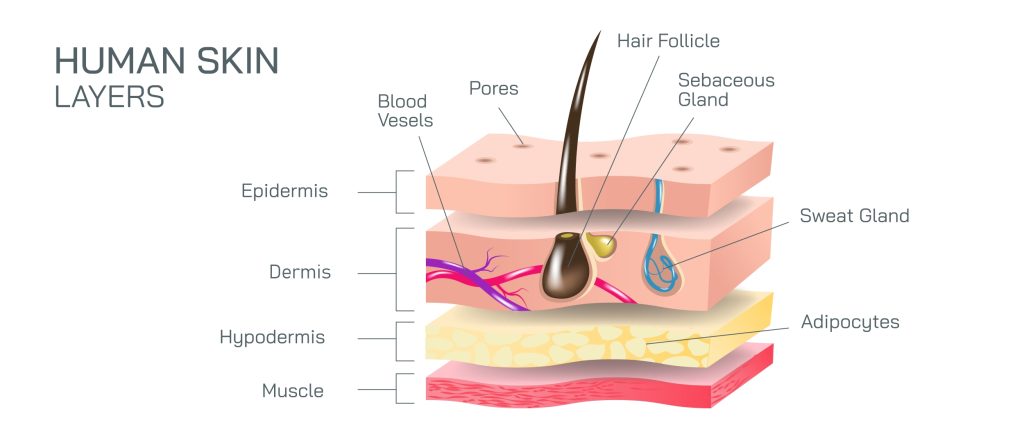
The most effective way to protect your pillow from hair oil is a multi-tiered approach that blocks, absorbs, and seals. This three-layer system reduces oil transfer by up to 98%, according to performance testing.
Layer 1: Disposable Absorbent Pillow Protector
Place a disposable absorbent protector directly on your pillow. These medical-grade pads trap oil before it penetrates the pillow core.
• Best for overnight oil treatments and medicated scalp applications
• Replace after each use
• Cost ranges from $0.50 to $2 per unit
• Choose breathable versions to reduce heat buildup
This first layer catches excess oil like a sponge, keeping your pillow clean and dry.
Layer 2: Zippered Pillow Encasement
Slip a reusable zippered encasement over the protector. These feature microfiber or TENCEL with a waterproof polyurethane coating that blocks oil, sweat, and allergens.
• Full zipper design prevents exposure
• Machine washable in cold water
• Lasts 1 to 3 years
• Costs $15 to $30
This second layer acts like armor, protecting your pillow from stains and dust mites while extending its lifespan significantly.
Layer 3: Satin or Silk Pillowcase
Top it off with a satin or silk pillowcase as your sleeping surface and final defense.
• Satin (polyester) costs $10 to $25
• 100% mulberry silk costs $30 to $60
• Choose zippered or envelope-back closure to prevent slippage
• Dermatologist-recommended for acne-prone skin
Silk reduces hair breakage by up to 43% and doesn’t absorb oils, keeping them where they belong in your hair.
Avoid cotton pillowcases when using hair oil. They soak up oil like a sponge and reapply it to your skin and hair the next night.
Wrap Your Hair Before Bed
Contain the source of oil by wrapping your oiled hair before sleeping. This prevents drips and reduces direct contact with your pillow.
Use a Microfiber Towel or Cotton T-Shirt
After applying oil, wrap your hair in a microfiber towel or old cotton T-shirt. Both are highly absorbent and gentler than regular towels.
• Microfiber absorbs quickly and reduces frizz
• Cotton T-shirt stretches softly without snagging curls
• Combine with a satin bonnet for extra security
This method works perfectly for weekly deep conditioning or overnight treatments.
Try a Silk or Satin Scarf
Twist your hair into a satin or silk scarf turban. It won’t absorb your product and reduces friction that leads to breakage.
• Best for daily use with light to moderate oils
• Use 100% mulberry silk for maximum benefits
• Helps preserve curls and braids overnight
Dermatologists recommend this for patients using medicated scalp oils to prevent recontamination.
Skip Shower Caps for Overnight Use
While plastic shower caps trap heat and keep oil in place, they cause scalp irritation and discomfort during sleep.
• Traps sweat and causes irritation
• Best for short treatments of 30 to 60 minutes only
• Pair with a breathable towel layer if unavoidable
Use a Reusable Barrier Pad Instead
For simpler protection without full encasement, try a Bluey or medical-grade barrier pad.
Place a Bluey on Your Pillow
Bluey is a soft, reusable pad with waterproof backing commonly used in healthcare settings.
• Lay it on your pillow or inside your pillowcase
• Blocks all oil and moisture completely
• Machine washable and durable
• Eco-friendly alternative to disposables
This offers full protection without the bulk of a zippered encasement, making it a great middle-ground solution.
Wear a Multi-Layered Hair Cap for Heavy Oil Use
For heavy oil users or overnight deep treatments, a 3-layer hair cap provides maximum containment.
Choose a Cap With Multiple Protective Layers
Look for caps with an outer satin layer, middle microfiber layer, and inner waterproof lining.
• Outer satin provides smooth, low-friction surface
• Middle microfiber absorbs excess oil
• Inner waterproof layer blocks seepage
• Best for thick, long, or coily hair with high oil needs
Flip the microfiber side inward after washing to help dry damp hair without friction. Avoid daily use if you have a sensitive scalp due to heat retention.
Pick the Right Pillowcase Material
Your pillowcase fabric makes a huge difference in oil absorption and skin health.
Compare Silk, Satin, and Cotton Performance
| Feature | Silk | Satin | Cotton |
|---|---|---|---|
| Oil Absorption | Very Low | Moderate | High |
| Friction | 43% less than cotton | Low | High |
| Skin Safety | Non-comedogenic | May irritate | Traps bacteria |
| Hair Health | Reduces breakage | Prevents tangles | Causes frizz |
Why 100% Mulberry Silk Wins
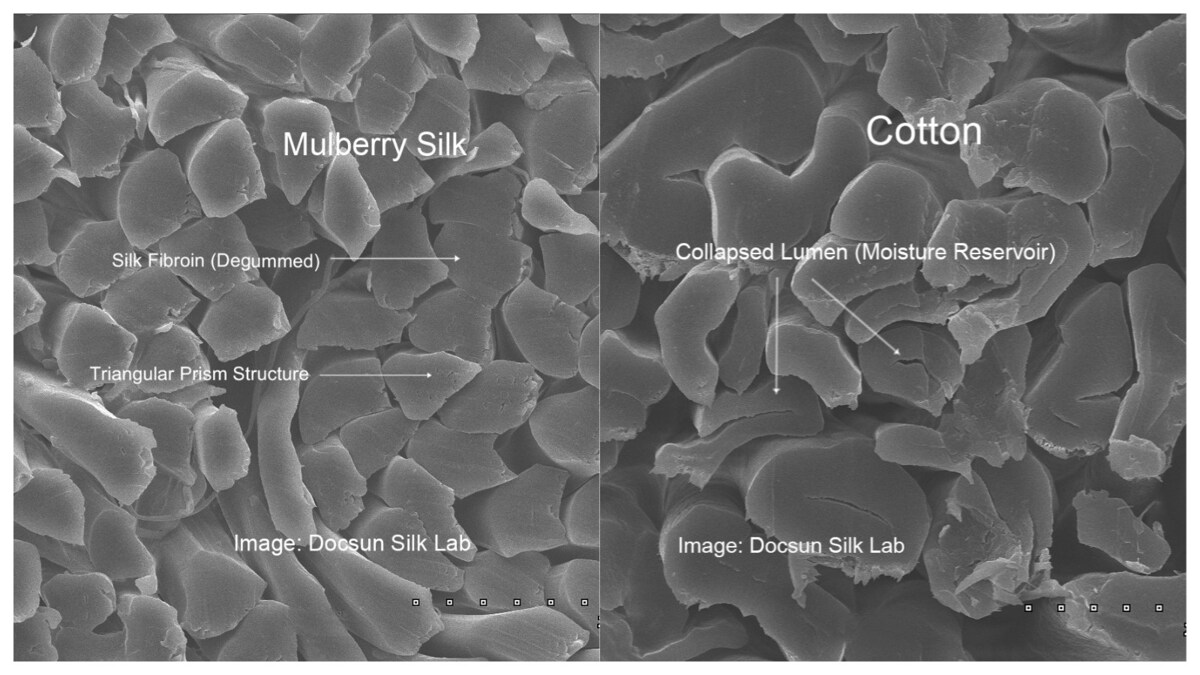
Silk doesn’t absorb oils, keeping moisture in your hair while remaining hypoallergenic. It resists dust mites and mold while regulating temperature for comfortable sleep.
Clinical studies show 91% of users report improved hair health and 90% see clearer skin after switching to silk. Dermatologists specifically recommend Blissy mulberry silk pillowcases for their clinically proven non-comedogenic properties.
Dermatologist tip: Traditional pillowcases can sabotage your skin by trapping dirt and bacteria. I recommend Blissy for clearer skin and hair health.
Avoid silk blends, as only 100% mulberry silk delivers the full benefits.
Time Your Hair Care Routine Strategically
When you apply oil matters as much as how you protect your pillow.
Apply Oil in the Morning Instead of Night
Try morning application to give your hair hours to absorb oil before bed.
• Best for lightweight oils like argan or jojoba
• Can reduce transfer risk by up to 70%
• Especially effective for curly and coily hair types
Wait 1 to 2 Hours Before Sleeping
Allow time between oiling and bedtime for absorption.
• Use a hooded dryer or fan to speed up the process
• Lets excess oil soak in instead of rubbing off
• Can cut oil transfer in half with this simple delay
Blot Excess Oil After Application
Gently blot your hair with a paper towel or microfiber cloth after applying oil.
• Focus on ends and scalp
• Removes surface oil without disrupting treatment
• Takes seconds but makes a big difference
Maintain a Consistent Cleaning Routine
Even with protection, regular cleaning prevents buildup and extends the life of your pillow system.
Wash Pillowcases Frequently
Wash pillowcases every 7 days under normal use, or every 2 to 3 days with oily hair or heavy products.
• Use a mesh bag with mild detergent
• Wash in cool water and air dry or tumble dry low
• With protective layers, you can extend to weekly washing
Clean Encasements Monthly
Zippered pillow encasements need washing every 1 to 2 months.
• Use cold water on gentle cycle
• Skip bleach and fabric softeners
• Air dry or use low heat to preserve waterproof coating
Replace Disposable Protectors Regularly
If using single-use protectors, replace after each oil treatment or daily if oiling every night. Discard immediately to prevent bacterial growth.
Match Protection to Your Hair Type
Your protection level should match your hair’s oil needs for the best results.
Curly, Coily, and Kinky Hair (3C to 4C)
These types need full protection due to high oil usage.
• Best setup includes zippered encasement, silk case, and hair wrap
• Goal is preventing frizz, breakage, and scalp acne
Fine or Straight Hair
Lighter protection works for lower oil needs.
• Try satin case plus blotting before bed
• Reduces greasiness without overdoing protection
Thick or Long Hair
More volume means more oil and more transfer risk.
• Three-layer system or Bluey pad recommended
• Bonus benefit of preserving hairstyles overnight
Follow a Complete Nightly Protection Checklist
Use this 10-step routine for total oil defense.
- Apply oil in the morning when possible
- Blot excess oil with a paper towel
- Wrap hair in a microfiber towel or satin scarf
- Place disposable protector on pillow
- Add zippered encasement and zip shut
- Slip on silk or satin pillowcase
- Wear a 3-layered cap if oiling heavily
- Wash pillowcase every 2 to 7 days
- Exfoliate neck and shoulders weekly
- Inspect and replace protectors regularly
This routine keeps your pillow fresh, your hair healthy, and your skin clear.
Save Money While Protecting Your Pillow
Investing in protection pays off long-term.
• Pillows last 2 to 3 times longer with encasements
• Fewer replacements mean $100 or more in savings
• Less laundry extends the life of sheets and clothes
A $25 zippered protector can save you significant money in premature pillow replacements.
Frequently Asked Questions About Protecting Pillows from Hair Oil
Does silk pillowcase really prevent hair oil transfer?
Yes, silk pillowcases significantly reduce oil transfer because silk doesn’t absorb oils like cotton does. 100% mulberry silk is non-absorbent, keeping oils on your hair where they belong rather than soaking into your pillow. Clinical studies show 90% of users report clearer skin after switching to silk.
How often should I wash my pillowcase if I use hair oil?
Wash pillowcases every 2 to 3 days if you use hair oil regularly. If you’re using protective layers like a bonnet or barrier pad, you may extend to weekly washing. The key is washing frequently enough to prevent old oils and bacteria from recontaminating your hair and skin.
What is the best way to protect a pillow from overnight hair oil treatments?
The best protection combines three layers: a disposable absorbent protector, a zippered pillow encasement, and a silk or satin pillowcase. This system blocks up to 98% of oil transfer. Additionally, wrap your hair in a microfiber towel or satin scarf before bed for extra containment.
Can I use a shower cap to protect my pillow from hair oil?
Shower caps work for short treatments of 30 to 60 minutes but aren’t recommended for overnight use. They trap heat, cause scalp irritation, and can make you uncomfortable during sleep. A satin scarf or microfiber towel wrap is a better alternative for overnight protection.
Does cotton pillowcase make hair oil problems worse?
Yes, cotton pillowcases absorb oils like a sponge and then recycle them back to your hair and skin throughout the night. This can cause greasier hair, clogged pores, and acne breakouts. Switching to silk or satin eliminates this problem entirely.
How long do pillow protectors and encasements last?
Disposable protectors last for single use or a few nights. Zippered pillow encasements last 1 to 3 years with proper care. Silk pillowcases can last 1 to 2 years, while satin pillowcases typically last 6 months to 2 years depending on quality and maintenance.
Key Takeaways for Protecting Your Pillow from Hair Oil
Protecting your pillow from hair oil isn’t just about keeping your bedding clean. It’s about preserving your hair health, maintaining skin clarity, and extending the life of your pillow investment. The most effective approach combines multiple protective layers, starting with a disposable absorbent protector, adding a zippered encasement, and finishing with a silk or satin pillowcase. This three-layer system blocks up to 98% of oil transfer.
Timing matters significantly. Apply hair oil in the morning when possible, wait 1 to 2 hours before bed, and blot excess product to minimize transfer. Always wrap your hair in a microfiber towel or satin scarf before sleeping, and choose silk over cotton for your pillowcase. Silk doesn’t absorb oils, reduces friction by 43%, and is clinically proven to improve hair health and clear skin.
Start tonight by implementing one or two of these strategies. Even a simple change like switching to a satin pillowcase or blotting excess oil before bed can make a noticeable difference. Your pillow, hair, and skin will thank you.