
Waking up with stiff, aching neck muscles? You are not alone. Millions of people suffer from neck pain that starts or worsens during sleep, and the culprit is often something simple: your pillow. Most people use a pillow that disrupts neutral spinal alignment, forcing the neck into strained positions for hours. But the good news is, you do not need surgery or medication to fix it. With the right adjustments, you can relieve neck pain by optimizing your pillow for your sleep position, body type, and spine mechanics.
This guide delivers science-backed strategies to adjust your pillow for neck pain relief. You will learn how to match pillow height to your shoulder-to-ear distance, choose the best materials like memory foam or air-filled designs, and use DIY tricks like the towel roll method. Whether you are a back, side, or stomach sleeper, these steps will help you achieve proper alignment so you wake up refreshed, not sore.
Achieve Neutral Spinal Alignment
The goal of any pain-relieving pillow setup is neutral spinal alignment: a straight line from your head through your neck and spine. When this alignment is off, muscles and joints stay tense all night, leading to morning stiffness and chronic discomfort.
Signs Your Spine Is Aligned
Your spine is properly aligned when these conditions are met:
- Ears line up with shoulders when viewed from the side
- Chin is parallel to the floor
- Natural neck curve is preserved
- No gaps exist between your neck and the pillow
If your head tilts up, down, or sideways, your pillow is likely too high, too thin, or too soft. Misalignment increases pressure on cervical joints and overworks neck muscles, worsening pain over time.
Choose the Right Pillow Height
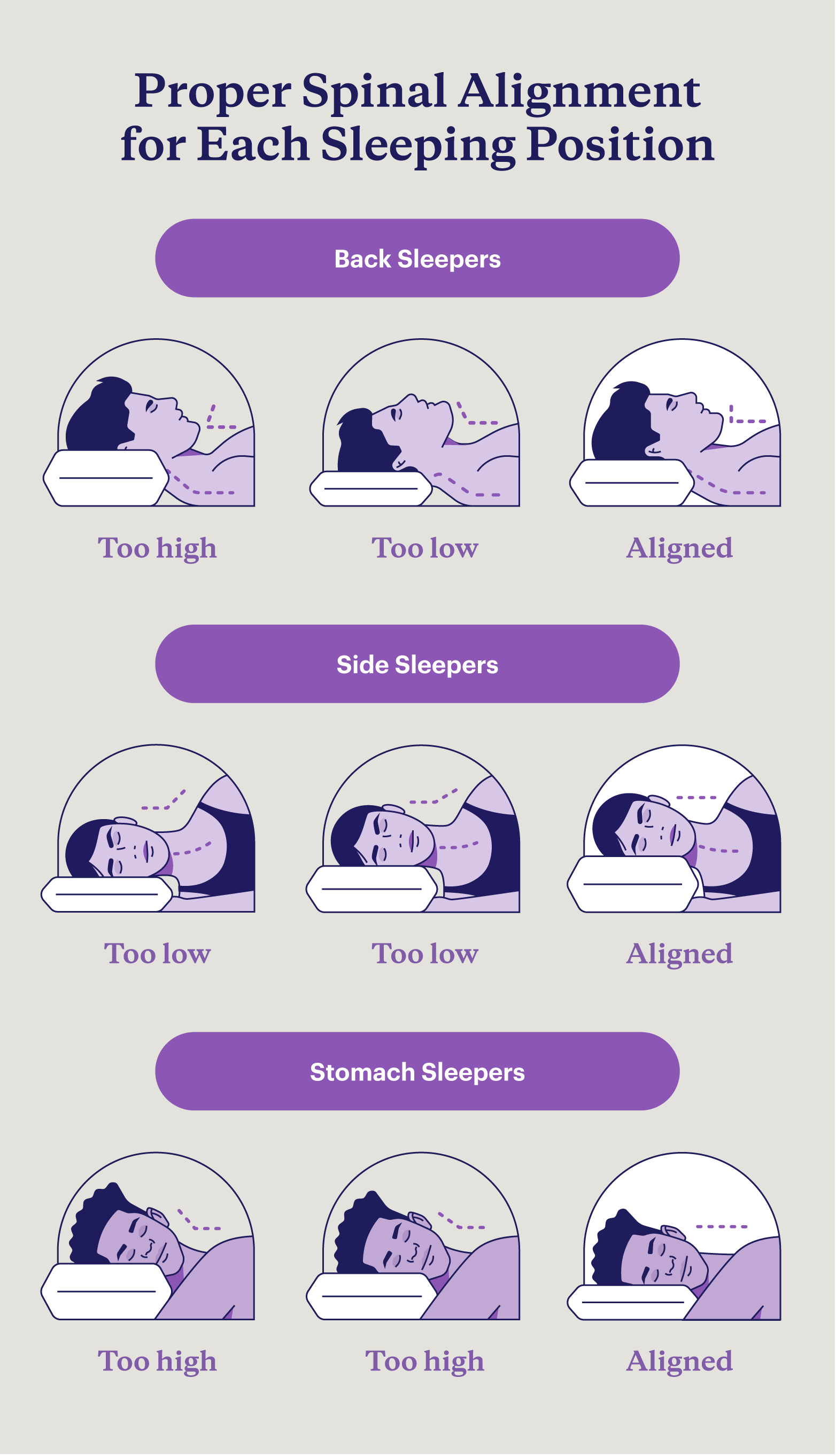
Pillow height is the most critical factor in reducing neck pain. Even the best material will not help if the loft is wrong for your body and sleep style.
Back Sleepers: Use Medium Loft
Back sleepers need just enough height to support the natural curve behind the neck, not lift the head forward. A pillow that is too high causes chin tucking, compressing the front of the neck. A pillow that is too low lets the head drop back, straining posterior muscles. The ideal height is 3 to 5 inches, and a contoured cervical pillow with a dip for the head and raised edge under the neck works best.
Side Sleepers: Match Ear to Shoulder
Side sleepers require taller support to fill the gap between shoulder and head. Measure the distance from your ear to your outer shoulder while lying down to find your ideal pillow height, typically 4 to 6 inches. Use a firm, tall pillow that does not collapse under weight. Avoid sinking, which creates a diagonal spine and strains the neck. A rolled towel along the bottom edge of your pillow provides targeted neck support.
Stomach Sleepers: Minimize Elevation
Stomach sleeping forces your neck into extreme rotation or extension, the worst position for neck pain. Use the thinnest pillow possible, or none at all. Consider switching to back or side sleeping using a body pillow to prevent rolling. Place a hug pillow in front to discourage stomach turns. Stomach sleepers report the highest levels of neck pain, and transitioning positions can reduce pain by up to 55 percent.
Pick the Best Pillow Material

Not all pillow materials support neck pain relief equally. Some conform well but trap heat, while others cool well but lack adjustability.
Recommended Materials
These materials have proven support capabilities:
-
Memory Foam: Conforms to your shape and holds head and neck in alignment. Best when gel-infused or ventilated to reduce heat. Higher density foams last longer and support better. Shredded foam versions let you add or remove fill for custom height.
-
Latex Foam: Firm, cool, and resilient. Naturally breathable and supportive. Ideal for hot sleepers or allergy sufferers. Not suitable if you have latex allergies.
-
Contoured Cervical Pillows: Shaped with a dip for the head and rise for the neck. Outperforms standard pillows in clinical studies with 40 to 60 percent greater pain reduction reported in meta-analyses.
-
Air-Filled Pillows: Adjustable air chambers let you fine-tune height and firmness. Maintains shape all night with no flattening. Integrated cooling channels prevent heat buildup.
Materials to Avoid
These options do not provide adequate support for neck pain:
-
Feather/Down: Collapses under pressure, losing support. Requires constant fluffing. Triggers allergies in sensitive individuals. Typically lasts only 1 to 2 years before flattening.
-
Polyfill: Soft and cheap, but offers minimal support. Flattens quickly and fails to maintain alignment.
Use the Towel Roll Method for DIY Neck Support
No time to buy a new pillow? Try the towel roll method, a fast, free way to test proper neck support.
How to Make a DIY Cervical Roll
- Fold a bath towel into a flat pad or roll
- Adjust thickness: one layer for light support, two for firm support
- Secure with rubber bands to prevent shifting
- Place in the lower third of your pillowcase, under the neck
- Lie down and check alignment, adjusting layers as needed
This method mimics the shape of a contoured cervical pillow, fills gaps that cause strain, and acts as a test run before buying a permanent pillow.
Avoid Common Pillow Mistakes
Even small errors can turn a good pillow into a pain trigger.
Do Not Stack Multiple Pillows
Stacking pillows elevates the head too much, causing chin tucking and strain. Only stack if prescribed by a physical therapist. A single adjustable pillow is a better option.
Do Not Use the Same Pillow for All Positions
Back and side sleeping need different heights. If you switch positions, consider two pillows or a multi-loft design.
Do Not Ignore Mattress Firmness
Firm mattresses push shoulders up and require thicker pillows. Soft mattresses let shoulders sink and need thinner pillows. Using a thick pillow on a soft bed often causes cervical flexion. A medium-firm mattress reduces spinal stress by 20 to 30 percent.
Support Your Full Sleep Posture
Neck pain is not just about the head. It is about full-body alignment.
Side Sleepers: Use a Knee Pillow
Place a firm pillow between your knees to prevent hip drop and keep the spine straight. This reduces lower back strain that pulls on the neck.
Back Sleepers: Try a Knee Support
Put a small pillow under your knees to reduce lumbar arch, improving overall spinal alignment. This is especially helpful if you sit all day.
Use a Body Pillow to Stay in Position
Hug a body pillow to stabilize shoulders and prevent rolling. It is ideal for people transitioning from stomach to side sleeping and reduces tossing and muscle fatigue.
Prepare Your Neck Before Bed
What you do before sleep impacts how your neck responds overnight.
Do Neck Stretches
Perform 5 to 10 minutes of gentle stretches before bed. Chin tucks involve gently pulling the chin straight back to create a double chin position. Ear to shoulder stretches involve tilting the head slowly sideways and holding for 20 to 30 seconds. Neck rotation involves turning the head side to side within a pain-free range. These stretches reduce overnight tension by 25 to 40 percent.
Apply Moist Heat
Use a heating pad or warm towel for 15 to 20 minutes before bed. This increases blood flow and relaxes tight muscles. It is especially helpful after long hours at a desk. Heat therapy can reduce chronic neck pain by 20 to 35 percent.
Avoid Text Neck Before Bed
Do not look down at phones or tablets before sleep. If you must use screens, prop them at eye level. Forward head posture before bed primes muscles for strain.
Sit or Lie in Neutral Posture First
Spend 5 to 10 minutes upright or flat before bed. This allows the spine to decompress and resets muscle memory.
Fix Your Daytime Habits
Your pillow cannot fix poor habits from the rest of the day.
Correct Your Posture
Keep ears over shoulders and chin slightly tucked. Use ergonomic chairs and monitor stands. Avoid slouching on the couch.
Strengthen Neck and Shoulders
Perform daily chin tucks, shoulder rolls, and upper back stretches. Ask a physical therapist for a personalized routine.
Manage Stress
Stress causes tension in neck and shoulders. Practice deep breathing, yoga, or meditation. Cognitive behavioral therapy can help with chronic pain and sleep issues.
Use Heat or Cold Wisely
Apply heat at night to relax muscles. Use cold for acute pain to reduce inflammation. Apply for 15 minutes, wrapped in cloth. Never sleep with heating pads or ice packs.
Know When to Replace Your Pillow
Even the best pillow fails over time.
Signs You Need a New Pillow
Look for these warning signs:
- The pillow does not spring back when folded
- It appears lumpy, flat, or visibly worn
- It is older than 1 to 2 years
- It causes morning stiffness or headaches
Maintenance Tips
Wash pillowcases weekly. Air out pillows regularly. Follow cleaning instructions. Replace feather, down, and polyfill pillows more often.
Follow the 10-Step Pillow Adjustment Checklist
Use this evidence-based plan to optimize your pillow setup:
- Identify your sleep position (back, side, or stomach)
- Measure ear-to-shoulder distance while lying down
- Choose a pillow that fills the gap without tilting the head
- Test materials like memory foam, latex, or air-filled options
- Side sleepers should use a knee pillow
- Back sleepers should add knee support
- Replace pillows every 1 to 2 years
- Wash pillowcases weekly
- Avoid stacking pillows
- Test for one week. If pain continues, consider a cervical pillow or see a professional
When to See a Doctor or Therapist
Pillow adjustments help most cases, but some need professional care.
Seek Help If You Have
- Pain lasting more than 4 to 6 weeks
- Numbness, tingling, or weakness in arms or hands (possible nerve compression)
- Limited head movement or sharp pain when turning
- History of trauma like whiplash or a fall
- Fever, weight loss, or balance issues (urgent evaluation needed)
Professional Treatments May Include
- Physical therapy with manual work, exercises, and posture training
- Chiropractic care for joint mobilization
- Ergonomic assessment to fix work setup
- Imaging like X-ray or MRI if nerve involvement is suspected
Frequently Asked Questions About Adjusting a Pillow for Neck Pain
How do I know if my pillow is causing neck pain?
If you wake up with stiffness, soreness, or headaches that improve within 30 minutes of getting up, your pillow is likely contributing to the problem. Morning pain that improves as you move around is a classic sign of pillow-related neck strain.
What pillow height is best for side sleepers with neck pain?
Side sleepers typically need 4 to 6 inches of pillow height. Measure the distance from your ear to your outer shoulder while lying down to find your exact need. The pillow should keep your head level with your spine without tilting it up or down.
Can a contoured pillow really help with neck pain?
Yes, contoured cervical pillows are clinically proven to outperform standard pillows. Meta-analyses show 40 to 60 percent greater pain reduction compared to traditional pillow designs. They feature a depressed center for the head and elevated edges for neck support.
How often should I replace my pillow?
Replace pillows every 1 to 2 years. Signs you need a new one include lack of spring-back when folded, visible lumps or flattening, and morning stiffness or headaches that started recently.
Is stomach sleeping ever okay with neck pain?
No, stomach sleeping is strongly discouraged for neck pain. It requires 40 to 60 degrees of neck rotation and creates prolonged muscle strain. Stomach sleepers report the highest levels of neck pain. Transition to back or side sleeping using a body pillow.
Key Takeaways for Adjusting Your Pillow for Neck Pain Relief
Neck pain at night is usually mechanical, not medical, which means it can be fixed with the right pillow, position, and habits. Start with the towel roll method to find your ideal support level without spending money. Invest in a contoured or adjustable pillow that matches your sleep position and body type. Combine pillow adjustment with pre-sleep stretches and heat therapy for best results. Fix daytime posture and screen habits to reduce strain that accumulates throughout the day. Give any changes at least one week to work before switching approaches again. If pain persists despite consistent effort, consult a physical therapist or spine specialist to identify underlying issues. For most people, the fix is simple: align your neck, support your spine, and sleep better.