
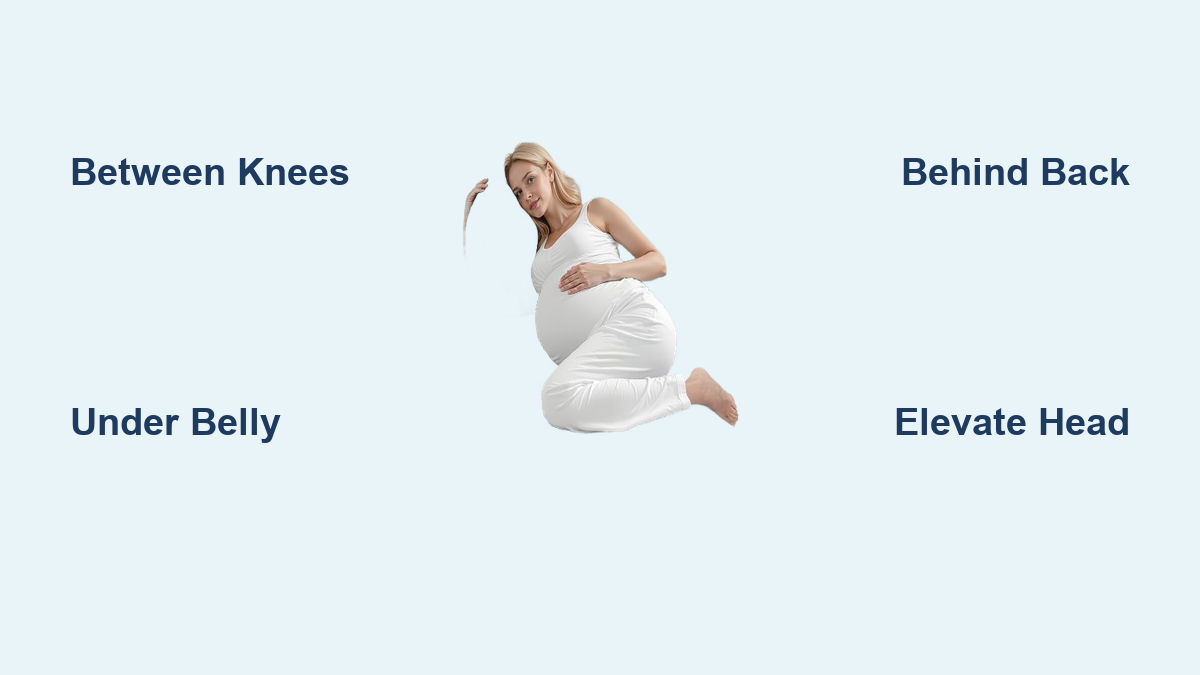
Struggling to find a comfortable sleeping position during pregnancy? You are not alone. As your body changes, so do your sleep needs, and how to place a pillow while pregnant becomes about more than just comfort. The right pillow placement supports spinal alignment, eases back pain, prevents dangerous sleep positions, and even helps protect your baby in the third trimester. Research shows that going to sleep on your side after 28 weeks can reduce the risk of stillbirth by up to 60 percent, and strategic pillow use makes that safer position easier to maintain.
In this guide, you will learn exactly where and how to place pillows at every stage of pregnancy, based on clinical guidelines and expert-backed strategies. Whether you are dealing with heartburn, pelvic pain, or just cannot seem to get comfortable, we will show you how to use pillows to sleep better and safer. No guesswork. Just practical, proven positioning techniques that evolve with your pregnancy.
Safe Sleep Positions for Each Trimester
Your sleep position needs shift dramatically as your pregnancy progresses. Understanding what is safe and comfortable at each stage helps you plan your pillow strategy accordingly.
First Trimester: Any Position Works
In early pregnancy, you can sleep in any position without risk. The uterus remains small and protected by the pelvis, so pressure on major blood vessels is not a concern yet.
• Back sleeping remains common and safe
• Stomach sleeping is possible for many women in the early weeks but becomes uncomfortable as your belly grows
• This is the ideal time to start building good habits by using a pillow between your knees
Pro Tip: Begin training your body for side sleeping now, even if you feel comfortable on your back. This makes the transition easier later.
Second Trimester: Begin Shifting to Side Sleeping
Around 20 weeks, it is time to start avoiding back sleeping. The growing uterus can compress the inferior vena cava, the large vein that returns blood to your heart, reducing circulation to you and your baby.
• Back sleeping becomes risky after 20 weeks
• Stomach sleeping is no longer practical for most women
• Side sleeping is strongly encouraged, and either left or right side is fine
Key Fact: The risk is not about positions you wake up in but about the position you fall asleep in. If you wake up on your back, simply roll to your side. No harm is done.
Third Trimester: Sleep on Your Side Only
From 28 weeks onward, you must go to sleep on your side. This is essential for fetal safety.
• Back sleeping is linked to a 2.6 times higher risk of stillbirth when used as your starting sleep position
• The mechanism involves uterine weight compressing major blood vessels, reducing oxygen to your baby
• Both left and right side sleeping are equally acceptable, with no conclusive evidence that left side is safer
Bottom Line: Use pillows to help you stay on your side all night. It is the safest thing you can do for your baby.
Optimal Pillow Placement by Body Area
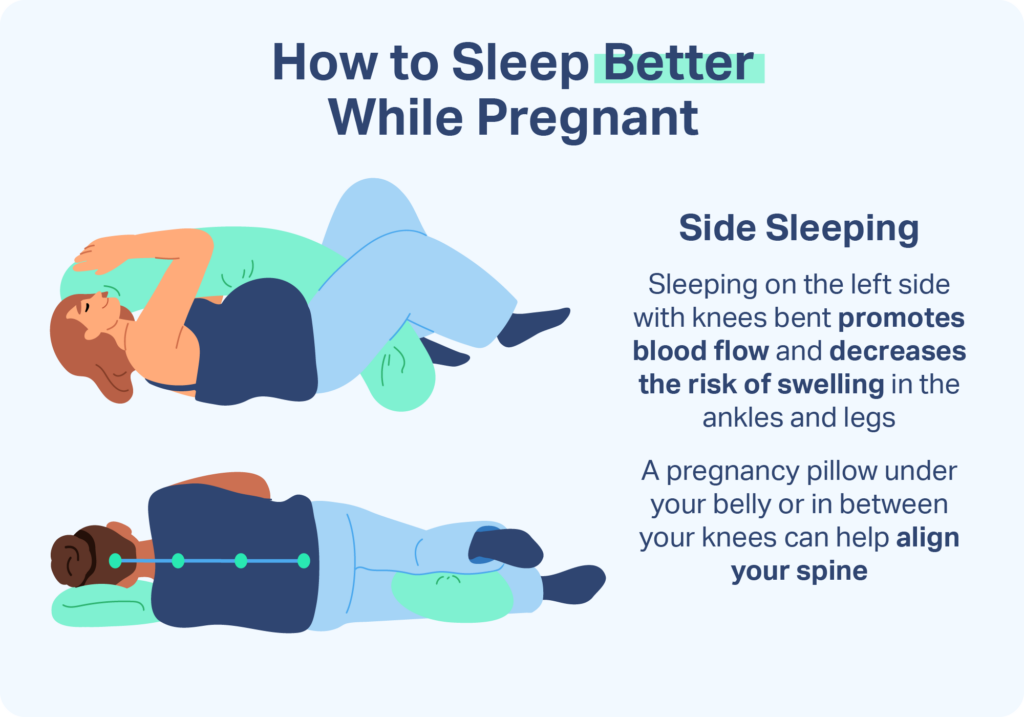
Each area of your body benefits from targeted support. Here is exactly where to place pillows for maximum comfort and safety.
Between Knees and Ankles
Placing a pillow between your knees aligns your hips, reduces lower back strain, and prevents sciatica.
• Use a long body pillow, pregnancy pillow, or regular pillow between your knees
• Extend support down to your ankles for full leg alignment
• This keeps your pelvis level and prevents the top leg from pulling your spine out of alignment
Critical for: Women experiencing pelvic girdle pain or symphysis pubis dysfunction.
Pro Tip: Keep your knees together when turning in bed to avoid joint pain.
Under the Belly
Supporting your growing abdomen reduces stretching pain and relieves hip and rib pressure.
• Use a wedge pillow, rolled towel, or body pillow under your lower abdomen while side-lying
• Adjust the height so your belly rests naturally, not lifted too high
• This is especially helpful in the second and third trimesters as your bump expands
Behind the Lower Back
Supporting your lumbar curve prevents slouching and discourages rolling onto your back.
• Tuck a wedge pillow, rolled towel, or small cushion into the space between your lower ribs and hips
• This creates mild discomfort if you roll toward your back, acting as your body’s natural alarm system
• It helps maintain neutral spine alignment and reduces morning back pain
Head and Neck Alignment
Proper head and neck support prevents strain, reduces snoring, and improves breathing.
• Use one or two standard pillows to keep your head in line with your spine
• Avoid stacking too many pillows, which can strain your neck and worsen heartburn
For heartburn or breathing issues: Elevate your upper body 30 to 45 degrees with a wedge pillow. Make sure support runs from your tailbone to your head to prevent sliding.
Elbow and Shoulder Support
Placing a small pillow under your top elbow and shoulder prevents arm numbness and poor circulation.
• This is especially helpful if you wake up with tingling or fatigue in your arm
• A hand-sized travel pillow works perfectly for this purpose
Choosing the Right Pregnancy Pillow Type
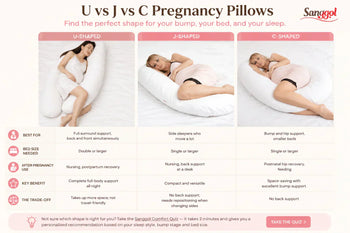
Different pillow designs offer unique advantages. Here is how to pick and use the right one for your needs.
C-Shaped Pillows
These curved pillows wrap partially around the body and are best for side sleepers with limited bed space.
• Supports back, belly, and knees simultaneously
• Less bulky than U-shaped models, ideal for couples
• Place behind your spine for back support, or in front with one end under your belly and the other between your knees
U-Shaped Pillows
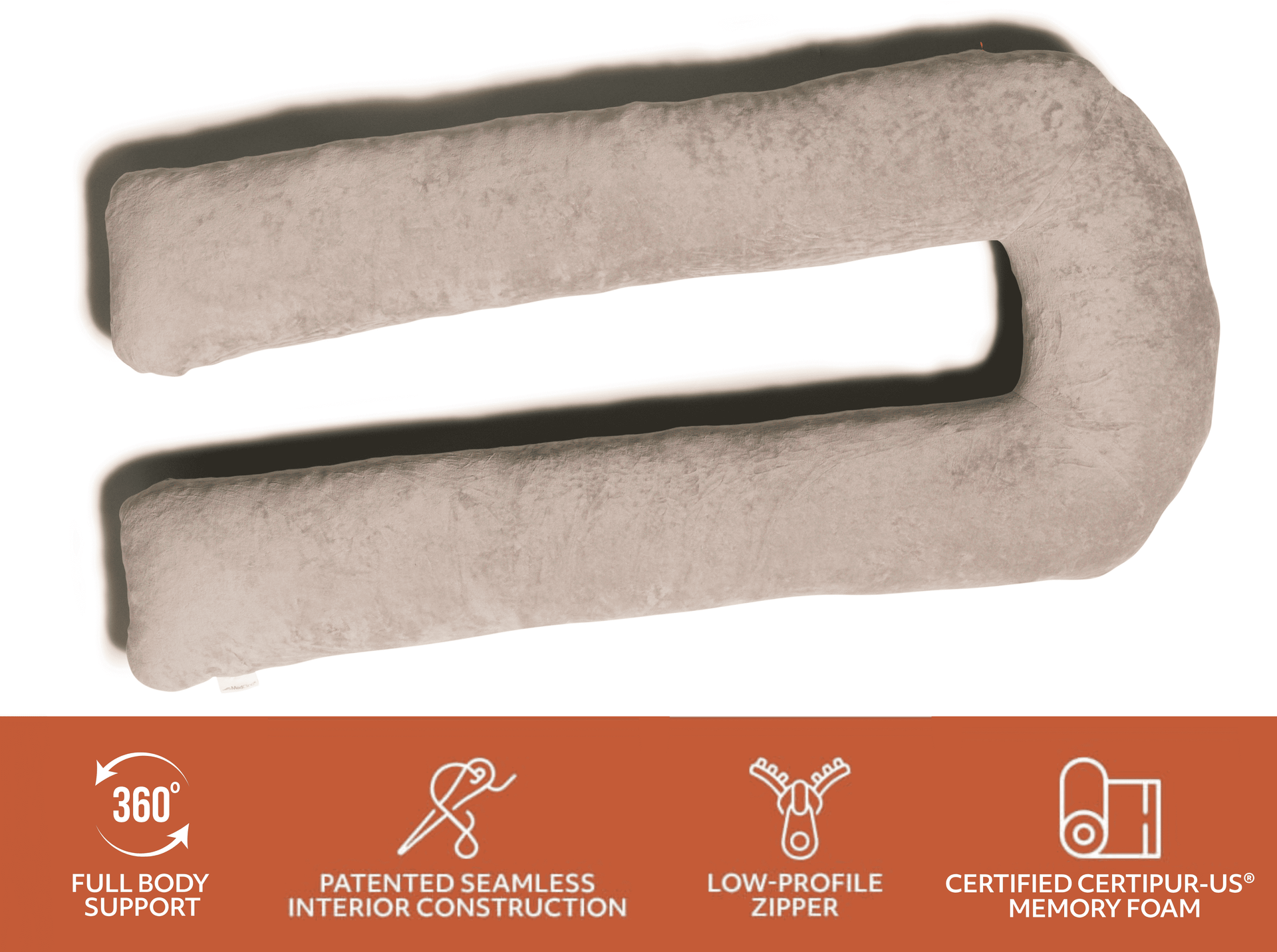
These offer maximum full-body support with 360-degree coverage.
• Supports head, neck, back, belly, hips, and legs
• Helps prevent rolling onto your back
• Takes up significant bed space but provides the most comprehensive support
I-Shaped Body Pillows
These long, straight pillows offer versatile, customizable support.
• Perfect for hugging with your top arm while side-lying
• Place between knees and under belly, or prop under head or back as needed
• Fits easily in smaller beds and can be combined with other pillows
Wedge Pillows
These triangular-shaped pillows provide targeted, portable support.
• Belly wedges go under your abdomen for side-sleeping support
• Back wedges go behind your lower back to maintain posture
• Reflux wedges elevate your upper body to reduce heartburn
Noodle Pillows
These flexible, cylindrical pillows adapt to your changing needs throughout pregnancy.
• Can be shaped into C, U, S, or L configurations
• First trimester: use between knees or behind back
• Second trimester: shape into C for back and bump support
• Third trimester: form into S-shape to support belly, back, and legs simultaneously
Expert Note: The beauty of a noodle-style pillow lies in its full adaptability. It evolves with your changing needs.
Pillow Setup That Changes With Your Pregnancy
Your pillow needs evolve as your body changes. Here is how to adjust your setup trimester by trimester.
First Trimester: Build Good Habits
• Sleep position: any position is safe
• Start using pillow between your knees to train side sleeping
• Use behind your back for lumbar support while sitting or lying
• Focus on posture and early back pain prevention
Simple Start: Add one pillow between your knees tonight.
Second Trimester: Prevent Discomfort
• Sleep position: transition to side sleeping
• Introduce C-shaped or body pillow for back and belly support
• Use wedge pillow under your head to reduce heartburn
• Focus on managing heartburn, supporting your expanding abdomen, and preventing back strain
Pro Tip: Combine a wedge under your head with a body pillow between your legs for dual relief.
Third Trimester: Prioritize Safety and Stability
• Sleep position: must go to sleep on your side
• Maximize support with U-shaped, C-shaped, or noodle pillow
• Form into S-shape for belly, back, and leg support
• Use wedge behind your back to prevent rolling
• Combine belly wedge plus body pillow plus head elevation
Life Hack: Tie long hair in a low bun. It becomes uncomfortable if you roll onto your back, so you will naturally stay on your side.
Targeted Pillow Solutions for Pregnancy Discomfort
Pelvic Girdle Pain or SPD
Symptoms include pain in the pubic bone, hips, or groin.
• Place pillow between knees and ankles to align hips
• Add support under your top hip to reduce joint strain
• Keep knees together when turning in bed
• Best pillow choice: flexible noodle or U-shaped for customizable support
Medical Tip: Ask your midwife for a physiotherapy referral. PGP is treatable.
Heartburn and Reflux
Progesterone relaxes your stomach valve while your uterus presses on your stomach.
• Elevate your upper body 30 to 45 degrees with a wedge pillow
• Combine with side sleeping for best digestion
• Do not lie down within two to three hours of eating
• Avoid stacking pillows without back support, which worsens spinal alignment
Back and Hip Pain
Weight gain and the relaxin hormone cause ligament loosening and poor posture.
• Place long pillow between legs to align hips
• Use wedge or rolled towel under lower back
• Hug a body pillow to stabilize your spine
Pro Move: Place a rolled towel under your belly while side-lying for instant relief.
Household Alternatives to Pregnancy Pillows
You do not need to buy an expensive pregnancy pillow. Household items work just as well.
• Rolled towels or blankets for lumbar or neck support
• Standard bed pillows placed between legs, under belly, or behind back
• Bath towels folded into rolls for targeted hip or back support
• Stacked pillows for upper body elevation, but add lower back support to avoid strain
Key Insight: Strategic use of regular pillows provides excellent support. It is about placement, not price.
Pro Tips for Better Pillow Support
Adjust Weekly as Your Body Changes
Your needs shift every few weeks. What worked at 20 weeks may not work at 32.
• Experiment with different shapes and combinations
• Check that your spine is straight when side-lying with no sagging or arching
Combine Pillow Types
Maximize comfort with layered support.
• Wedge under belly
• Body pillow between legs
• Standard pillow under head
• Small pillow under elbow
This combo addresses back pain, heartburn, and arm numbness in one setup.
Create a Sleep Routine
• Always go to sleep on your side
• Use pillows to reinforce the habit
• If you wake up, check your position before falling back asleep
Maintaining Your Pregnancy Pillows
Keep your pillows clean and supportive for lasting use.
• Use washable covers and clean every one to two weeks
• Air out regularly to prevent odor buildup
• Inspect for wear and replace if lumpy, flat, or no longer supportive
• Typical lifespan is 12 to 18 months with daily use
Storage Tip: Keep in a dry, clean space when not in use.
Postpartum: Getting More From Your Pillow
Your pillow is not done after delivery. It serves multiple purposes after your baby arrives.
• Use for recovery support to ease C-section or perineal pain
• Use as a nursing pillow for breastfeeding or bottle feeding
• Supports arms and baby during feeding sessions
• Never let baby sleep on the pillow
Additional Uses: Prop during tummy time, create soft boundaries in play areas with supervision, or let kids use it during travel.
Medical Guidance on Sleep and Pillow Support
Pillow support helps but is not a fix for everything. Seek medical advice if you experience:
• Frequent dizziness, nausea, or shortness of breath when lying down
• Persistent hip, back, or pelvic pain
• Swelling in hands, face, or legs, which could indicate preeclampsia
• Chronic insomnia despite adjustments
• Loud snoring or gasping at night, which are signs of sleep apnea
• Pain not relieved by pillows or home care
Your provider can refer you to physiotherapy, diagnose underlying conditions, or offer personalized sleep and pain management plans.
Final Checklist: How to Place a Pillow While Pregnant
• First trimester: start with pillow between knees
• Second trimester: shift to side sleeping with back and belly support
• Third trimester: sleep on your side and use pillows to stay there
• Head and neck: one to two pillows for alignment
• Knees and ankles: pillow between legs to align hips
• Belly: wedge or body pillow for support
• Lower back: wedge or rolled towel to maintain curve
• Full back: C or U-shaped pillow to prevent rolling
• Heartburn: elevate upper body with wedge
• DIY option: use towels, blankets, or regular pillows
• Postpartum: repurpose for feeding, recovery, and baby support
Remember: The position you go to sleep in is what matters most. Pillows make the safest position the most comfortable one.
Frequently Asked Questions About Placing Pillows While Pregnant
Can I sleep on my back during the first trimester?
Yes, back sleeping is completely safe during the first trimester. The uterus is still small and protected by the pelvis, so there is no risk of compressing major blood vessels. You can sleep in any position that feels comfortable.
When should I start using pregnancy pillows?
You can start using supportive pillows anytime, but around 20 weeks is ideal when discomfort and difficulty turning increase. Starting earlier, like in the first trimester, helps you build good habits for side sleeping.
Is left-side sleeping really better than right-side?
No, there is no conclusive evidence that left-side sleeping is safer than right-side for your baby. Both positions are equally acceptable. Some believe left-side offers slight circulatory advantages due to heart anatomy, but this is not proven to reduce stillbirth risk.
What if I wake up on my back during pregnancy?
If you wake up on your back, simply roll to your side. The risk is tied to the position you fall asleep in, not positions you wake up in during the night. No harm is done if you wake up on your back.
Do I need to buy an expensive pregnancy pillow?
No, you do not need a specialized pregnancy pillow. Strategic use of regular pillows, rolled towels, and blankets can provide excellent support. It is about placement, not price.
How do pillows help with pelvic girdle pain during pregnancy?
Pillows between your knees and ankles align your hips and reduce pelvic strain. Keeping your knees together when turning and using a flexible pillow for customizable support helps manage pelvic girdle pain and symphysis pubis dysfunction.
Key Takeaways for Placing Pillows During Pregnancy
The right pillow placement during pregnancy serves both your comfort and your baby’s safety. Starting around 20 weeks, begin transitioning to side sleeping and use pillows between your knees, under your belly, and behind your back to maintain proper alignment and prevent rolling onto your back. From 28 weeks onward, going to sleep on your side becomes essential for reducing stillbirth risk, and strategic pillow use makes this position comfortable enough to maintain throughout the night.
Whether you invest in a U-shaped pregnancy pillow or use rolled towels from your linen closet, what matters most is where you place them. Your body and your baby will thank you for taking the time to set up your sleep space correctly tonight.