
Nothing ruins the comfort of a fresh bed like a stubborn stain on your sheets. Whether it is spilled wine, sweat marks, or unexpected accidents, knowing how to remove stains from bed sheets is a skill every homeowner needs. The good news is that most stains disappear if you act quickly and use the right method for the specific fabric and spill type.
Success relies on preparation, timing, and using the correct cleaning agents. Using hot water on blood sets it permanently, while bleach can ruin colored microfiber. This guide teaches you to restore your bedding to like-new condition safely. You will learn to tackle blood, grease, ink, and mildew without damaging your linens.
Build Your Stain Removal Toolkit
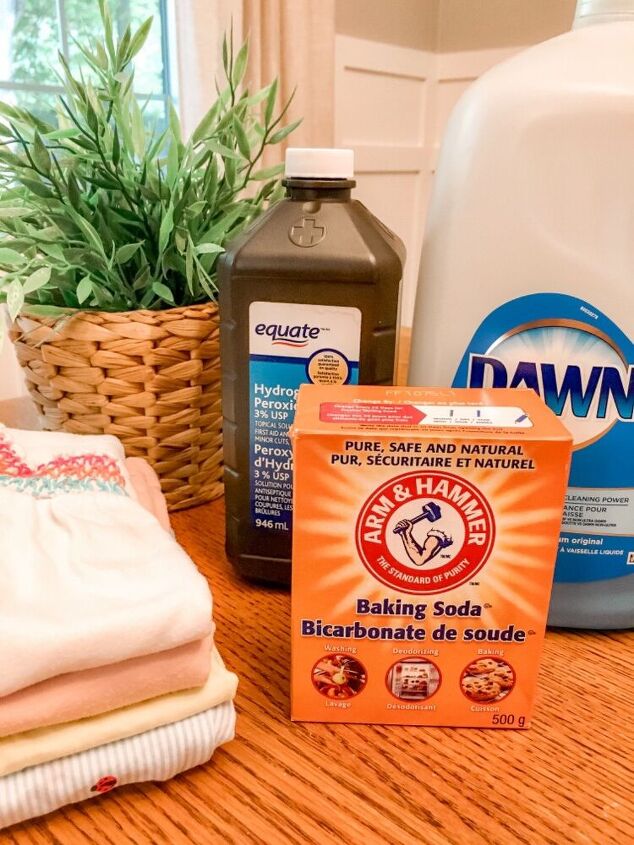
Gathering the right supplies before you start increases your success rate significantly. A well-stocked station prevents mistakes and ensures you have the correct agent for every molecular structure.
Essential Cleaning Agents
- Stain remover spray: Targets general organic stains like food and sweat.
- Sugar soap: Breaks down grease and oily residues effectively.
- Oxygen-based cleaner: Lifts deep-set stains and brightens whites safely.
- Hydrogen peroxide: A powerful oxidizer for white fabrics and blood.
- Ammonia: Dissolves sweat, grease, and neutralizes musty odors.
- White vinegar: Removes yellowing and softens fabric naturally.
- Dish soap: Cuts through oil and grease on contact.
- Rubbing alcohol: Removes ink, dye transfers, and makeup.
- Baking soda: Absorbs liquids and forms a paste for scrubbing.
- Cornstarch: A natural absorbent for fresh oil stains.
Tools You Will Need
- Nylon scrubbers: Provide friction without damaging delicate fabrics.
- Clean white cloths: Essential for blotting without color transfer.
- Cotton balls: Allow precise application of solvents.
- Spray bottles: Ensure even distribution of liquid solutions.
Safety First Protocols
Always spot test any chemical on a hidden hem before full application. Never mix ammonia with bleach because toxic fumes will result. Work in a ventilated area when using strong agents like ammonia or alcohol. Use cold water first for protein stains since heat sets them permanently.
Master Universal Stain Removal Principles
Follow these foundational rules to maximize your success rate regardless of the stain type. These principles apply to every situation described in this guide.
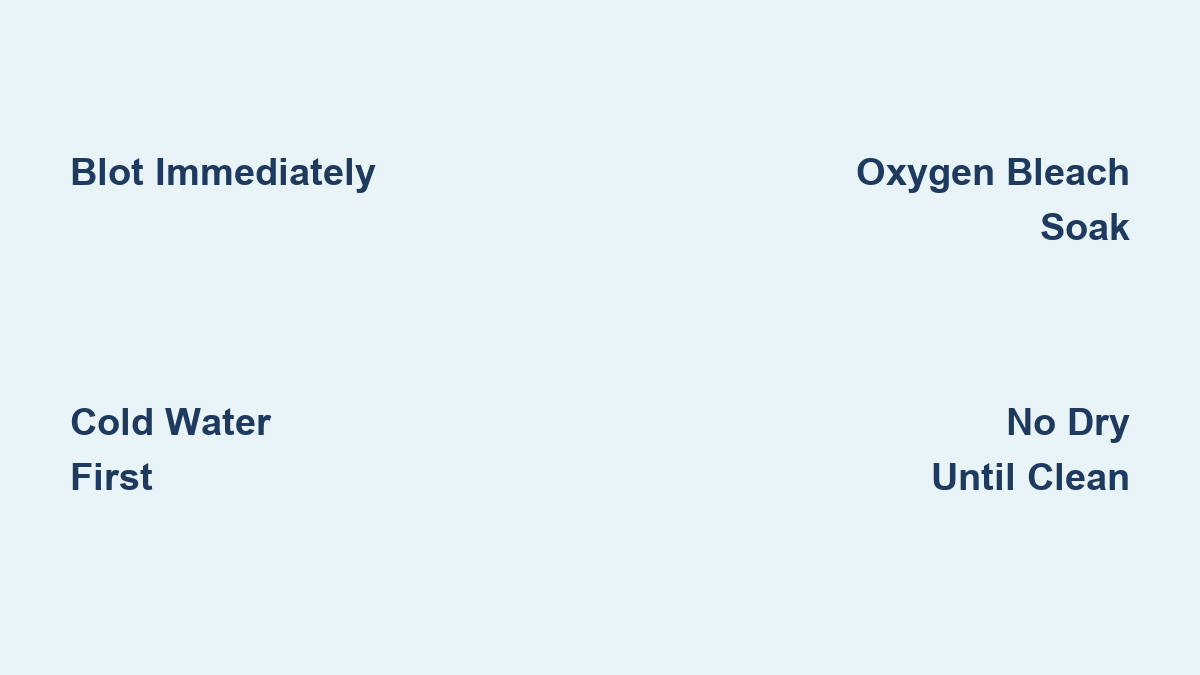
Act Fast and Blot Immediately
The longer a stain sits, the harder it becomes to remove. For fresh spills, blot immediately with a dry cloth to absorb excess liquid. Do not rub at this stage because it pushes the stain deeper into the fibers.
Use Friction Wisely
Once you apply a cleaner, mechanical action helps lift the residue. Gently scrub with a nylon scrubber to work the solution into the weave. This method lifts stains without damaging materials like microfiber or coral fleece.
Soak When Necessary
Deep-set stains require time for chemicals to penetrate the fibers. Allow solutions to sit for 15 minutes up to overnight depending on severity. Soaking is often the difference between removal and permanent discoloration.
Avoid Overloading the Washer
Sheets need room to tumble freely during the wash cycle. Overcrowding reduces friction and cleaning efficiency significantly. Wash bedding separately whenever possible for best results.
Rinse Thoroughly
Leftover detergent traps odors and makes sheets feel stiff. Use an extra rinse cycle to flush out all residues completely. This step ensures your bedding feels soft and smells fresh.
Remove Blood Stains from Sheets
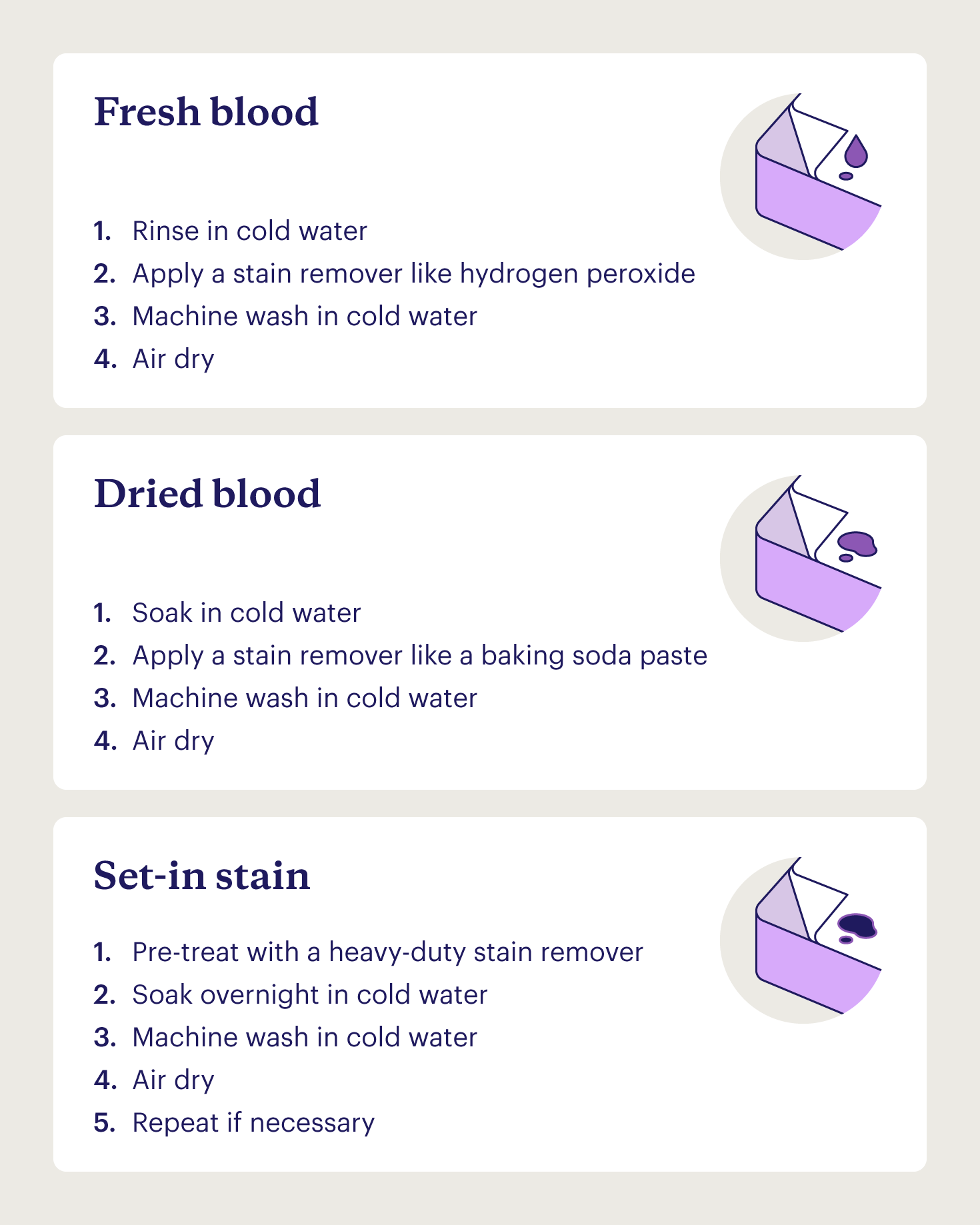
Blood is protein-based, meaning heat will cook the proteins and set the stain forever. You must always use cold water for these accidents.
Fresh Blood: Cold Water Flush
- Rinse the area under cold running water from the back of the fabric.
- Apply a stain remover spray directly to the spot.
- Add a drop of dish soap and gently rub the fibers.
- Soak the sheet in cold water for 30 minutes.
- Wash in cold water with your regular detergent.
Set-In Blood: Oxygen or Peroxide Boost
- Mix 1 part hydrogen peroxide with 2 parts cold water for white fabrics only.
- Dab the solution on the stain with a cotton ball and wait 10 minutes.
- Rinse the area thoroughly with cold water.
- For colored sheets, soak in an oxygen-based cleaner and cold water for over six hours.
- Wash as usual but do not dry until the stain is completely gone.
Pro Tip: Repeat the peroxide treatment or extend the oxygen soak to overnight for old blood stains.
Eliminate Sweat and Yellowing
:max_bytes(150000):strip_icc()/How-to-get-yellow-stains-out-of-white-sheets_final_rev-80025d96c3a74cb7ade1726b49c44379.png)
Yellow underarm stains occur when body oils react with detergent over time. Regular deep cleaning prevents this unsightly buildup effectively.
Ammonia Treatment for Sweat
- Mix 200 ml cold water with 1 tablespoon of 10% ammonia.
- Apply the solution directly to the stained areas.
- Wait 10 minutes before washing in the hottest water safe for the fabric.
- Add 2 tablespoons of ammonia to your detergent drawer monthly for odor control.
Vinegar Soak for Yellowing
- Mix equal parts white vinegar and water in a spray bottle.
- Soak the yellowed areas for 30 minutes before washing.
- Wash with an oxygen-based detergent for best results.
- Air dry in sunlight since UV rays naturally bleach and disinfect.
Oxygen Bleach Soak for Whites
- Fill a basin with cold water and add ½ cup oxygen-based cleaner.
- Submerge sheets for 6 to 12 hours to lift deep discoloration.
- Wash normally and repeat if the yellowing persists.
Warning: Never use chlorine bleach on sweat stains as it can turn them yellow permanently.
Clean Grease and Food Stains

Grease leaves dark, oily marks that repel water. Your goal is to absorb the oil first and then dissolve the residue.
Fresh Grease: Absorb and Wash
- Sprinkle baking soda, cornstarch, or flour over the fresh stain.
- Let it sit for 15 to 30 minutes to absorb the oil completely.
- Brush off the powder and apply dish soap directly to the spot.
- Rub gently, rinse with warm water, and wash in the machine.
Set-In Grease: Ammonia or Paste Method
- Option 1: Mix 200 ml water with 1 tablespoon of 10% ammonia, apply to the stain, wait 10 minutes, and wash.
- Option 2: Create a thick paste with baking soda and water, apply to the stain, let it dry completely, then brush off and wash.
Note: Avoid ammonia on microfiber fabrics. Use dish soap and vinegar instead for these materials.
Remove Wine and Coffee Stains
Tannin-based stains like wine and coffee require quick action and mild acid to neutralize discoloration. Speed is your best ally here.
Coffee or Tea: Vinegar and Baking Soda
- Blot excess liquid immediately with a clean cloth.
- Mix 1 tablespoon vinegar with 2 tablespoons baking soda.
- Pour the fizzing mixture on the stain and let it sit for 15 to 30 minutes.
- Rinse with cold water and wash with detergent.
Wine: Salt and Peroxide for Whites
- Blot the wine immediately to remove excess liquid.
- Sprinkle salt or baking soda to absorb remaining moisture.
- Dampen with cold water and apply a 1:2 hydrogen peroxide mix.
- Wait 5 to 10 minutes, rinse, and wash in cold water.
For colored sheets: Skip peroxide entirely. Use an oxygen-based cleaner soak instead to protect dyes.
Erase Ink and Makeup Stains

These stains penetrate deeply and resist water-based cleaners. You need a solvent to break down the pigments effectively.
Ink: Rubbing Alcohol Method
- Place a clean cloth underneath the stain to catch transferred ink.
- Dampen a cotton ball with rubbing alcohol.
- Dab the stain repeatedly without rubbing it wider.
- Blot with a dry cloth as the ink lifts onto the cotton.
- Repeat until no more ink transfers, then rinse and wash.
Makeup: Ammonia and Soap Mix
- Mix 100 ml water, 1 teaspoon ammonia, and a few drops of dish soap.
- Apply to lipstick, foundation, or mascara stains.
- Wait 5 minutes before gently scrubbing with a nylon brush.
- Wash in warm water to remove all residues.
Pro Tip: For mascara stains, use alcohol first to break down the wax, then follow with the ammonia mix.
Kill Mildew and Musty Smells
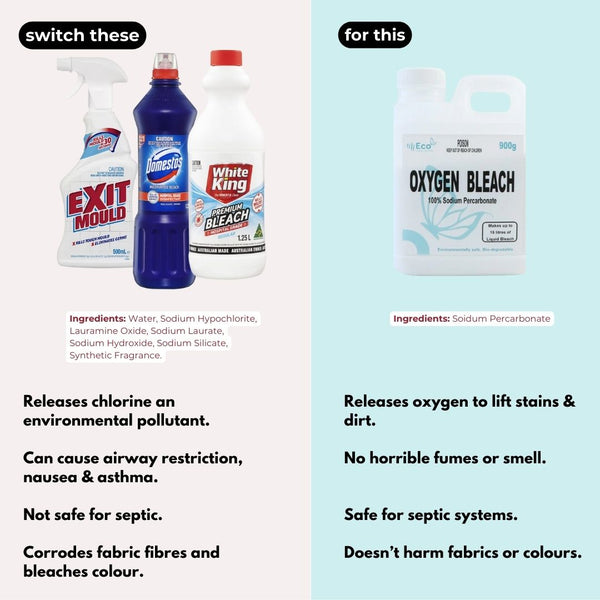
Musty odors indicate mold or mildew growth from damp storage or infrequent washing. You must kill the spores to remove the smell.
Bleach for White Sheets
- Mix 1 part bleach with 3 parts water carefully.
- Apply to affected areas and wait 10 minutes.
- Rinse thoroughly and wash at 60°C (140°F).
Only for colorfast whites: Bleach damages dels and destroys colors instantly.
Ammonia for Odor Neutralization
- Add 2 tablespoons of 10% ammonia to your detergent drawer.
- Ensure your detergent is chlorine-free to avoid toxic reactions.
- Wash at high heat and dry in direct sunlight to kill remaining spores.
Oxygen Cleaner Soak for All Fabrics
- Soak sheets in oxygen-based cleaner and cold water overnight.
- Wash as usual and dry completely before storing.
- Never store damp bedding as it invites mildew growth.
Prevention: Wash sheets every 1 to 2 weeks and use a dehumidifier in humid climates.
Wash Sheets the Right Way

Even perfect stain treatment fails if you wash the sheets incorrectly. Follow these professional steps for best results.
Load Machine Properly
Do not overload the drum. Sheets need space to tumble and create friction against the drum to lift dirt effectively. Wash bedding alone for optimal cleaning.
Use the Correct Detergent
Use mild, bleach-free detergent for microfiber to prevent clogging. Standard detergents work well for cotton and linen. Avoid chlorine bleach on colored sheets entirely.
Boost Cleaning Power
Add 2 tablespoons of ammonia to the detergent drawer monthly for a deep clean. Always use an extra rinse cycle to remove residue that traps odors.
Set the Right Cycle
Select the Cotton or heavy-duty cycle. Set temperature to 60°C (140°F) if the fabric allows to kill dust mites. Use a high spin setting to reduce drying time.
Dry Completely
Air dry in sunlight when possible for natural disinfection. If using a dryer, use low heat to avoid shrinking or setting any residual stains.
Prevent Future Stains
Smart habits and protective layers help you avoid repeat problems effectively.
Use Protective Layers
- Mattress protector: Blocks spills, sweat, and accidents from reaching the mattress.
- Duvet cover: Easier to wash frequently than a heavy comforter.
- Pillow protectors: Prevent oil and makeup transfer on pillows.
Change Daily Habits
Avoid eating in bed to eliminate food and drink spills entirely. Wait before sleeping after applying lotions or makeup to reduce transfer. Shower before bed if you sweat heavily at night.
Tips for Rental Hosts
Provide basic cleaning supplies for guests to handle accidents immediately. Include clear instructions for stain response in your house manual. Inspect after each stay and treat stains before they set.
Troubleshoot Common Problems
Stain Still Visible After Washing?
Heat may have set the stain or soaking was insufficient. Re-treat with the correct agent and soak overnight. Never dry the item until the stain is completely gone.
Sheets Feel Stiff or Gritty?
Detergent buildup is the likely cause. Run a wash cycle with 1 cup of vinegar and no detergent. Use less detergent in future washes to prevent this issue.
Musty Smell Won’t Go Away?
Hidden mildew is the culprit. Soak in oxygen bleach, wash at 60°C, and dry in sunlight to kill spores.
Whites Turning Yellow?
Body oils or chlorine bleach on protein stains causes this. Use an ammonia treatment and switch to oxygen bleach for future washes.
Colors Fading?
Chlorine bleach or harsh solvents damage dyes. Use only color-safe oxygen bleach and always spot test new solutions on hidden areas.
Fabric-Specific Tips

Cotton
Durable and handles hot water, bleach (on whites), and strong cleaners well. Ideal for deep cleaning at 60°C to kill bacteria.
Microfiber
Avoid bleach and fabric softener as they clog fibers. Use mild detergent and low heat drying. Treat stains with dish soap and vinegar.
Linen
Strong but sensitive to harsh chemicals. Use mild detergents and oxygen bleach only if the fabric is white.
Coral Fleece
Use nylon scrubbers only to prevent pilling. Wash in cold water and avoid high heat drying completely.
Grey or Colored Sheets
Never use chlorine bleach or hydrogen peroxide. Stick to oxygen-based cleaners and always spot test new solutions first.
Frequently Asked Questions About Removing Stains from Bed Sheets
Can I use hydrogen peroxide on colored sheets?
No, hydrogen peroxide acts as a bleach and will fade or remove color from dyed fabrics. Use oxygen-based cleaners instead for colored sheets.
What is the best way to remove old blood stains?
Soak the sheet in cold water with an oxygen-based cleaner for six to twelve hours. You may need to repeat this process or use a hydrogen peroxide mix on white fabrics.
Why do my white sheets turn yellow after washing?
This often happens when chlorine bleach reacts with protein stains like sweat or blood. Switch to ammonia treatments or oxygen bleach to prevent yellowing.
How do I get rid of musty smells in stored sheets?
Soak the sheets in oxygen bleach and cold water overnight. Wash at 60°C with ammonia and dry in direct sunlight to kill mold spores.
Is it safe to mix ammonia and bleach for tough stains?
Absolutely not. Mixing ammonia with bleach creates toxic fumes that are dangerous to inhale. Always use them separately and rinse thoroughly between uses.
How often should I wash my bed sheets?
Wash sheets every one to two weeks depending on usage. Perform a deep clean with ammonia once a month to prevent odor and oil buildup.
Key Takeaways for Removing Stains from Bed Sheets
Knowing how to remove stains from bed sheets transforms laundry from a chore into a simple science. The secret lies in speed, using the right agent for the specific stain type, and avoiding common mistakes like using hot water on blood. With the right toolkit and protocols, you can keep your bedding fresh and spotless for years.
Remember to always test solutions on hidden areas first and never dry a sheet until the stain is completely gone. A clean bed is essential for health, hygiene, and peace of mind. Start building your stain removal toolkit today to protect your investment.