
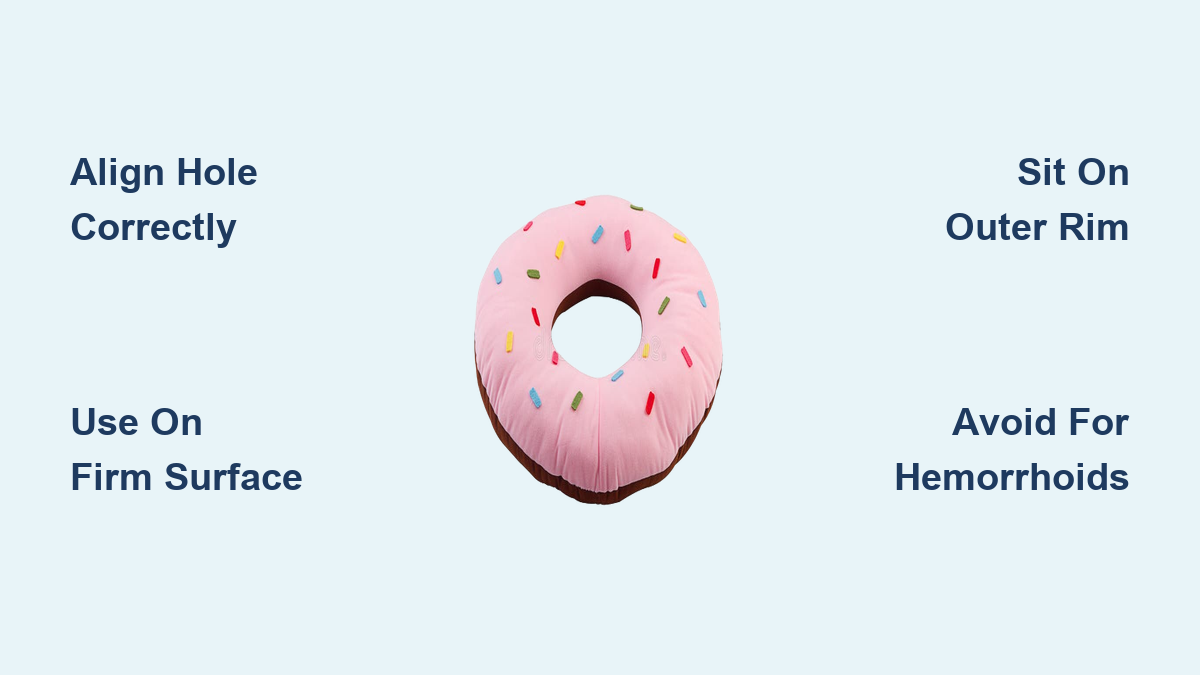
After childbirth, sitting can feel like a painful challenge. Whether you’ve experienced perineal tearing, an episiotomy, hemorrhoids, or a cesarean section, the simple act of lowering yourself into a chair may bring wincing discomfort. This is where a donut pillow, a circular cushion with a central hole, can make a real difference in your early recovery. Designed to relieve pressure from sensitive areas like the tailbone, perineum, and anus, it is a popular postpartum aid for new moms seeking comfort during long nursing sessions, car rides, or desk work. But to get the most benefit and avoid making things worse, you need to know how to sit on a donut pillow postpartum correctly.
Using this cushion improperly can increase pressure on healing tissues or even delay recovery, especially if you are dealing with hemorrhoids. In this guide, we will walk you through the exact steps for using a donut pillow safely and effectively, explain when it helps and when it does not, and offer expert-backed alternatives so you can make informed choices about your comfort and healing.
Choose the Right Donut Pillow for Your Recovery
Before you start using a donut pillow, make sure you have the right one for postpartum recovery. The material and design you choose directly impacts how much relief you actually experience.
Pick Postpartum-Friendly Materials
Not all donut pillows are created equal. The best options for new mothers combine support, hygiene, and comfort. Memory foam offers firm yet cushioned support and retains shape over time. Gel-infused or egg-crate foam adds breathability and cooling to prevent overheating during long sitting sessions. Inflatable models are lightweight and portable, but they are less stable for extended use. Avoid overly soft or flat cushions because they will not provide enough lift to truly relieve pressure from sensitive areas.
Look for Key Features
When selecting a pillow, prioritize these design elements. A removable, machine-washable cover is essential for hygiene during postpartum bleeding. A non-slip bottom prevents sliding on smooth surfaces like car seats or office chairs. The hole should be large enough, ideally around 7 inches by 4 inches, to fully suspend tender areas. Most quality models support up to 400 pounds, so check the specifications to ensure it meets your needs.
Some brands offer women-specific designs with anatomical shaping to accommodate perineal swelling and C-section incisions. These can provide better alignment and comfort than generic ring-shaped pillows.
Position the Pillow Correctly for Maximum Relief

Proper placement is critical to getting relief and avoiding further strain. Even the best pillow will not help if you position it wrong.
Center the Hole Under Your Tailbone or Perineum
The open center must align precisely with the area causing pain. For tailbone pain, also known as coccydynia, place the hole directly under your coccyx. For perineal tears, episiotomy, or hemorrhoids, shift the cushion slightly forward so the hole centers over the anus and perineal area, allowing those tissues to hang freely without contact. Misalignment can place pressure right on healing sutures or swollen veins, worsening discomfort instead of relieving it.
Use on a Firm Surface Only
Place the pillow on a stable, flat seat such as a dining or nursing chair, office desk chair, car seat, or hard bench. Avoid using it on soft couches or recliners unless you place a stiff board or tray underneath. Otherwise, the pillow may sink into the cushion and lose its supportive effect entirely.
Sit Down Safely and Maintain Proper Posture
How you sit matters just as much as the pillow itself. Follow these steps to protect healing tissues while getting the support you need.
Lower Yourself Slowly
If you have had a C-section or significant tearing, sudden movements can trigger pain or strain. Use your hands on armrests or nearby surfaces for control. Gently lower your body to avoid jolting sensitive areas. Let your weight settle onto the outer ring of the pillow, not the center.
Distribute Weight on the Outer Rim
Your sit bones, also known as ischial tuberosities, should rest on the raised outer edge. This suspends the tailbone and perineum in the open center, reduces direct pressure on stitches or inflamed tissue, and supports natural weight-bearing points. Think of it like sitting on a life preserver. The center stays empty while the ring bears the load.
Keep Your Spine Aligned
Good posture enhances the pillow is benefits. Sit upright with shoulders relaxed. Keep your back straight and avoid slouching or leaning forward. Place feet flat on the floor or use a footrest to reduce pelvic strain. Poor posture can negate pressure relief and lead to lower back pain over time.
When to Use Your Donut Pillow Postpartum
Knowing when to use the pillow helps maximize comfort and healing. Certain activities and situations call for this support more than others.
During Breastfeeding Sessions
Long feeds put hours of strain on your pelvis. Place the donut pillow on a sturdy nursing chair and align the hole with your perineum or tailbone. Add a small lumbar roll if needed for back support. Keep baby at breast level to avoid hunching over. This setup reduces pressure while promoting proper feeding posture for both you and your baby.
While Driving
Short car trips become manageable with the right support. Secure the pillow on the driver is seat with non-slip grip facing down. Position so the hole relieves your most painful zone. Limit travel duration in the first two to three weeks postpartum. Ensure you can move freely and brake comfortably before driving.
At Work or Desk
For returning moms working from home or in an office, use the pillow on your desk chair for all seated tasks. Take breaks every 30 to 45 minutes to stand and stretch. Pair with a standing desk option when possible. Avoid sitting longer than an hour at a time, even with cushion support.
Why Donut Pillows May Worsen Hemorrhoids
Here is a crucial caveat. Donut pillows may actually worsen hemorrhoids, despite being marketed for anal comfort. This is an important distinction that many new mothers overlook.
The Medical Expert Warning
Experts, including colorectal specialists at Doctor Butler is, warn that ring-shaped cushions can elevate the rectal area, increasing blood flow to hemorrhoidal veins. They concentrate pressure on the perineum and pelvic floor. The posture mimics prolonged toilet sitting, which is a known hemorrhoid trigger. While you may feel short-term relief from reduced surface contact, long-term use can increase swelling and delay healing.
Better Alternative for Hemorrhoid Relief
Switch to a wedge-shaped coccyx cushion or full-support memory foam pad instead. These alternatives support the entire buttocks evenly. They tilt the pelvis forward to reduce anorectal pressure. They distribute weight across thighs and sit bones. This option is recommended by pelvic floor therapists and proctologists. Many women transition from a donut pillow in week one to a wedge cushion by week two as healing progresses.
Clean and Maintain the Pillow Properly
Hygiene is non-negotiable during postpartum recovery. Your body is still healing, and keeping your support tools clean helps prevent infection.
Wash After Every Use If Soiled
With lochia, which is post-birth bleeding, and sweat, the cover can harbor bacteria. Remove the stretchable mesh cover immediately after use if damp or stained. Machine-wash in cold water on gentle cycle. Air-dry completely before reassembling. Never use a dryer because heat can damage the foam.
Care for the Foam Core
To extend the life of your pillow, avoid direct sunlight or heat sources that degrade foam. Disinfect regularly with mild soap and water. Store flat. Do not fold or stack heavy items on top. A well-maintained pillow can be reused for future pregnancies or shared safely with others.
Understand the Risks and Limitations
Even helpful tools have downsides if misused. Being aware of these limitations helps you use the pillow safely.
Risk of Increased Perineal Pressure
Contrary to intuition, the ring design may concentrate weight around the hole, increasing pressure on soft tissues below the pelvis. This can slow healing of perineal tears, aggravate hemorrhoids, and cause new discomfort in the inner thighs or groin. If pain increases after use, stop and try a full-support cushion instead.
Poor Posture Without Additional Support
Without back or lumbar support, users often slump backward into the hollow, leading to lower back strain, pelvic floor tension, and reduced circulation. Always pair the donut pillow with a chair that supports your spine, or add a small lumbar roll for extra support.
Do Not Rely on It Long-Term
This is a short-term recovery aid, not a permanent seating solution. Use only during acute healing, which typically lasts two to four weeks. Gradually phase out as pain decreases. Rebuild core strength and normal sitting mechanics. Overuse may delay your return to natural posture and movement.
Try These Postpartum Alternatives If Needed
If the donut pillow is not working for you, consider these effective substitutes. Every body is different, and finding the right support is personal.
Wedge-Shaped Coccyx Cushions
These feature a tapered front that lowers pelvic tilt. They have a full base that supports the entire buttocks. They are ideal for hemorrhoids and long-term sitting.
Full Memory Foam Seat Pads
These are contoured to cradle sit bones and tailbone. Some include cooling gel layers. They offer superior pressure distribution across the entire seating area.
Inflatable Pelvic Rings
These are compact and travel-friendly. They offer adjustable firmness. They are less durable but convenient for short-term use, especially when moving between locations.
DIY Options in a Pinch
In a pinch, you can use folded towels under hips to elevate pelvis. Use a regular pillow behind back for lumbar support. Place a rolled blanket under thighs to reduce perineal tension. These are temporary fixes, so opt for medical-grade cushions when possible.
Follow Expert Medical Guidance
Always consult your provider before using any support device postpartum. Your specific healing situation may require different approaches.
Who Recommends Donut Pillows
Orthopedic specialists approve them for tailbone pain and post-surgical recovery. Obstetricians may recommend them for early perineal comfort after vaginal birth. Physical therapists often suggest transitioning to full-support cushions as healing progresses.
Who Advises Against Them
Proctologists and colorectal specialists warn against using them for hemorrhoids. Pelvic floor therapists prefer cushions that support the entire pelvic floor, not isolate it. Use the donut pillow only if it helps without worsening symptoms. If pain, swelling, or bleeding increases, discontinue use and consult your care team.
Maximize Healing With Complementary Care
The pillow is just one part of postpartum recovery. Combining it with other comfort measures speeds healing.
Combine With These Comfort Measures
Sitz baths soothe perineal tissue when soaked in warm water two to three times daily. Apply cold packs for 10 to 15 minutes to reduce swelling after sitting. Use perineal spray, like Dermoplast, before and after bathroom use. Practice pelvic rest by avoiding heavy lifting, sex, and straining for six weeks or as advised by your provider.
Stay Active Within Limits
Gentle walking improves circulation and speeds healing. Start with short walks around the house. Avoid prolonged sitting or standing. Listen to your body. Pain is a signal to rest, not push through.
Final Tips for Sitting on a Donut Pillow Postpartum
Use this checklist to get the most from your donut pillow. Do use it for tailbone pain or perineal pressure in the first two to three weeks. Choose memory foam with a washable cover. Sit with good posture and feet flat on the floor. Clean the cover after every soiled use. Transition to a wedge cushion if healing stalls.
Do not use it as a solution for hemorrhoids. Do not sit for more than 45 to 60 minutes at a time. Do not place it on soft, unstable furniture without support. Do not ignore increasing pain or swelling. Do not replace medical advice with self-treatment.
Key Takeaways for Using a Donut Pillow Postpartum

A donut pillow can be a lifesaver in early postpartum recovery, especially when used correctly for the right conditions. By aligning the hole under your tailbone or perineum, maintaining good posture, and pairing it with proper hygiene and complementary care, you can sit more comfortably during one of the most physically demanding times in motherhood.
Remember that it is not a cure-all. For hemorrhoids or persistent pain, better alternatives exist. Prioritize your healing over convenience, listen to your body, and always follow your healthcare provider is guidance. With the right tools and approach, you will be back to comfortable sitting and enjoying motherhood sooner than you think.
Frequently Asked Questions About Using a Donut Pillow Postpartum
Can I use a donut pillow immediately after a C-section?
Yes, you can use a donut pillow after a C-section, but it does not go over your incision. The pillow helps you maintain upright posture, which reduces strain on your abdominal muscles as they heal. Sit gently and use armrests for support when lowering yourself.
How long should I use a donut pillow postpartum?
Limit use to the acute healing phase, typically two to four weeks. Prolonged use may delay your return to natural sitting mechanics and core strength. Transition to a regular chair or a full-support cushion as pain decreases.
Does a donut pillow help with postpartum hemorrhoids?
Medical experts warn that donut pillows may actually worsen hemorrhoids by increasing blood flow to the area. If you have hemorrhoids, consider a wedge-shaped cushion or full-support memory foam pad instead.
Can I use my donut pillow while breastfeeding?
Yes, place it on a sturdy nursing chair during breastfeeding sessions. Align the hole with your perineum or tailbone to reduce pressure during long feeds. Add a lumbar roll for additional back support if needed.
How do I clean my donut pillow during postpartum recovery?
Remove the cover immediately if it becomes soiled. Wash in cold water on a gentle cycle and air-dry completely. Clean the foam core regularly with mild soap and water, and store flat to maintain its shape.