
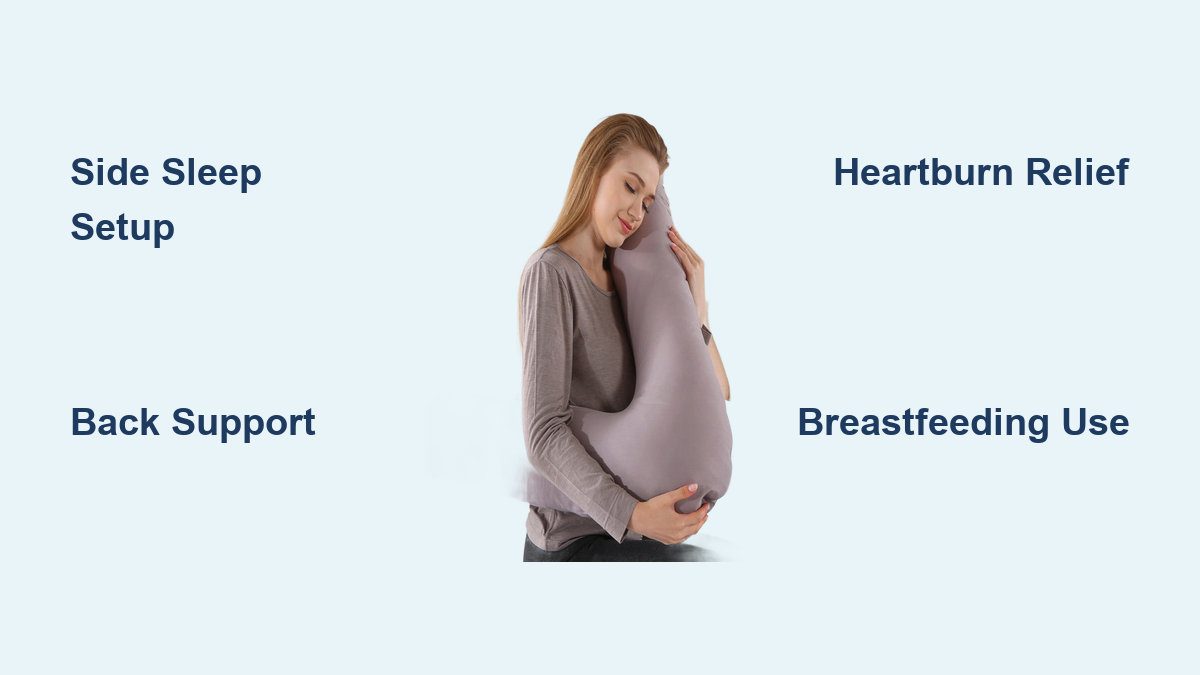
Struggling to find a comfortable position as your bump grows? You are not alone. By the second and third trimesters, many pregnant people face sleepless nights due to back pain, hip pressure, heartburn, and the growing challenge of staying on their side. That is where the V-shaped pregnancy pillow comes in, a compact and versatile solution designed to support your changing body and help you sleep better.
In this guide, you will learn exactly how to sleep with a V-shaped pregnancy pillow for maximum comfort and alignment. From side-sleeping setups to heartburn relief and postpartum use, we will walk you through proven positions, real user tips, and medical recommendations.
Side-Sleeping Setup for Belly and Leg Support
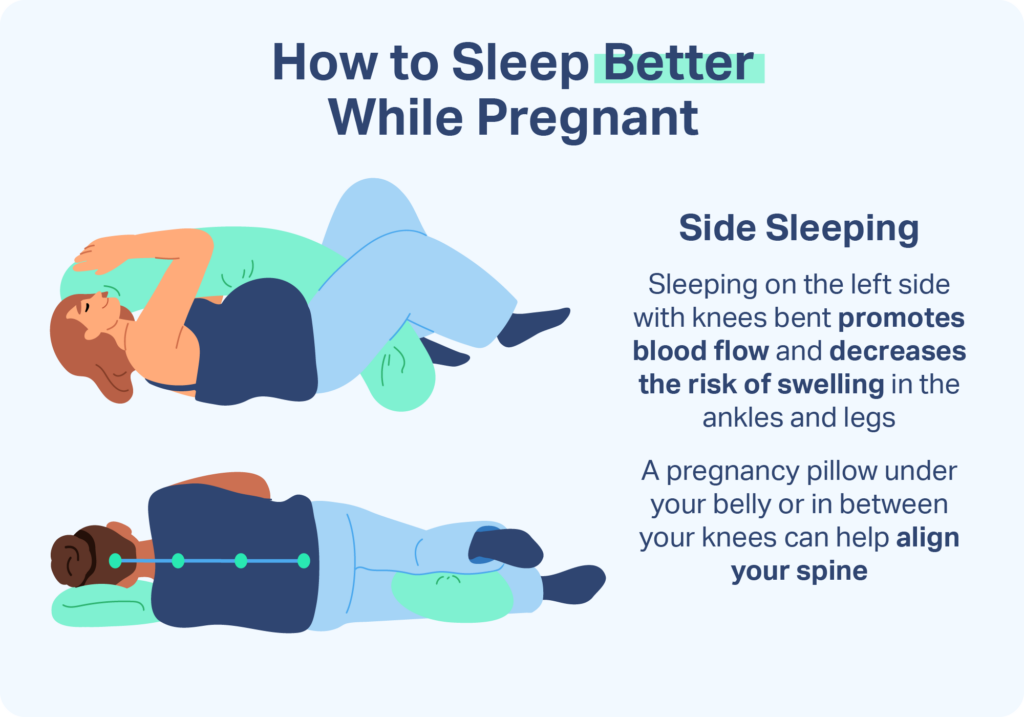
After 28 weeks, doctors recommend sleeping on your side, especially the left side, to boost blood flow to your baby and reduce stillbirth risk. But staying in that position comfortably is the real challenge.
Position One Arm Between Legs, One Under Belly
This is the most effective way to use your V-shaped pillow during pregnancy:
- Lie on your side with your left side preferred.
- Slide one arm of the V between your knees and thighs to keep hips aligned.
- Position the other arm under your belly to gently cradle the bump.
- Adjust until your spine feels neutral and your lower back is not strained.
This setup prevents your top leg from pulling your pelvis out of alignment, which often causes sciatic pain. It also stops your belly from dragging your torso forward, reducing lower back strain.
Why it works: The amniotic fluid protects your baby, so there is no risk of squishing them. Instead, you are relieving pressure on your spine and muscles.
Pro tip: If the pillow shifts during the night, try placing a regular pillow behind it to stabilize the base.
Back Support Positioning
Even side-sleepers need extra back support, especially as the pregnancy progresses and your center of gravity shifts.
Place the Pillow Behind Your Back for Stability
- Lie on your side.
- Place the V behind your back with the point facing down.
- Let the arms of the pillow follow the curve of your spine from hips to shoulders.
This creates a supportive wall that helps maintain posture and prevents rolling onto your back during sleep, which is a dangerous position in late pregnancy due to reduced blood flow.
Bonus use: This position is great for reading or watching TV in bed. The pillow props you up slightly, reducing strain on your lower back.
User insight: Sleeping practically sitting up really helped with back pain and breathing.
Heartburn Relief with Upright Positioning

Heartburn becomes common in the third trimester as the growing uterus pushes against the stomach. Lying flat makes it worse.
Use the V to Create a Gentle Incline
- Sit or lie back into the V-shape.
- One arm supports your upper back, the other under your head or neck.
- Lean into the pillow to elevate your torso slightly.
This reclined position helps keep stomach acid down without needing a wedge pillow or adjustable bed.
Expert tip: Combine with a small wedge under your regular pillow for added elevation if reflux is severe.
When to use it: At night when lying down or during daytime naps when digestion is slow.
Upper Body and Shoulder Comfort
Side sleeping often leads to shoulder tension, especially if you tend to curl inward.
Hug One Arm, Support the Other
- Wrap one arm of the V around your chest like a body pillow.
- Let the opposite arm rest behind your back or under your top arm.
- Keep your shoulders relaxed and spine aligned.
This hugging position reduces strain on your neck and upper back and can help prevent numbness in your arms from poor circulation.
User experience: I would nap with one arm flung over it, like it was hugging me back.
Ideal for: Those with shoulder pain or who sleep in a tight fetal position.
Building a Pillow Nest for Maximum Support
As pregnancy advances, one pillow may not be enough, especially if you are dealing with pelvic pain or frequent movement at night.
Combine V-Pillow with Regular Pillows
Create a full-body support system using these additions:
- Head pillow for neck alignment
- Standard pillow behind the V to prevent rolling
- Pillow under top arm to prevent shoulder compression
- Pillow under feet if you have leg cramps or swelling
This nest keeps you stable, reduces tossing and turning, and supports every pressure point.
Real talk: By the end, I had six pillows, a full-body one, and my V. My husband said there was no room left.
Best for: Third trimester, SPD, or severe back pain.
Breastfeeding and Postpartum Uses
Your V-shaped pillow is not just for pregnancy. It is a long-term support tool.
Support Arms and Baby During Feeding
- Place the V across your lap.
- Rest your arms and baby in the curve.
- Keep wrists elevated and shoulders relaxed.
This reduces fatigue during cluster feeding and helps maintain good posture, especially in non-nursing chairs.
User feedback: It kept my arms from going numb during long feeding sessions.
Also useful for: Bottle feeding, skin-to-skin contact, or propping baby during tummy time.
Aid Postpartum Healing and Back Pain
Recovery after birth, especially cesarean or tearing, requires careful positioning.
- Use the V to support your back while sitting up in bed.
- Place under your legs to reduce swelling.
- Cradle your belly gently if abdominal muscles are weak.
It helps you move safely, sit up with less strain, and find comfort when lying down.
Bonus: Non-pregnant partners or family members often borrow it for back pain or post-surgery recovery.
Choosing the Right Pillow
Not all V-shaped pillows are created equal. Getting the right one makes a big difference.
Pick Based on Size, Firmness, and Material
Consider these factors when shopping:
- Size: Arms should reach from knees to under belly when lying down
- Firmness: Medium-firm is ideal. Too soft collapses, too firm feels rigid.
- Material: Memory foam contours well but may retain heat. Polyester is lighter and cooler.
- Cover: Removable, machine-washable covers are essential for hygiene.
Pro tip: Look for orthopedic or maternity support labels when shopping.
Top brands: Dunelm, John Lewis, Argos, Amazon, Mothercare.
Common Mistakes to Avoid
Even the best pillow will not help if used wrong.
Do Not Ignore Position Changes
Your body changes weekly. What worked at 24 weeks may not work at 36.
- Reassess your setup every few weeks.
- Do not force a position that feels awkward.
- Experiment by trying to rotate the V or use only one arm at a time.
Myth: You have to use both arms of the V.
Truth: Use only what you need. Flexibility is key.
Warning: Never sleep on your back in late pregnancy. Use the V as a barrier to prevent rolling.
Comparing V-Shaped to Other Pregnancy Pillows

Not sure if the V-shape is right for you? Here is how it stacks up.
| Type | Space Used | Support Areas | Best For |
|---|---|---|---|
| V-Shaped | Low-Medium | Belly, legs, back, neck | Side sleepers, small beds |
| U-Shaped | High | Full body | Tossers, full support |
| C-Shaped | Medium-High | Belly, back, legs | Huggers, multi-use |
| Wedge | Low | Belly, heartburn | Targeted relief |
| Body Pillow | High | Full spine | Long-term use |
Winner for balance: The V-shaped pillow offers high versatility with low space use, perfect for couples or small beds.
Keeping Your Pillow Clean and Durable
Your pillow will be with you for months, maybe years. Treat it well.
Wash Cover, Spot-Clean Core
- Remove and wash the cover weekly or as needed.
- Air out the inner foam regularly.
- Avoid folding or compressing for storage, as this damages foam.
Long-term use: Many keep it for breastfeeding, back pain, or as a toddler bed bumper.
User note: Now it is a corner bumper in my LO’s bed.
Final Tips for Better Sleep
You do not need perfection. Just consistent comfort.
Adjust Weekly and Listen to Your Body
- Try new positions as your bump grows.
- Use the V even when sitting on the sofa.
- Combine with a heating pad or sleep spray for added relaxation.
Medical reminder: After 28 weeks, sleep on your side. The V-pillow helps you stay there safely.
Pro move: Set up your pillow before getting into bed. This makes it easier to slide into position.
Frequently Asked Questions About V-Shaped Pregnancy Pillows
How do I use a V-shaped pregnancy pillow for side sleeping?
Place one arm of the V between your knees and thighs to align your hips, and position the other arm under your belly to cradle the bump. This keeps your spine neutral and reduces lower back strain.
Can I use a V-shaped pillow for heartburn relief?
Yes. Position the V behind your upper back and neck to create a gentle incline. This elevates your torso and helps keep stomach acid down.
Is it safe to sleep on my back with a V-shaped pillow?
No. After 28 weeks, avoid sleeping on your back. Use the V-shaped pillow behind your back as a barrier to prevent rolling onto your back during sleep.
Can I use my V-shaped pillow for breastfeeding?
Absolutely. Place the V across your lap and rest your arms and baby in the curve. This reduces strain on your wrists, shoulders, and back during long feeding sessions.
How do I clean my V-shaped pregnancy pillow?
Remove the cover and wash it weekly in the machine. Spot-clean the inner foam and air it out regularly. Avoid folding or compressing the foam to maintain its shape.
What is the best firmness for a V-shaped pregnancy pillow?
Medium-firm is ideal. Too soft and the pillow collapses under your weight. Too firm and it feels rigid and uncomfortable.
Key Takeaways for Sleeping with a V-Shaped Pregnancy Pillow
The V-shaped pregnancy pillow is a functional, adaptable, and space-conscious solution to one of pregnancy is most universal challenges: sleep disruption. Its value lies in its simplicity, no straps, no gadgets, just effective anatomical support where it is needed most.
The most important positions to remember are placing one arm between your legs and one under your belly for hip and spine alignment, using the pillow behind your back to prevent rolling onto your back, and positioning it behind your upper body for heartburn relief. Beyond pregnancy, this pillow supports breastfeeding, postpartum recovery, and general back pain.
Experiment with different configurations weekly as your body changes. The ideal setup today may not work in two weeks. Flexibility is key. It does not promise miracles, but it delivers consistent relief from pain, improves sleep posture, and enhances overall comfort during a physically demanding time.