
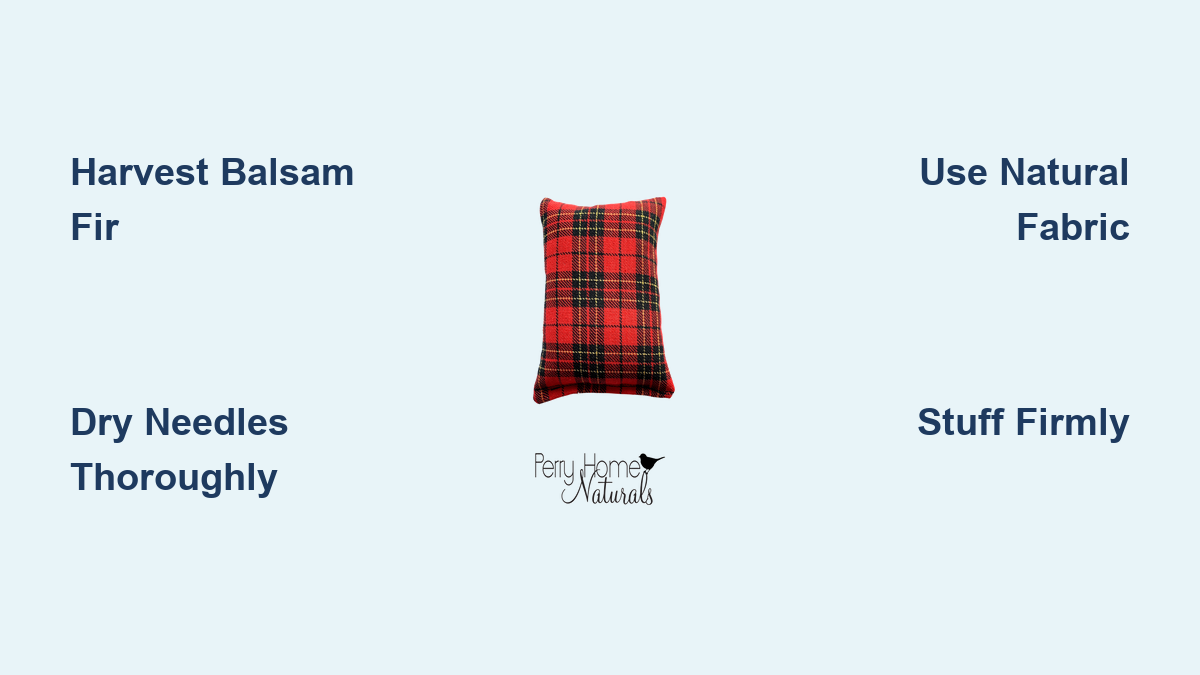
You’ve caught that whiff of fresh pine at a tree lot or unwrapped a holiday wreath, and suddenly you’re craving that crisp, forest aroma year-round. Learning how to make a balsam pillow lets you capture that enchanting scent for your drawers, closets, or as heartfelt gifts. These aromatic sachets have roots in 19th-century Shaker communities and remain a beloved craft for good reason—they’re simple to make, eco-friendly, and fill your home with natural fragrance for years.
This guide walks you through every step, from sourcing authentic balsam fir to stitching the final seam. You’ll discover how to harvest the right needles, prepare them for lasting scent, and construct a pillow that stays fragrant through seasonal changes.
Harvest Authentic Balsam Fir for Your Pillow

Quality begins with your source. Not every evergreen delivers that sweet, resinous aroma—using the wrong tree leads to poor fragrance or even skin irritation.
Identify True Balsam Fir
Genuine Abies balsamea displays specific features that set it apart from similar evergreens. Look for flat, soft needles around ¾ inch long with dark green tops and silvery-white undersides showing waxy bands. Crush a needle between your fingers—you want that signature sweet, piney scent. The needles grow in a flat plane along the branch, not encircling it.
Skip spruce, which has sharp four-sided needles, and hemlock, which carries little fragrance. Misidentification means your pillow won’t smell right or could irritate sensitive skin.
Source Responsibly
Wild harvesting gives you the purest material. Collect from healthy trees in pesticide-free areas, taking only a few branches per tree to avoid stressing it. You can also harvest from your own Christmas tree after the holidays, provided it wasn’t treated with fire retardants. Commercial tree farm needles often carry chemicals unsafe for inhalation, so verify the source before using them.
Gather small branchlets with clean, sharp pruning shears. Handle gently to preserve needle integrity.
Prepare Balsam Needles for Maximum Scent
Raw needles need processing to unlock their fragrance potential and prevent mold inside your finished pillow.
Chop and Shred the Needles
Cut branchlets into ½-inch segments over a tray to catch falling pieces. Use heavy scissors to scrape needles away from larger stems—this ruptures more resin cells and amplifies aroma. Finely chop the needles afterward; the more shredded the material, the softer and more potent your pillow becomes. Whole needles feel prickly and release far less scent.
Dry Thoroughly Before Stuffing
Skipping this step invites mold. Spread chopped material in a thin layer in a cool, dry, ventilated room and turn daily for 1 to 2 days. A dehydrator works better—set it to 100 to 110°F and dry for 12 to 18 hours until needles feel crisp. This method locks in essential oils faster and reduces moisture-related risks.
Store dried balsam in airtight containers until you’re ready to use it.
Select the Right Fabric for Your Pillow
Your casing must hold fine needle fragments while allowing scent to diffuse through the fabric.
Choose Natural, Tightly Woven Cloth
Stick with 100% cotton, linen, muslin, or calico. These natural fibers breathe well, resist moisture buildup, and stand up to hand-stitching. Avoid thin cotton, synthetics, or loosely knit fabrics—needles will poke through, and synthetic materials trap odor rather than releasing it.
Cut to Size
Standard sizes work well for most projects. A small sachet measures 4 by 4 inches and holds about ½ pound of balsam. A standard pillow finishes at 5 by 5 inches using 5.5 by 5.5-inch pieces with seam allowance. Large decorative pillows run 7 by 9 inches and hold approximately 1 pound of filling.
Cut two identical pieces per pillow, using a quilting template for precision.
Sew the Pillow Casing
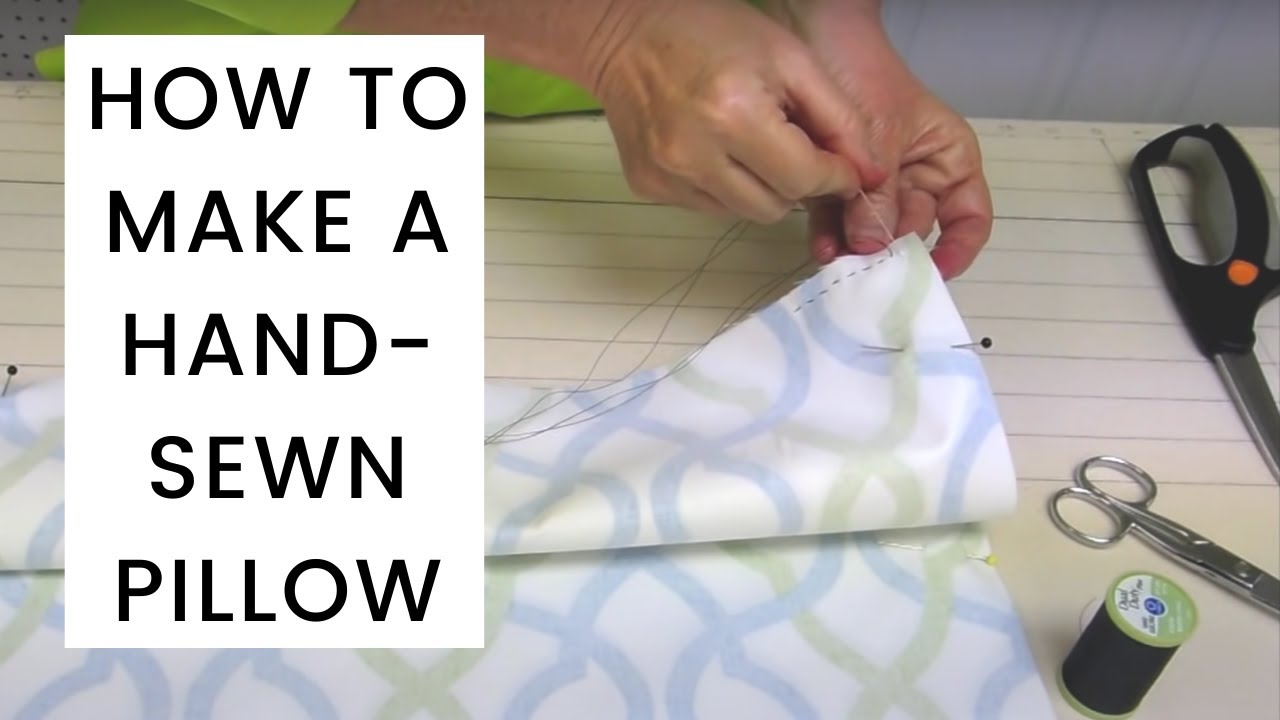
A secure casing keeps balsam contained and scent locked in for years of use.
Pin and Stitch Right Sides Together
Place your two fabric pieces with right sides facing. Pin along the edges to prevent shifting during sewing. Sew three complete sides and about half of the fourth side, using a ½-inch seam allowance. Backstitch at both start and end points to reinforce the seams.
If sewing by hand only, leave the top fully open and stuff before closing.
Turn and Shape
Flip the casing right side out. Use a chopstick or pencil to gently push out the corners. Check that no fabric is trapped in the seams.
Stuff Your Pillow with Dried Balsam
Proper filling determines both longevity and fragrance strength.
Use a Funnel for Precision
Make a cardboard funnel or grab a small kitchen funnel. Insert it into the open end to guide balsam inside without making a mess.
Fill Firmly
Compress balsam into corners and edges using a chopstick. Overfill slightly—needles settle over time, and you want the pillow to stay plump. Leave ½ to 1 inch of unfilled space at the top for easy closure. The pillow should feel firm but not bursting.
Close and Embellish Your Creation
Seal everything securely and add personal touches.
Hand-Sew with an Invisible Stitch
Use a slip stitch, ladder stitch, or whip stitch to close the opening. Pull tight and knot securely, burying thread ends inside the seam. For extra strength, machine-sew the opening shut after hand-finishing.
Add Decorative and Functional Elements
Sew a ribbon loop onto the top seam for hanging on doorknobs or tree branches. Turn the pillow into a reusable sachet with a ribbon tie closure. Add buttons, beads, embroidery, or fabric paint for charm. Attach a label noting “Contains balsam fir—avoid if allergic to evergreens.”
Extend the Scent for Years
A well-made balsam pillow fragrances your space for 3 to 5 years with proper care.
Scent Lasts Longest in Humid Areas
Bathrooms and closets reactivate essential oils with ambient moisture. Squish the pillow occasionally to release trapped aroma.
Refresh When Scent Fades
Mist lightly with 2 to 3 sprays from a plant mister. Gently crush the pillow to break remaining cell walls and release oils. Add 1 to 2 drops of balsam essential oil to boost fragrance, testing first to avoid staining fabric.
Avoid over-wetting—excess moisture invites mold.
Care for Your Balsam Pillow
Proper maintenance keeps your pillow safe, clean, and aromatic.
Clean Safely
Never machine wash balsam pillows. To clean, unpick a seam, remove the filling, wash the fabric separately, dry completely, refill with fresh or original balsam, and resew the opening. Spot clean minor stains without submerging the filling.
Prevent Mold and Damage
Keep the pillow dry at all times. If it gets wet, disassemble immediately and dry all components. Avoid direct sunlight, which degrades essential oils. Store in dark, cool places like linen closets or drawers. Discard the pillow if mold appears—do not attempt to salvage it.
Use Your Balsam Pillow in Your Home
These pillows work beautifully throughout your living spaces.
Ideal Placements
Tuck them into linen drawers to freshen towels and sheets. Place in wardrobes to naturally repel moths. Hang in bathrooms where humidity enhances the scent. Create small versions for car vents. Set decorative pillows on mantels or shelves. Include them in gift baskets paired with soaps or candles.
Children love choosing their own from a basket of handmade options.
Gift Balsam Pillows as Handmade Keepsakes
These pillows make exceptional DIY gifts that cost little but mean so much.
Perfect Gifting Occasions
Balsam pillows work wonderfully as teacher gifts, hostess presents, stocking stuffers, craft fair items, or family heirlooms. Batch-prep dozens at once using the same-day method—crafters like Anna Chesley keep a basket by their door for guests to pick their favorite.
Cost-Effective and Sustainable
A 10-pound bag of balsam runs about $10.50 and makes over 20 pillows. Fabric scraps often come free. Your cost per pillow stays under $1, while retail versions sell for $10 or more. You save roughly 90% while crafting something far more personal.
Avoid Allergies and Safety Issues
Safety matters with materials you’ll keep close.
Label for Allergies
Some people react to tree pollen or resins with sneezing, congestion, or skin irritation. Always attach a tag reading “Contains balsam fir—may not be suitable for those with tree allergies.”
Use Only Pesticide-Free Balsam
Never use needles from commercial tree farms unless you confirm they’re chemical-free. Residual sprays cause respiratory issues or skin reactions. When in doubt, harvest your own or buy from trusted organic sources.
Frequently Asked Questions About Making Balsam Pillows
How long does a balsam pillow stay fragrant?
A properly made balsam pillow stays fragrant for 3 to 5 years in optimal conditions. Humid environments like bathrooms actually extend the scent life, as moisture reactivates the essential oils. Refresh faded pillows by misting lightly with water or adding a drop or two of balsam essential oil.
Can I use fresh needles instead of dried ones?
While some crafters use fresh needles, drying before stuffing is strongly recommended. Fresh needles contain moisture that can lead to mold and mustiness inside the enclosed pillow. Pre-drying locks in essential oils and ensures your pillow remains safe and fragrant for years.
What size fabric do I need for a standard balsam pillow?
Cut two pieces of fabric at 5.5 by 5.5 inches each to create a finished 5 by 5-inch pillow. For smaller sachets, cut 4.5 by 4.5-inch pieces. Large decorative pillows require 7.5 by 9.5-inch pieces to finish at 7 by 9 inches.
How do I refresh a balsam pillow that has lost its scent?
Mist the pillow with 2 to 3 sprays of plain water from a plant mister. Gently squeeze or crush the pillow to break remaining cell walls and release trapped oils. Alternatively, add 1 to 2 drops of pure balsam essential oil directly onto the needles, testing on a small area first to prevent staining.
Are balsam pillows safe for people with allergies?
Balsam fir can trigger reactions in individuals sensitive to tree pollen or resins. Symptoms may include sneezing, nasal congestion, or skin irritation. Always label your pillows with a warning, and avoid using them near someone with known evergreen allergies.
Key Takeaways for Making Your Own Balsam Pillow
Creating a balsam pillow combines simple materials with meaningful tradition. Start by harvesting true balsam fir—look for flat needles with silvery undersides and that sweet resinous scent. Always dry and shred the needles before stuffing; this step prevents mold and maximizes fragrance release. Use tightly woven natural fabrics like cotton or linen, and stuff firmly while leaving room for secure closure.
Your finished pillow will scent drawers and closets for years with proper care. Refresh the aroma occasionally with light misting or essential oil, and store in cool, dry places away from direct sunlight. Whether you craft one for yourself or dozens for gifts, you’re preserving a piece of natural history that brings the crisp forest into everyday spaces.