
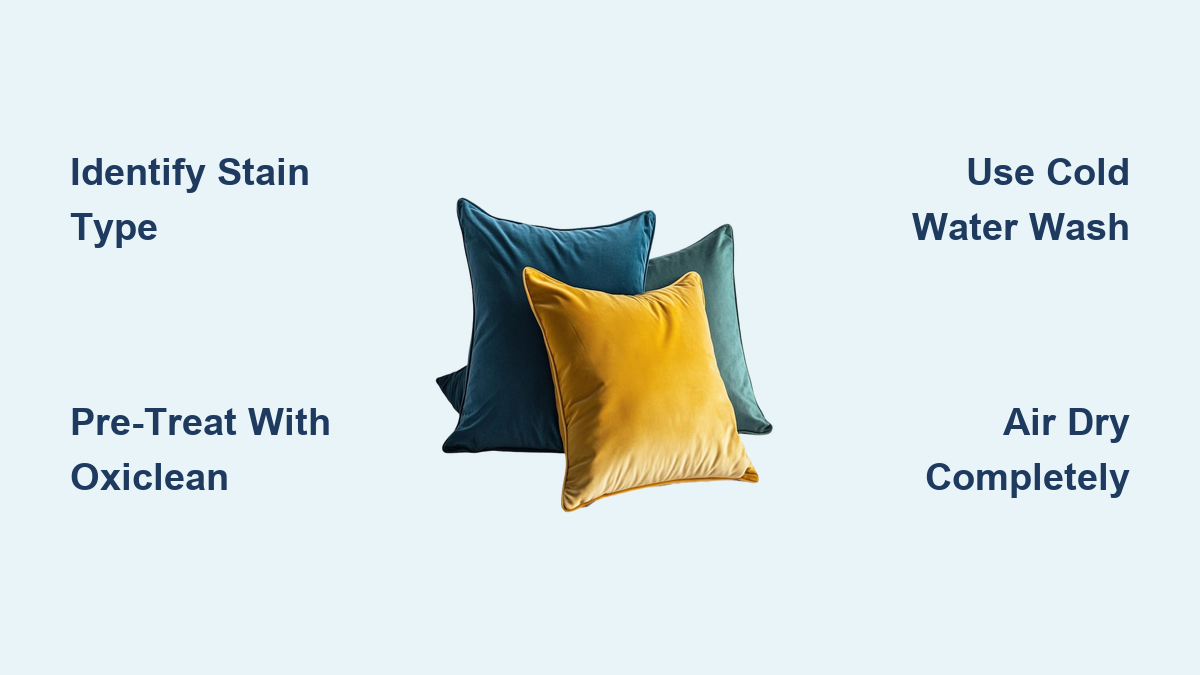
You wake up refreshed, roll over, and notice another yellowish spot staring back at you from your pillow cover. If this scene feels familiar, you are not alone. How to remove stains from pillow covers is one of the most frequent cleaning questions households face, because pillow covers endure constant exposure to sweat, facial oils, skincare products, and makeup every single night. These substances seep into fabric fibers, oxidize over time, and create stubborn discoloration that worsens the longer you ignore it.
The good news? Most stains are completely treatable, especially when you act quickly and use the right method for your fabric type. This guide covers exactly how to identify stain types, choose effective pre-treatment solutions, wash correctly by material, and prevent future discoloration with simple habit changes.
Why Pillow Covers Develop Stains
Pillow covers stain because they absorb what your skin and hair leave behind during hours of sleep. Understanding the culprits helps you choose the right cleaning approach.
Primary Stain Causes
• Sweat and body oils: Perspiration contains water, salts, and sebum that transfer onto fabric. These oxidize over time, creating yellow or grey-brown discoloration especially on white or light-colored covers.
• Hair and scalp products: Hair oils, conditioners, gels, and styling serums leave residues that penetrate fabric fibers deeply.
• Facial skincare products: Night creams, moisturizers, retinoids, and face masks rub off onto pillowcases and create buildup.
• Makeup residue: Foundation, lipstick, and blush can set into fabric fibers, appearing as colored smudges typically on one side of the pillow.
• Saliva and drooling: Common among side sleepers, saliva introduces proteins and moisture that cause localized discoloration.
• Fake tan transfer: Self-tanning products contain pigments that leave orange or brown stains on fabric.
Pro Tip: Natural fibers like cotton and linen absorb stains more readily than polyester blends, showing discoloration faster but also responding better to aggressive treatments.
Identifying Your Stain Type for Effective Treatment

Different stains require different approaches. Using the wrong treatment can permanently set the discoloration.
Stain Categories and Best Responses
• Yellow or brown discoloration: Caused by sweat, body oils, and oxidized sebum. Most common on white cotton and linen. Respond well to OxiClean soaks, hydrogen peroxide treatments, and sunlight exposure.
• Greasy or oily spots: From hair products, facial oils, or moisturizers. Feel slick to the touch and resist plain water. Require grease-cutting agents like dish soap or enzyme-based detergents.
• Makeup smudges: Colored stains from foundation, lipstick, or blush. Benefit from dish soap pre-treatment and cold water washing.
• Orange or brown from fake tan: Difficult to remove once set. Require enzyme detergents or oil-based stain removers.
• Dull or grey buildup: Accumulated product residue without visible spots. Common for heavy skincare users. Respond to vinegar baking soda soaks.
Visual Test: Hold the cover up to light. If the stain looks darker when backlit, it is oil-based. If it appears flat and yellowed, it is likely sweat or protein residue.
Quick Action Steps for Fresh Stains
Acting fast dramatically increases your chances of complete stain removal. Once oils and proteins bond with fibers, they become much harder to lift.
Blotting Technique
• Use a clean microfiber cloth or paper towel to gently blot the affected area. Press firmly but avoid rubbing, which pushes the stain deeper and spreads it across more fibers.
Baking Soda Absorption
• Sprinkle baking soda directly on fresh oil or sweat stains. Let it sit for 15 to 30 minutes to absorb moisture and grease. Brush off thoroughly before washing.
Note: Baking soda works best on cotton and linen. Avoid using it on silk or satin, as the fine particles can be abrasive on delicate protein fibers.
Best Pre-Treatment Solutions for Stubborn Stains
Pre-treatment breaks down stains before washing and can improve removal success by up to 70 percent.
OxiClean Deep Soak
• Dissolve OxiClean powder in warm water following package ratios. Soak pillow covers for 4 to 6 hours, or overnight for old, set-in stains.
• For spot treatment, apply OxiClean MaxForce spray directly and wait 10 minutes before washing.
• Safe for cotton, polyester blends, and colorfast fabrics. Never use on silk, wool, or delicate protein fibers.
Why it works: Oxygen bleach releases active oxygen that breaks down organic matter without weakening most fabric fibers.
White Vinegar and Baking Soda Soak
• Mix one-half cup white vinegar plus one-half cup baking soda in 4 liters of warm water. Submerge covers and soak for 1 hour, or overnight for heavily yellowed fabric.
• Rinse thoroughly before machine washing. This combination deodorizes and lifts mild oil residue.
• Best for cotton, linen, and synthetic blends.
Hydrogen Peroxide and Dish Soap Combo
• Mix equal parts 3 percent hydrogen peroxide and grease-cutting dish soap such as Dawn. Apply to stained areas, agitate gently, and wait 5 to 10 minutes.
• Rinse immediately and wash as usual. Highly effective for set-in sweat and oil stains.
Critical Warning: Never mix hydrogen peroxide with chlorine bleach. Also avoid combining vinegar and hydrogen peroxide together, as this creates peracetic acid, a respiratory irritant.
Enzyme Detergent Soak
• Use a detergent containing protease or lipase enzymes, such as Tide Ultra OXI or Persil Bio. Soak for 30 minutes to 4 hours in cool or warm water.
• Enzymes break down proteins from sweat, saliva, and skin cells, plus fats from oils and creams. Perfect for acne-prone users or heavy product users.
Lemon Juice and Sunlight Method
• Apply fresh lemon juice to yellow stains. Sprinkle coarse salt for light scrubbing action, then rinse.
• Dry in direct sunlight for 3 to 6 hours. UV rays act as a natural bleach and disinfectant.
• Best for white cotton and linen only. Never use on colored or delicate fabrics.
Essential Step: Always spot-test any pre-treatment solution on an inner seam first, especially for colored or printed fabrics.
Washing Pillow Covers by Fabric Type

Using the correct water temperature, detergent, and cycle prevents damage and ensures stains lift completely.
Water Temperature Guidelines
| Fabric Type | Recommended Temperature | Reasoning |
|---|---|---|
| Cotton, Linen | Warm (30-40°C / 86-104°F) | Dissolves oils, kills bacteria |
| Polyester Blends | Warm or Cold | Prevents pilling and color fade |
| Silk, Satin, Bamboo | Cold (≤30°C / 86°F) | Prevents fiber damage and shrinkage |
| Protein Stains (Sweat, Saliva) | Cold | Hot water permanently sets protein-based stains |
Warning: Never wash sweat stains in hot water. Heat permanently sets the discoloration, making it nearly impossible to remove.
Detergent and Booster Recommendations
• Use a mild, high-efficiency detergent appropriate for your fabric type.
• Add one-half cup baking soda to boost cleaning power and deodorize.
• Add one-half cup Borax to break down organic stains and soften hard water.
• Use oxygen-based bleach for safe whitening on cotton and colorfast fabrics. Never use chlorine bleach, which reacts with sweat proteins and causes worse yellowing.
Cycle Selection
• Normal or heavy-duty cycle for cotton and durable blends with heavy soiling.
• Gentle or hand-wash cycle for silk, satin, and bamboo. Always use a mesh laundry bag.
• Select extra rinse to ensure all detergent and loosened residue is removed.
Hand Washing Delicate Fabrics
For silk, satin, or bamboo pillow covers:
- Fill a basin with cool water.
- Add 1 teaspoon mild detergent such as Woolite plus one-quarter cup diluted white vinegar (1:4 ratio with water).
- Submerge and agitate gently for 10 minutes.
- Rinse thoroughly until water runs clear.
- Press out excess water. Never wring or twist.
Proper Drying Techniques to Prevent Set-In Stains
Drying is the critical final step. Any remaining stain that is exposed to heat will set permanently.
Air Drying Methods
• Air drying is best for all fabrics, especially delicates.
• Outdoor drying in sunlight exposes pillow covers to UV rays that disinfect and naturally fade yellowing. Dry for 3 to 6 hours, flipping halfway through. Bring in before evening dew to avoid moisture reabsorption.
• Indoor drying requires a rack in a well-ventilated area. Ensure complete dryness to prevent mildew and musty odors.
Machine Drying Safely
• Use low-heat or air-dry (no heat) settings only.
• Add dryer balls or clean tennis balls to prevent clumping and maintain shape.
• Never use high heat, especially on items with remaining stains.
Critical Rule: Never store or use a damp pillow cover. Moisture breeds bacteria and causes new stains to form.
Preventing Future Stains on Pillow Covers
The best cleaning strategy stops stains before they start.
Sleep Routine Adjustments
• Shower before bed to remove excess oils, sweat, and product residue from skin and hair.
• Apply skincare products 1 to 2 hours before sleep to allow creams to absorb fully.
• Dry hair completely before going to bed. Wet hair transfers moisture and styling product residue.
• Use lightweight, fast-absorbing skincare formulas. Avoid heavy oils at night.
Sleep Environment Improvements
• Keep bedroom cool to reduce night sweating.
• Use breathable bedding such as bamboo, linen, or TENCEL that wicks moisture away.
• Wear cotton or bamboo pajamas to reduce oil transfer from body to pillow.
Protective Barriers
• Use pillow protectors as a waterproof or absorbent layer between pillow and cover. They block sweat, oils, saliva, and fluids from reaching the pillow case.
• Wash pillow protectors every 1 to 2 weeks, or weekly for heavy sweaters.
• Rotate multiple pillow covers. Keep 2 to 3 sets per pillow and rotate weekly to allow thorough cleaning and reduce wear.
How Often to Wash Pillow Covers
Consistent washing prevents stains from setting and improves skin health.
Recommended Washing Frequency
• Standard recommendation: wash every 1 to 2 weeks.
• High-risk users with oily skin, acne, heavy product use, or night sweats: wash weekly or twice weekly.
• Wash immediately after face mask use, hair treatments, or illness.
Do Not Forget the Pillows
• Wash pillows every 3 to 6 months. Down and feather pillows are machine washable on gentle cycle. Memory foam requires spot cleaning only. Synthetic fill pillows are machine washable.
• Always use pillow protectors to prevent internal staining and allergen buildup.
What Really Works: Stain Removal Effectiveness Guide
Based on testing and user feedback, certain methods deliver consistently better results.
| Method | Best For | Effectiveness |
|---|---|---|
| OxiClean Soak | Cotton, polyester blends | High – removes years of buildup |
| Baking Soda Paste | Fresh oil stains | Moderate to High |
| Vinegar + Baking Soda Soak | Odors, mild stains | Moderate – deodorizing |
| Hydrogen Peroxide + Dish Soap | Set-in sweat and oil | High – fast-acting |
| Lemon + Sunlight | White cotton, linen | Moderate – natural bleaching |
| Enzyme Detergent | Organic stains (sweat, saliva) | High – breaks down proteins |
| Dawn Dish Soap | Makeup, greasy stains | High – grease-cutting |
User Insight: 93% of people report better sleep on freshly washed bedding. Weekly washing reduces facial breakouts for acne-prone users.
Frequently Asked Questions About Removing Stains from Pillow Covers
Can I use bleach on yellow pillow cover stains?
No. Chlorine bleach reacts with sweat proteins and actually causes worse yellowing. Use oxygen-based bleach (OxiClean) instead, which is safe for cotton and colorfast fabrics but should never be used on silk, wool, or delicate materials.
How do I remove old set-in stains from pillow covers?
Soak the covers in OxiClean solution overnight, then wash with warm water. For stubborn cases, apply hydrogen peroxide and dish soap mixture directly, wait 10 minutes, then launder. Old stains respond best to extended soaking and repeated treatments.
Can I wash silk pillow covers in the washing machine?
Silk requires gentle handling. Use cold water, a mild pH-neutral detergent, and select the gentle or hand-wash cycle. Always place silk items in a mesh laundry bag. Never use baking soda, OxiClean, or hydrogen peroxide on silk, as these degrade protein fibers.
Why do my pillow covers still smell after washing?
Insufficient rinsing leaves detergent residue that causes odor. Select the extra rinse option on your machine. Also ensure pillow covers are completely dry before storage, as dampness leads to musty smells and bacterial growth.
Does washing pillow covers more often damage the fabric?
Washing every 1 to 2 weeks is standard and safe when using appropriate water temperature and mild detergent. However, frequent washing of delicate fabrics like silk will accelerate wear. Using pillow protectors reduces how often you need to wash the outer covers.
How do I get makeup stains out of pillow covers?
Apply grease-cutting dish soap directly to the stain, gently rub, and let sit for 5 to 10 minutes. Wash in cold water with enzyme detergent. Avoid hot water, which can set makeup pigments into fibers.
Key Takeaways for Removing Stains from Pillow Covers
Successfully removing stains from pillow covers comes down to three core practices. First, identify the stain type and choose a targeted treatment rather than applying generic cleaners that may worsen the problem. Second, always pre-treat stains before washing and avoid hot water on protein-based stains like sweat, since heat permanently sets the discoloration. Third, match your cleaning method to the fabric type: cotton tolerates OxiClean and hydrogen peroxide, while silk requires only cold water and pH-neutral detergent.
Beyond cleaning, prevention matters most. Shower before bed, apply skincare products hours before sleep, use pillow protectors, and wash covers weekly. These habits keep pillow covers fresher longer and reduce the effort required to maintain them.
Ready to restore your pillow covers? Gather your supplies, identify your stain type, and start with a pre-treatment soak tonight.