
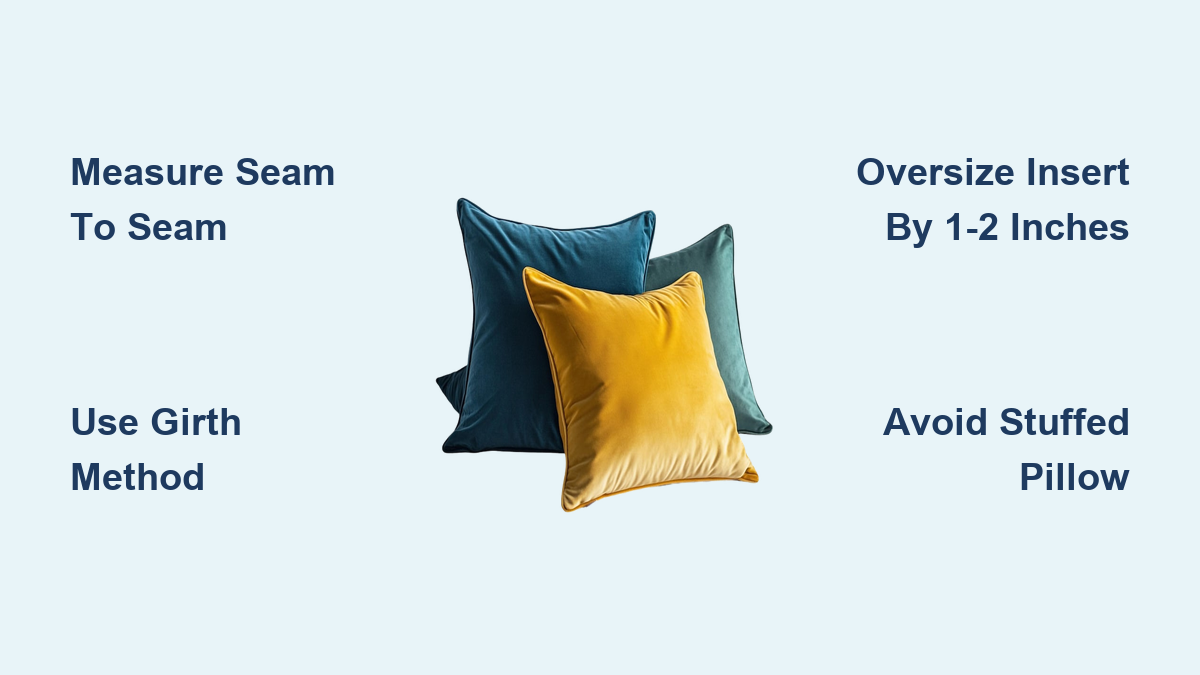
Nothing ruins a beautifully styled couch or bed like a lumpy, ill-fitting pillow. Getting the right fit starts with knowing how to measure a pillow for a pillow cover accurately. Too small, and your pillow looks deflated; too large, and seams strain or zippers burst. The secret is not about measuring the stuffed pillow is squishy center; it is about precise, seam-to-seam measurements and understanding how insert materials affect sizing.
This guide walks you through foolproof methods to measure any pillow, whether you are buying a new cover, replacing an insert, or sewing one yourself. You will learn the best tools, avoid common mistakes, and discover pro tips for achieving that full, designer look every time.
Use the Right Measuring Tools
Soft Tape Measure Is Essential
A flexible measuring tape is the most accurate tool for measuring pillows. It bends smoothly along seams and contours, giving you true dimensions. Avoid rigid rulers or yardsticks because they cannot follow curves and often lead to incorrect cuts or purchases.
No Tape Measure? Try This Workaround
If you do not have a tape measure, you can still get accurate measurements with household items.
Use a string or ribbon and wrap it along the seam or under the insert. Mark where it meets with a pen. Lay the string flat against a ruler or yardstick to get the measurement. Always write down your numbers, and if you are measuring multiple pillows, label each one to avoid mix-ups.
Measure the Cover, Not the Stuffed Pillow
Measure Unstuffed Covers Seam to Seam
When determining cover size, remove the insert completely. Lay the cover flat, preferably inside out. Measure from inner seam to inner seam, which gives the true fabric dimension. Round up to the nearest inch, for example, 19.6 inches becomes 20 inches.
Pro Tip: Interior seam measurements are more accurate than exterior ones, especially with thick fabrics or bulky stitching.
Never Measure Across a Stuffed Pillow
A common error is stretching the tape across the middle of a puffed-up pillow. This compresses the fill and yields a smaller number, often 2 to 4 inches short. Measuring diagonally or through the center of a filled pillow is wrong. Measuring edge-to-edge on an empty, flat cover is right. This mistake leads to covers that are too small and inserts that will not fit.
How to Measure Different Pillow Types
Measure an Empty Pillow Cover
If your pillow has a removable cover, follow these steps for the most accurate measurement.
Take out the insert. Smooth the cover flat, inside out. Measure width and height from seam to seam. Record both dimensions, for example, 20 inches by 20 inches. This method eliminates guesswork from fill compression.
Watch Out: Measuring the outside of the cover may add 1 to 2 inches due to seam bulk, especially with flange trims or thick linings.
Measure a Pillow Insert with the Girth Method
When you only have the insert, use the girth under-wrap method, which is the gold standard for perfect fit.
Fluff the insert to distribute filling evenly. Start at one bottom corner, wrap the tape up the side, across the top, down the opposite side, and back under to the starting point. Pull snug but not tight, like how a cover should feel when zipped. Divide the total girth by 2 to get panel size. Add one-half inch seam allowance per side for the final cut size.
Example: Girth equals 42 inches, panel equals 21 inches, cut fabric equals 22 inches by 22 inches. This method accounts for how down or synthetic fills expand outward, ensuring a plump, wrinkle-free finish.
Measure a Sewn-Shut Pillow
For non-removable inserts, you can still get accurate measurements with a few adjustments.
Fluff and reshape the pillow. Pull the top edge taut between two fingers and measure from seam to seam. If fabric resists stretching, add one-half inch to compensate. Repeat for the side.
Warning: If the pillow feels flat or lumpy, the insert is likely degraded. Replace it instead of relying on old measurements.
Choose the Right Insert Size
Oversize Inserts for Fullness
A properly sized insert should be larger than the cover to create a full, tailored look. For covers under 18 inches, use an insert 1 inch larger. For covers 18 inches and above, use an insert 2 inches larger.
Example: A 20-inch by 20-inch cover needs a 22-inch by 22-inch insert. Too small creates sagging corners. Too big causes zippers to strain and seams to split.
Avoid These Insert Mistakes
Using the labeled insert size is a mistake because labels often reflect compressed dimensions, not actual expanded girth. Matching insert to cover size exactly results in a loose, wrinkled appearance. Ignoring fill type is another error because down compresses more than polyfill, requiring a larger insert.
Designer Secret: The karate chop crease only works with an oversized, high-loft insert.
Adjust for Lumbar and Specialty Pillows
Use Same-Size Inserts for Lumbar Pillows
Lumbar pillows, for example, 12 inches by 20 inches, should use an insert equal to the cover size. Their elongated shape is prone to bulging if overstuffed. A true-to-size insert maintains clean lines and prevents distortion.
Best Practice: Measure girth if unsure, but do not oversize unless the cover fabric is very stretchy.
Know How Fill Type Affects Fit

Feather and Down Inserts
Feather and down inserts are best for decorative pillows with a soft, moldable look. Use 2 inches larger than the cover because down compresses when squeezed but expands outward, needing extra room. Look for 90 percent feathers and 10 percent down blends because they are affordable and choppable.
Down Alternative Synthetic Inserts
Down alternative inserts are best for allergy sufferers or low-maintenance homes. High-quality versions mimic down and hold shape well. Size the same as down, 1 to 2 inches oversized. Pro choice is 100 percent hypoallergenic poly fiber with baffled box stitching.
Polyester Polyfill Inserts
Polyester inserts feel firmer and are less compressible. They often fit true-to-size or plus 1 inch. Lower-quality versions flatten over time. Fix flat pillows by replacing with a higher-loft poly or down alternative insert.
Foam and Cluster Inserts
Foam and cluster inserts provide structural support, not decor. Use exact or slightly smaller than cover size because foam does not compress inward; it pushes outward, causing stiffness. Avoid on soft sofas; best for floor cushions or pet beds.
Common Pillow Sizes and Uses
Standard pillow sizes serve different purposes across your home.
18 inches by 18 inches works best for chairs and twin beds, requiring a 19-inch by 19-inch insert. 20 inches by 20 inches suits beds and sectionals, needing a 22-inch by 22-inch insert. 22 inches by 22 inches is ideal for deep seating and large sofas, requiring a 24-inch by 24-inch insert. 24 inches by 24 inches creates statement pillows for modern decor, needing a 26-inch by 26-inch insert. 12 inches by 20 inches serves as lumbar accent pillows, using a 12-inch by 20-inch insert.
Style Tip: Mix sizes, for example, 20 inches plus 22 inches, for layered, designer bedding.
Buying vs. Sewing Pillow Covers
When Buying Pre-Made Covers
Check product details to see if the size refers to the cover or insert. Look for seam allowance notes because some brands include it while others do not. Contact the seller if unsure, especially for custom or luxury brands.
Example: Pillow Decor confirms measurements upon request at 1-866-900-8448.
When Sewing Your Own Cover
Follow these five steps for a perfect fit.
Fluff the insert and measure girth using the under-wrap method. Divide girth by 2 to get panel size. Add one-half inch seam allowance per side for the cut size. Cut fabric to final dimensions. Sew with a one-half inch seam for a snug, professional fit.
Example: Insert girth equals 42 inches, panel equals 21 inches, cut equals 22 inches by 22 inches. This ensures a cover that hugs the insert tightly without strain.
Troubleshoot Fit Problems

Flat or Saggy Pillow
Cause: Insert too small or degraded. Fix: Replace with a larger, high-loft insert, for example, 22 inches for a 20-inch cover.
Bulging Cover or Stressed Seams
Cause: Insert too large. Fix: Downsize insert or reinforce cover with lining.
Empty Corners
Cause: Poor fit or low-quality fill. Fix: Use an oversized insert with down or premium synthetic fill.
Wrinkled or Loose Fabric
Cause: Insert undersized or cover oversized. Fix: Re-measure using the girth method and adjust accordingly.
Key Takeaways for Perfect Fit
Measure unstuffed covers from inner seam to inner seam. Use the girth method for inserts: wrap, divide by 2, add one-half inch seam. Oversize inserts by 1 to 2 inches for fullness, except for lumbar pillows. Replace old, flat inserts before blaming the cover. Never measure across a stuffed pillow because it is inaccurate. Do not trust labeled insert sizes because compression varies by material.
Frequently Asked Questions About Measuring Pillows for Covers
How do I measure a pillow cover that still has the insert inside?
You should not measure across a stuffed pillow because the compression gives false results. Remove the insert first, or use the girth method on the insert itself to calculate the correct cover size.
What is the girth method for measuring pillow inserts?
The girth method involves wrapping a tape measure around the entire insert, starting from one bottom corner, going up one side, across the top, down the other side, and back underneath. Divide the total by 2, then add one-half inch seam allowance per side for your fabric cut size.
How much bigger should the insert be than the cover?
For covers under 18 inches, use an insert 1 inch larger. For covers 18 inches and above, use an insert 2 inches larger. This oversizing creates that full, plump look that professional designers achieve.
Should lumbar pillows use oversized inserts?
No, lumbar pillows should use inserts equal to the cover size. Their elongated shape bulges easily when overstuffed, so true-to-size inserts maintain clean lines and proper shape.
Does the fill material affect what size insert I need?
Yes, down and feather inserts compress more and need to be 2 inches larger than the cover. Polyester fills are firmer and often fit true-to-size or just 1 inch larger. Foam inserts should match the cover size exactly or be slightly smaller.
Why does my pillow still look flat even with the right size insert?
The insert may be low quality or flattened over time. High-quality down alternative or down inserts maintain loft better. Consider upgrading to a higher-loft insert for that full, professionally styled appearance.
Final Thoughts on Measuring Pillows for Pillow Covers
Accurate pillow measurement is about understanding the relationship between cover, insert, material, and desired aesthetic. Always measure unstuffed covers along interior seams, use the girth method for inserts, and oversize by 1 to 2 inches for that full designer look. When in doubt, contact the manufacturer for exact specifications. Invest in quality inserts because they make even simple covers look luxurious. With these techniques, you will never guess at pillow sizes again.