
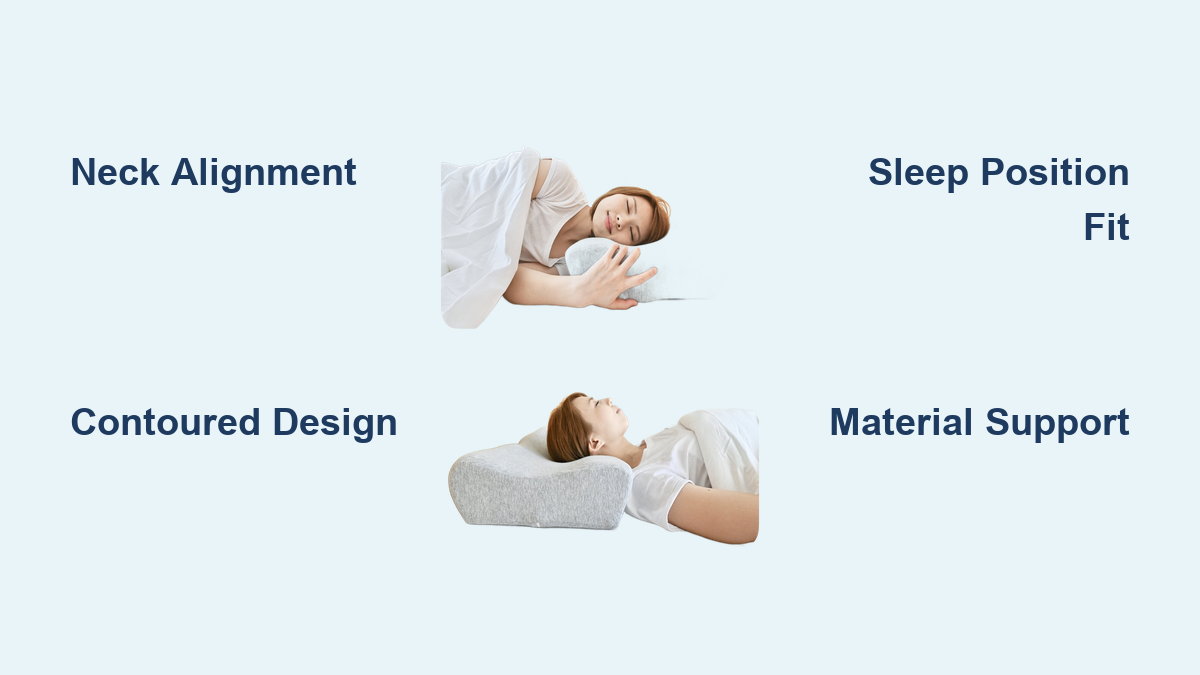
Waking up with a stiff neck, shoulder tension, or morning headaches affects millions of people each year. The culprit often isn’t a serious medical condition but rather poor sleep posture caused by an unsupportive pillow. A cervical pillow isn’t just another bedroom accessory. It’s a scientifically designed sleep aid that actively supports the natural curve of your neck to keep your spine aligned while you rest. Unlike standard pillows that collapse under pressure or push your head too high, cervical pillows use anatomical shaping and supportive materials to cradle your head and neck in a neutral, relaxed position, helping you wake up pain-free.
If you spend hours at a desk, hunched over a phone, or toss and turn at night due to discomfort, understanding how a cervical pillow works could be the missing link in your recovery. In this guide, you’ll learn exactly how these orthopedic sleep aids function, who benefits most, how to choose the right one, and what to expect during the adjustment period.
Maintains Natural Neck Alignment
The core function of a cervical pillow is to preserve the natural lordotic curve of your cervical spine. This is the gentle inward C-shape formed by the seven neck vertebrae (C1 through C7). When this alignment is disrupted during sleep, it can lead to muscle fatigue, joint compression, and nerve irritation. A cervical pillow prevents misalignment by supporting the base of your skull (occiput) and the upper neck vertebrae, keeping your head in line with your spine.
Supports Neutral Spinal Position
A properly positioned cervical pillow ensures your spine stays in a neutral posture. Your ears should align over your shoulders, with your head neither tilted forward nor backward. This reduces mechanical stress on the intervertebral discs, facet joints, and surrounding muscles like the trapezius and suboccipitals. Without this support, traditional pillows often cause the head to sink too low or rise too high, forcing the neck into flexion or extension, which over time contributes to chronic stiffness and pain.
Prevents Tech Neck Worsening at Night
Prolonged screen use leads to forward head posture, where the head shifts ahead of the shoulders. This adds extra strain per inch the head moves forward. While daytime habits cause this postural damage, poor pillow support at night can make it worse. A cervical pillow acts as a passive postural trainer, gently guiding the neck back into alignment for 7 to 8 hours each night and helping counteract daily postural damage.
Uses Contoured Design for Targeted Support
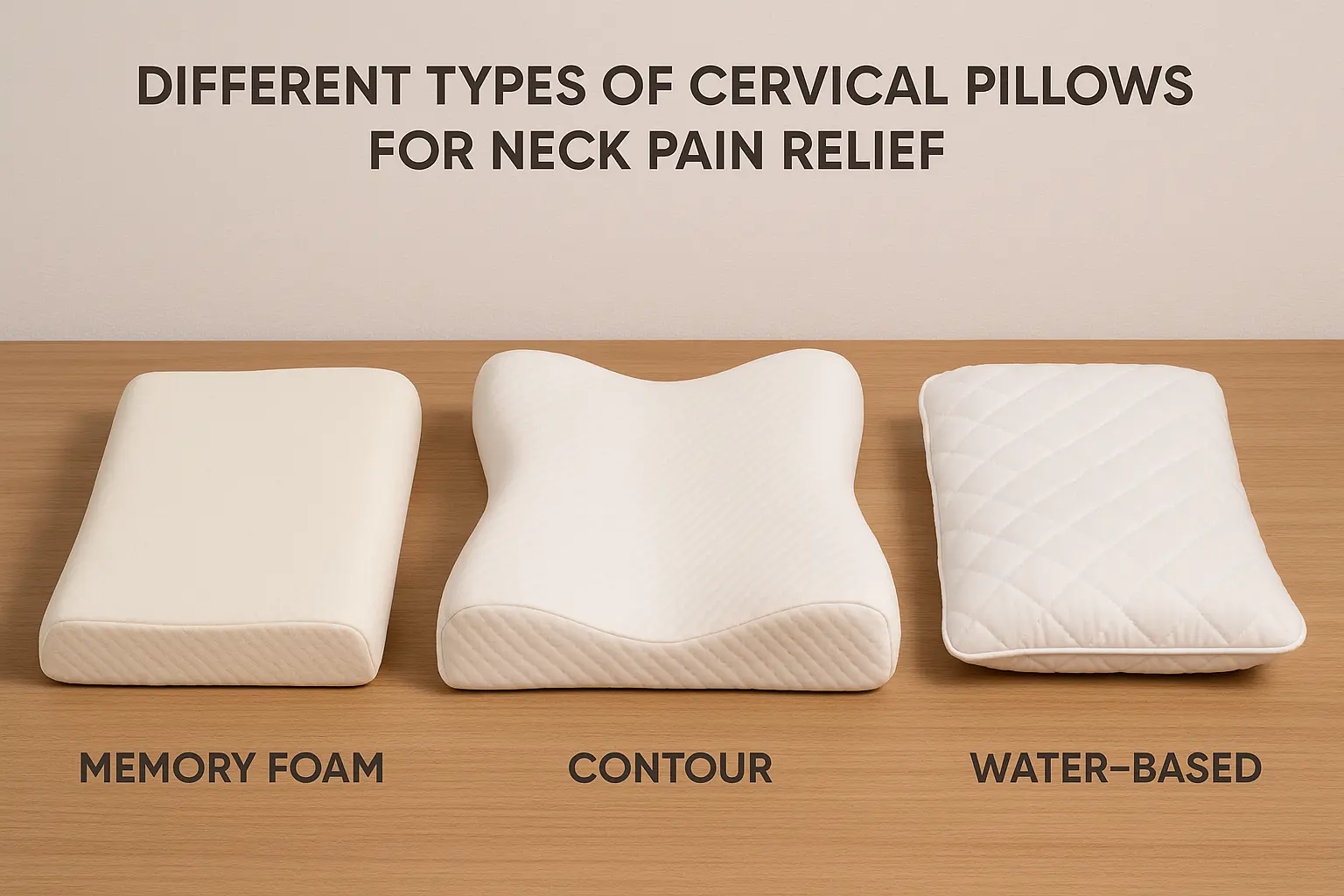
Cervical pillows are shaped differently from standard pillows. Their wave-like or ergonomic contour features a lower center for the head and raised edges to support the neck. This structure works biomechanically to stabilize the cervical spine in both back and side sleeping positions.
Head Cradle and Neck Rise Mechanics
The central dip allows the head to rest slightly lower than the neck. The elevated rear or side ridge supports the curve at the base of the skull. This design prevents the head from tilting too far forward or backward. For back sleepers, this shape maintains the natural neck curve. For side sleepers, the height fills the gap between shoulder and ear, aligning the spine from ear to hip.
Avoids Common Pillow Mistakes
Many people unknowingly harm their necks by using stacked pillows, which over-flex the neck. Placing a flat pillow only under the head leaves the neck unsupported. Choosing overly soft materials that compress too much also contributes to problems. A cervical pillow eliminates these issues with intentional geometry that distributes weight evenly and maintains structural integrity throughout the night.
Works Differently by Sleep Position
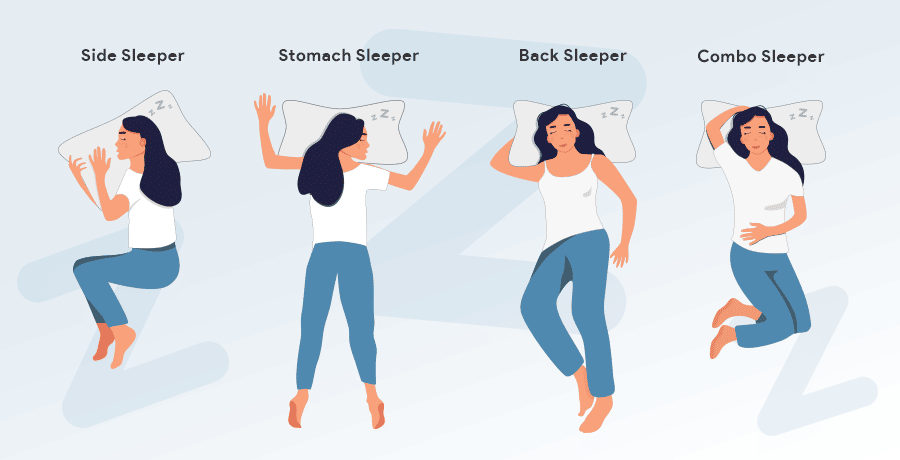
How a cervical pillow functions depends on how you sleep. Each position requires specific loft (height) and support distribution to maintain spinal alignment.
Back Sleepers: Balanced Head-Neck Support
For back sleepers, the ideal loft is 3 to 5 inches. The raised edge goes under the neck while the head rests in the center dip. The alignment check is simple: your face should point upward with ears directly over shoulders. Too high a pillow forces the chin toward the chest (flexion). Too low a pillow causes the head to tilt back (extension). The right cervical pillow keeps the neck in a straight line with the upper back.
Side Sleepers: High Loft for Shoulder Gap
Side sleepers need 4 to 6 inches of loft, or up to 6 inches or more for broad shoulders. The support goal is to fill the space between shoulder and ear. The visual cue is that your ear, shoulder, and hip should form a vertical line. Some models include side cutouts or butterfly shapes to allow arm movement without shifting spine alignment. Shoulder width is the key factor, as larger frames need taller, wider designs.
Stomach Sleepers: Not Recommended
Standard cervical pillows are not suitable for stomach sleepers. The elevated neck support forces the head into extreme rotation or hyperextension. The alternative is to use a very thin pillow under 3 inches or none at all. The long-term fix is to transition to back or side sleeping to reduce cervical strain.
Reduces Muscle Tension and Joint Stress
One of the most immediate benefits of a cervical pillow is muscle relaxation. Without proper support, neck and upper back muscles must constantly engage to stabilize the head, even during sleep. A cervical pillow removes this burden.
Prevents Nocturnal Muscle Fatigue
A supported neck means less isometric contraction in the trapezius, levator scapulae, and suboccipital muscles. This allows full muscle recovery during rest and reduces morning stiffness and micro-movements caused by discomfort. Over time, this can decrease the frequency of tension headaches and improve sleep continuity.
Lowers Pressure on Spinal Structures
Traditional pillows often concentrate pressure on a small area, like the back of the skull or side of the neck, leading to localized ischemia (reduced blood flow). Cervical pillows distribute head weight across a broader surface, minimizing tissue compression and enhancing circulation. This even pressure also reduces stress on intervertebral discs, slowing degeneration, facet joints, preventing arthritic wear, and nerve roots, decreasing the risk of radiculopathy.
Enhances Blood Flow and Airway Function
Proper neck alignment doesn’t just prevent pain. It supports vital physiological functions throughout the night.
Improves Cerebral Circulation
The vertebral arteries run through the cervical spine and supply blood to the brain. When the neck is bent too far forward or twisted, these vessels can become compressed, reducing cerebral perfusion. A cervical pillow maintains a neutral neck angle, keeping these arteries open and supporting healthy blood flow. This is especially important for those prone to morning headaches or dizziness.
May Reduce Snoring and Improve Breathing
While not a treatment for sleep apnea, a cervical pillow can help reduce positional snoring by keeping the airway open. Excessive neck flexion (chin to chest) or extension (head tilted back) can collapse the upper airway. Neutral alignment helps maintain an open passage, leading to quieter, more efficient breathing during sleep.
Built with Supportive, Adaptive Materials

The material of a cervical pillow determines how well it maintains shape, responds to body weight, and regulates temperature throughout the night.
Memory Foam: Personalized Contouring
Memory foam molds precisely to head and neck contours, offering excellent pressure relief. The downside is that it can retain heat and rebounds more slowly. This option works best for back and side sleepers wanting customized support.
Gel-Infused Memory Foam: Cooler Alternative
This material contains cooling gel or phase-change materials that dissipate heat better than standard foam. It’s ideal for hot sleepers or those in warm climates.
Latex: Firm, Resilient, and Breathable
Latex is naturally springy and durable, hypoallergenic, and resists dust mites and mold. The firmer feel may be too rigid for some users.
Shredded Foam: Adjustable Comfort
Shredded foam fill can be added or removed to customize firmness and loft. It’s responsive to position changes but requires occasional fluffing to prevent clumping.
Water-Based Core: Clinically Proven Support
An internal water bladder allows precise firmness control. Studies show superior pain relief and sleep quality with this option. The drawbacks are that it’s heavier and there’s a risk of leakage if damaged.
Microbeads: Lightweight and Portable
Microbeads are flexible, quiet, and easy to pack. They’re less durable and tend to flatten over time, making them best for travel or short-term use.
Matches Loft to Body Type and Sleep Style
Choosing the wrong height undermines even the best pillow. Loft must match your sleep position and body size for optimal support.
| Sleep Position | Recommended Loft | Key Consideration |
|---|---|---|
| Side sleeper | 4 to 6+ inches | Shoulder width is critical |
| Back sleeper | 3 to 5 inches | Head should sink into dip |
| Stomach sleeper | Under 3 inches | Avoid standard cervical models |
Broad-shouldered individuals need taller, wider pillows. Smaller users should opt for low-profile or adjustable versions. An ill-fitting pillow can cause more harm than good.
Specialized Option: Cervical Traction Pillows
Not all cervical pillows are for sleeping. Traction pillows are designed for short therapeutic sessions of 5 to 15 minutes daily, not all-night use.
How Traction Works
Traction pillows apply a gentle axial pull along the spine. This separates vertebrae to reduce disc and nerve pressure and relieves tension in suboccipital muscles using the OCBR technique.
Safe Use Guidelines
Place the pillow on a firm surface like a floor or hard mattress. Position it under the occiput, not the throat. Bend your knees to avoid lower back strain. Start with 5 to 10 minutes and increase gradually. Stop immediately if pain, numbness, or dizziness occurs. Medical clearance is required for those with osteoporosis, spinal instability, or prior neck surgery.
Requires Adjustment and Proper Use
Even the best cervical pillow takes time to get used to.
Adjustment Period: 3 to 14 Days
Expect mild soreness or stiffness as muscles adapt. Temporary sleep disruption is common. Feeling of strangeness is normal as your body relearns proper alignment. Persistent pain after 3 weeks means the pillow may be the wrong height, firmness, or material.
Common Positioning Errors
Upside-down placement leaves the neck unsupported while propping the head too high. Head sliding off causes micro-misalignments. Using with a sagging mattress undermines spinal support. Stacking with another pillow increases flexion. Always follow manufacturer instructions and check alignment in a mirror if possible.
Best for Specific User Groups
Cervical pillows aren’t for everyone, but they’re highly effective for certain populations.
Who Benefits Most
The following groups benefit most from cervical pillows. Chronic neck or shoulder pain sufferers. Office workers and students with tech neck. Side and back sleepers with morning stiffness. Patients recovering from whiplash or surgery, under professional supervision. Those with degenerative conditions like spondylosis, arthritis, and disc issues.
Who May Not Need One
Asymptomatic individuals who wake up pain-free may not need a cervical pillow. Stomach sleepers should avoid standard models unless using a low-loft alternative. People who strongly prefer soft, plush pillows may also not benefit.
Evidence and Medical Perspective
While clinical evidence is mixed, the biomechanical rationale is strong.
Research Findings
Vanti et al. (2019) found spring pillows reduced chronic neck pain and headaches more than education alone. Shields et al. (2006) systematic review called evidence insufficient due to small, low-quality studies. Water-based pillows consistently outperform standard pillows in pain relief and sleep quality.
Despite limited high-quality data, cervical pillows are widely recommended by chiropractors, physical therapists, and orthopedic specialists. They’re viewed as a safe, low-risk adjunct, not a cure, but a valuable tool in comprehensive neck care.
Choosing the Right Cervical Pillow
Key Selection Factors
Consider your sleep position first, as this determines loft and shape. Your shoulder width influences required height. Material preference balances support and comfort. Look for gel, ventilation, or bamboo covers for thermal regulation. Shredded foam or water cores offer adjustability. Dual-height designs work well for combination sleepers. Opt for brands developed with healthcare professionals or those offering 30-day trial periods to test comfort.
Maintenance and Replacement Tips
Replace Every 1 to 2 Years
Signs it’s time for a new pillow include loss of firmness or rebound, visible sagging or flat spots, and failure to hold shape after compression.
Care Instructions
Spot-clean only with mild detergent. Wash removable covers regularly using cold, gentle cycle. Air out weekly to prevent odor and moisture buildup. Fluff daily to maintain loft. Store uncompressed in a breathable bag.
Final Tips for Long-Term Neck Health
A cervical pillow works best as part of a broader strategy.
Combine With
Daily neck stretches like chin tucks, lateral bends, and shoulder rolls. An ergonomic workspace with screen at eye level and supportive chair. Tech hygiene practices like holding phone up and taking breaks every 30 minutes. Professional care including chiropractic, physical therapy, or medical evaluation.
When to Consult a Doctor
Stop using a cervical pillow and seek medical advice if you experience new or worsening pain, numbness, tingling, or weakness in arms, dizziness or balance issues, or undiagnosed neck conditions.
Frequently Asked Questions About Cervical Pillows
How long does it take to adjust to a cervical pillow?
Most people need 3 to 14 days to adjust to a cervical pillow. During this initial period, you may experience mild soreness or stiffness as your muscles adapt to the new support. Temporary sleep disruption is common and normal. If discomfort persists beyond 3 weeks, the pillow may not be the right fit for your body type.
Can a cervical pillow help with chronic neck pain?
Cervical pillows can help reduce chronic neck pain by maintaining proper spinal alignment and reducing muscle tension. Research shows mixed but promising results, with some studies finding particular benefit from water-based pillows. These pillows work best as part of a comprehensive approach that includes stretching, ergonomic improvements, and professional care.
Are cervical pillows safe after neck surgery?
Cervical pillows may be safe after neck surgery, but medical clearance is essential before use. Your healthcare provider can determine whether the specific type of surgery and your recovery stage make pillow use appropriate. Traction pillows specifically require medical approval due to their therapeutic mechanism.
Which sleep positions work best with cervical pillows?
Back and side sleepers benefit most from cervical pillows. Back sleepers should use moderate loft (3 to 5 inches) with the raised edge under the neck. Side sleepers need higher loft (4 to 6+ inches) to fill the shoulder-to-ear gap. Stomach sleeping is not recommended with standard cervical pillows.
How often should I replace my cervical pillow?
Replace your cervical pillow every 1 to 2 years, depending on material and usage. Signs of wear include loss of firmness, visible sagging, or flat spots that don’t recover after compression. Regular maintenance extends pillow life, but eventually all supportive materials break down.
Key Takeaways for Understanding How Cervical Pillows Work
A cervical pillow works by maintaining the natural curve of your neck through contoured design and supportive materials. The key benefits include reduced muscle tension, improved spinal alignment, better blood flow, and decreased morning stiffness. Choosing the right pillow requires considering your sleep position, body size, and material preferences. The adjustment period lasts 1 to 2 weeks, after which most users experience meaningful improvement in sleep quality and neck comfort. For best results, combine pillow use with daily neck stretches and proper ergonomic habits throughout the day.