

Feeding twins at the same time can feel overwhelming, especially in the early weeks when exhaustion is high and every movement counts. A twin feeding pillow is designed to simplify this challenge, offering ergonomic support that helps you feed both babies safely and comfortably. Whether you are breastfeeding or bottle feeding, the right setup can reduce strain on your back, protect your C-section incision, and even allow for hands-free feeding. This guide walks you through how to use a twin feeding pillow effectively, avoid common mistakes, and extend its use from infancy through toddlerhood.
Set Up Your Feeding Environment
Creating the right feeding environment before you begin is essential for a smooth session. Once feeding starts, getting up means disrupting both babies, so preparation prevents stress and saves valuable energy.
Gather Everything You Need First
Before placing the pillow or lifting your babies, gather all essentials within arm’s reach. You will need bottles or nursing supplies, burp cloths placed inside each side of the pillow, your water bottle, snacks, and your phone or entertainment. Having everything ready means you can focus entirely on feeding without interruptions.
Choose the Right Seat
Use a firm, stable surface like a dining chair, glider, or bed. Soft couches may sink, lowering the babies’ height and forcing you to hunch forward. If using a soft seat, add a cushion under the pillow to raise baby height and use a footstool to elevate your legs and improve posture. Proper alignment keeps your back supported and babies at latch level.
Position the Twin Feeding Pillow Correctly

Correct pillow positioning is the foundation of comfortable twin feeding. Taking time to secure the pillow properly prevents sliding and ensures full support throughout the feeding session.
Secure the Pillow Around Your Waist
Place the pillow around your midsection with the front buckle system centered. Pull the straps snugly so there is no gap between your body and the pillow. This prevents shifting and ensures full back support. A loose fit causes the pillow to slide, forcing you to hold babies up manually, which defeats the purpose of using the pillow.
Adjust for Your Body and Babies
Tighten buckles to reduce space between the two baby compartments, which is ideal for preemies or smaller infants who might slip through. Push the pillow firmly into your torso to anchor it in place. For M or W-shaped pillows, fold side wings forward and clip them to create a supportive backrest with extended arms for baby placement. Avoid placing the pillow over loose clothing, as it can shift. Wear snug-fitting maternity or nursing wear for better stability.
Place Babies Safely for Feeding
Safety during transfer and positioning is paramount when handling two infants at once. Following a systematic approach ensures both babies remain secure throughout the process.
Transfer Babies One at a Time
Even with a twin pillow, it is safest to transfer babies one by one. Keep the first baby nearby on a changing mat or bassinet. Position them on one side of the pillow, supporting their head and shoulders. Place a rolled muslin or small towel behind their back to prevent rolling. Gently lift the second baby by the neckline, then slide your hand beneath their body for full support. Place them on the opposite side, mirroring the first. Never leave either baby unattended during transfer.
Use Proper Positioning for Latching
For breastfeeding, use the football hold where each baby lies along the side of the pillow, tummy down, with legs pointing toward your back. Their head rests near your breast, aligned nose to nipple. Support their shoulders, not the head, to encourage neck extension. For bottle feeding, tilt bottles so the nipple fills with milk to prevent air swallowing and hold bottles at a slight angle allowing babies to feed without choking.
Achieve a Secure Latch

Getting a proper latch is essential for effective breastfeeding and preventing pain. The twin feeding pillow supports correct positioning, but you must guide each baby to latch correctly.
Align Baby to Breast
Bring each baby’s nose level with your nipple. This triggers the natural rooting reflex. When they open wide, bring them chin-first to the breast. Ensure the bottom lip flares outward, well below the nipple. This allows the nipple to aim toward the roof of the mouth for effective suction.
Support Without Overhandling
Use your hand to guide, not push. Once latched, cradle shoulders lightly and let the pillow bear most of the baby’s weight. Adjust breast shape gently with your free hand if needed, such as compressing slightly for better latch. If one baby finishes early, keep the other feeding. Break suction gently by inserting a clean finger into the corner of the mouth.
Enable Hands-Free Feeding Safely
One of the main benefits of a twin feeding pillow is the ability to feed hands-free after initial latching. However, you must confirm full support before letting go.
Test Support Before Letting Go
When properly adjusted, the twin feeding pillow should allow hands-free feeding after initial latching. Test this by lightly removing your hand from one baby’s shoulder and watching for slippage or head drop. If the baby sinks or rolls, reposition or add extra rolled towels behind their back.
Continue Monitoring Both Infants
Even with hands-free support, stay alert. Watch for signs of choking, poor latch, or falling asleep mid-feed. Burp both babies midway and after feeding, which is especially important with twins prone to gas. Feed during calm periods, such as after a diaper change, to reduce fussiness and improve cooperation.
Adjust for Reflux and Digestive Comfort
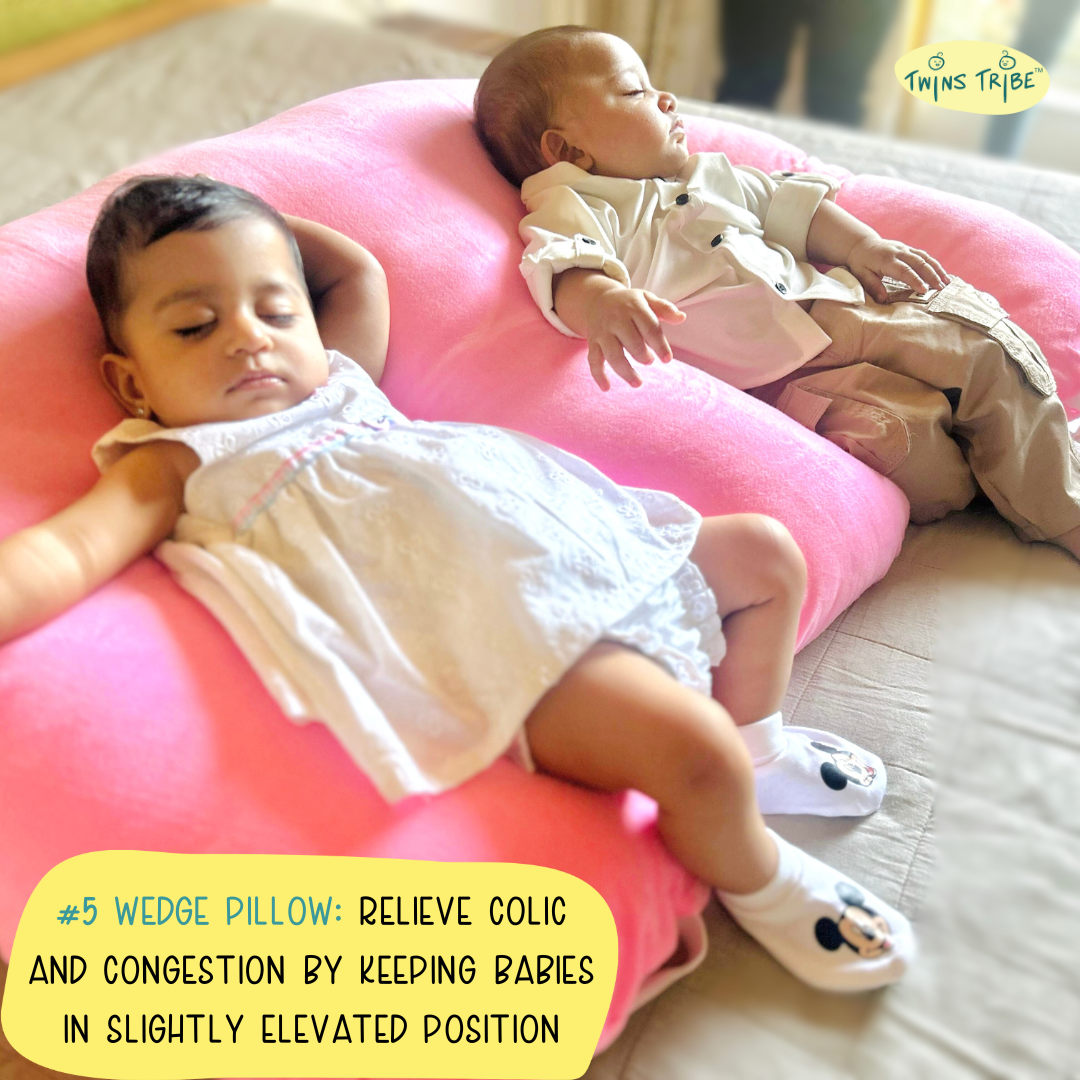
Many twins experience reflux or gas, and adjusting your feeding position can provide relief without medication. Small posture changes make a significant difference in comfort.
Elevate Upper Bodies Gently
If your babies suffer from reflux, spitting up, or gas, adjust your posture to keep their heads above their hips. Sit on a footstool to raise your knees and lean back slightly while maintaining back support. This creates a natural incline without straining your spine. Avoid propping bottles or letting babies lie flat during or immediately after feeding.
Use Burp Cloths Strategically
Place absorbent burp cloths inside each compartment before feeding. They catch spit-up and make cleanup easier, especially during overnight sessions.
Bottle Feed Twins Overnight
Nighttime feedings require a different approach that allows you to rest while still supporting both babies. The lying-down method works well once babies have head control.
Set Up for Semi-Reclined Feeding
Lie on your back or side with the twin feeding pillow placed across your torso. Nestle one baby in each opening, secured with rolled towels. Use slow-flow nipples and hold bottles parallel to the ground to control milk flow and prevent overfeeding.
Supervise Closely at All Times
Never fall asleep while feeding. Babies can choke or roll, so keep one hand nearby even if the pillow provides support. This method works best once babies have good head control, typically around six weeks or older.
Extend Use Beyond Feeding
Twin feeding pillows offer value far beyond the feeding months. Understanding these additional uses helps you get maximum return on your investment.
Support Tummy Time on the Floor
Lay the pillow flat on the floor with the raised edges forming a soft boundary. Place one baby inside each curve. The walls prevent rolling and encourage head lifting. Add toys in front to promote motor development. This is ideal for two to six months when neck strength is building.
Aid Pregnancy Recovery
Use the pillow as a body bolster during pregnancy. Place it under your belly while sleeping on your side or rest it behind your back for lumbar support. This helps reduce sciatica and improve circulation. Even before birth, it prepares you for postpartum comfort.
Relieve Reflux in Daily Use
For babies with chronic reflux, position the pillow at a slight incline during rest periods. Combine with upright seating or bouncer use after meals. Avoid flat lying for thirty minutes post-feeding. The gentle elevation keeps stomach contents down naturally.
Create a Toddler Play Zone
Once babies start sitting or crawling, place the pillow in a circle or U-shape on the floor. Use it as a soft barrier for safe exploration. Keeps toddlers contained while giving them freedom to move. Durable covers withstand spills, dirt, and frequent washing.
Clean and Maintain the Pillow
Regular cleaning keeps the pillow hygienic and extends its useful life. Proper maintenance also preserves the structural integrity that makes the pillow effective.
Wash the Cover Regularly
Remove the outer cover using the zipper or Velcro access. Machine wash in cold or warm water and tumble dry on any setting without shrinkage or damage. Clean after spills, spit-up, or daily if used heavily.
Restore Shape After Washing
Re-buckle the sides tightly after drying. This pulls the foam core back into position and maintains structural integrity and support. Without rebuckling, the pillow may lose its ergonomic shape.
Avoid Common Mistakes
Knowing what not to do prevents frustration and ensures safety. These mistakes can undermine the pillow’s effectiveness or create hazards.
Do Not Skip the Preemie Gap Adjustment
If your babies are small or premature, tighten the buckles to minimize the center gap. This prevents slipping or awkward positioning. Standard U-shaped pillows cannot do this, making twin-specific designs safer for fragile infants.
Do Not Use on Unstable Surfaces
Avoid recliners that tilt or couches that sag. These compromise baby alignment and increase fall risk. Stick to firm chairs or beds with back support.
Do Not Force Simultaneous Feeding Too Early
Start with one-on-one feeding until you are confident. Gradually introduce twin sessions as babies gain strength and you master positioning. Rushing leads to frustration and poor latches.
Who Benefits Most From a Twin Feeding Pillow
Certain parents and situations make twin feeding pillows particularly valuable. Understanding these benefits helps you determine if this tool is right for your family.
Mothers Recovering From C-Section
The front buckle design avoids pressure on the incision site, unlike wrap-around pillows that press into the abdomen. Combined with back support, it reduces pain and speeds recovery.
Parents of Preemies or Low Birth Weight Babies
Adjustable gaps and secure sides make it safe for fragile infants who need extra containment. Roll-up towels add additional stability during early weeks.
Caregivers Managing Reflux or Colic
Elevated positioning and upright feeding reduce symptoms naturally without medication. Frequent burping is easier with both babies accessible.
Expectant Parents Planning Ahead
Buying early allows practice before delivery. Use during pregnancy for comfort, then transition seamlessly to feeding. Long-term value extends usage beyond infancy.
Why It Beats Standard Nursing Pillows
Twin feeding pillows offer distinct advantages over traditional nursing pillows. Understanding these differences helps you choose the right tool for your needs.
| Feature | Twin Feeding Pillow | U-Shaped Nursing Pillow |
|---|---|---|
| Twin Feeding | Designed for two | Awkward or impossible |
| Abdominal Pressure | Avoids incision zone | Often presses on stomach |
| Back Support | Full lumbar support | Minimal or none |
| Preemie Safety | Adjustable gap | Risk of falling through |
| Multi-Use | Six plus functions | Feeding only |
The buckle system, front positioning, and M or W-shape design make twin feeding pillows uniquely effective for multiples.
Frequently Asked Questions About Using a Twin Feeding Pillow
Can I use a twin feeding pillow if my babies were born premature?
Yes, twin feeding pillows are particularly beneficial for preemies. The adjustable buckles let you tighten the gap between baby compartments, preventing smaller infants from slipping through. Always consult your pediatrician before feeding premature babies and use rolled towels for additional stability.
How do I achieve hands-free feeding with a twin feeding pillow?
After achieving proper latch for both babies, slowly remove your hands from their shoulders while watching for sinking or rolling. If both babies remain secure, you can enjoy hands-free feeding. Always stay nearby and monitor for choking or poor latch throughout the session.
Can I bottle feed both twins at the same time?
Yes, you can bottle feed twins simultaneously using either the lying-down method or upright positioning. Use slow-flow nipples and hold bottles parallel to the ground to control milk flow. Supervise closely and burp both babies midway through feeding.
When can I start using a twin feeding pillow after C-section delivery?
You can typically begin using a twin feeding pillow as soon as you feel comfortable sitting up. The front buckle design specifically avoids pressure on the incision area, making it safe for C-section recovery. Start with short sessions and increase duration as you heal.
How do I clean and maintain my twin feeding pillow?
Remove the cover and machine wash in cold or warm water. Tumble dry on any setting without damage. After drying, re-buckle the sides tightly to restore the original shape and maintain structural support.
What if my twins are different sizes?
The adjustable buckle system accommodates different-sized babies. Tighten or loosen each side independently to create a custom fit. Use rolled towels behind smaller babies to prevent rolling and ensure even positioning.
Key Takeaways for Using Your Twin Feeding Pillow
A twin feeding pillow transforms simultaneous feeding from an overwhelming task into a manageable routine. The most critical factors for success are proper positioning with no gap between your body and the pillow, correct latch alignment with nose-to-nipple positioning, and using rolled towels for stability during early feedings. Remember to adjust height so babies latch without you leaning forward, burp both infants midway and after feeding, and clean the cover regularly to maintain hygiene.
The pillow serves multiple purposes beyond feeding, including tummy time support, pregnancy comfort, reflux relief, and toddler play areas. This versatility makes it a valuable investment from pregnancy through toddlerhood. For parents of twins, it is not just helpful, it is essential for protecting your body, ensuring baby safety, and creating efficient feeding routines that save time and energy every day.