
You’ve washed your pillow and pulled it out looking like a puffy cloud, or maybe your memory foam pillow feels too thick for comfortable sleep. Whatever the situation, knowing how to flatten out a pillow safely and effectively can transform your sleep comfort. The key is matching your technique to the material. Using the wrong method, like applying heat to memory foam, can permanently damage your pillow. This guide covers proven, material-specific techniques to help you achieve the perfect flatness without shortening your pillow’s lifespan.
Whether you’re recovering from surgery, packing for travel, or just prefer a lower sleeping profile, you’ll find exact steps to compress your pillow the right way. We cover everything from using books and weights to dryer tricks and long-term storage, all based on tested methods for different pillow materials.
Set Up a Flat Work Surface for Even Compression
Before applying pressure or heat, prepare a clean, flat surface to work on. A hardwood floor, countertop, or ironing board provides the even support needed to prevent lopsided compression. Remove all pillowcases, protectors, or decorative covers to ensure direct access to the filling.
Avoid carpeted or uneven areas, as they reduce pressure effectiveness and can cause uneven creases. If using heavy weights, make sure the surface can support the added load without risk of tipping. For delicate fabrics, place a clean cotton cloth over the pillow to prevent scuffing or fiber disturbance.
An uneven base causes lopsided results. Pillows compressed on slanted or soft surfaces develop creases or indentations that are difficult to reverse. A rigid, level platform ensures the entire surface receives equal pressure, which is especially critical for memory foam and fiberfill types.
Apply Manual Compression to Break Up Fill
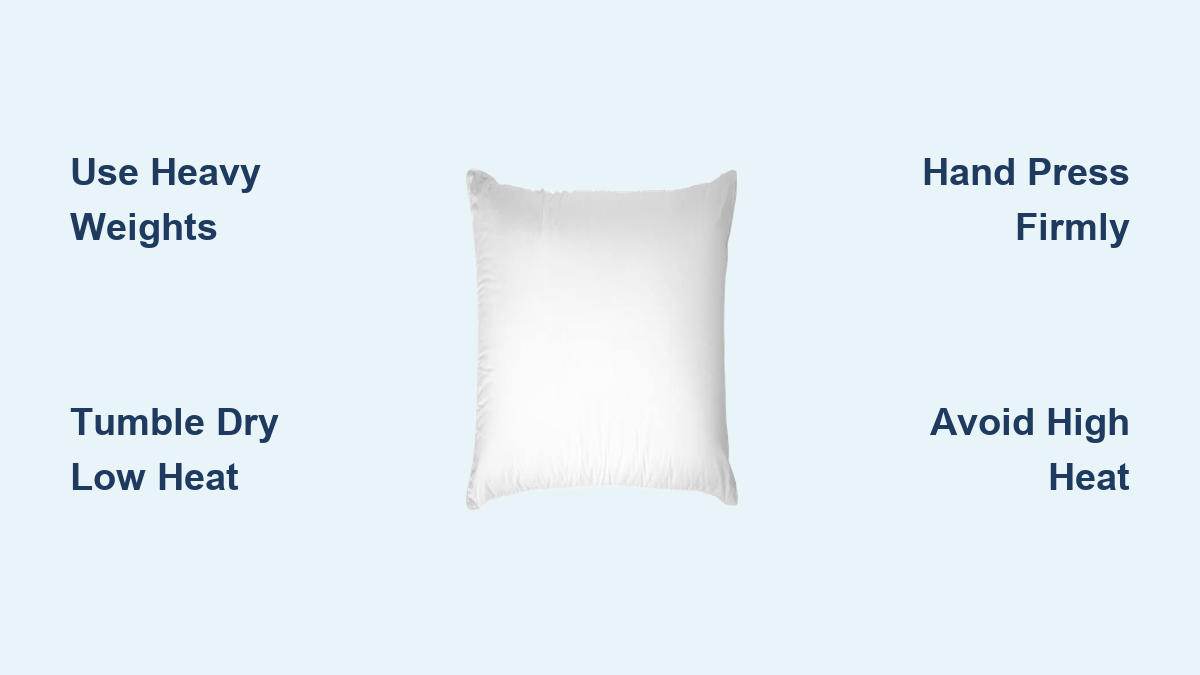
Press down firmly on the pillow with both palms, starting from the center and moving outward. This redistributes the filling and breaks up minor clumps. Repeat this motion 10 to 15 times per session, ideally 2 to 3 times daily over 2 to 3 days for lasting results.
This method works best on down, fiberfill, and down-alternative pillows, which respond quickly to hand pressure. It’s also useful for maintaining shape between deeper flattening sessions.
Use hand pressure in these situations:
- After washing and drying
- For quick daily adjustments
- To prep before applying heavier weights
Avoid over-compressing delicate down clusters. Gentle, repeated pressing is more effective than aggressive smashing.
Use Heavy Weights for Permanent Flattening

Place clean, heavy objects evenly across the pillow’s surface. Ideal options include hardcover books, dumbbells or kettlebells, and stacked boxes filled with books. Distribute weight uniformly to prevent creasing. Leave the weights in place for 12 to 48 hours depending on the material, flipping the pillow halfway through to compress both sides evenly.
Stack books edge-down to cover more surface area and prevent gaps in pressure.
Synthetic and down-filled pillows flatten significantly within 24 hours under 5 to 10 pounds of pressure. Memory foam requires longer compression, up to 7 days, but still benefits from consistent weight application.
Roll the Pillow for Travel and Storage
Roll the pillow tightly from one end to the other like a scroll. Secure it with rubber bands, straps, or place it under a rolled-up yoga mat. Leave rolled for 6 to 12 hours or overnight.
This method works especially well for travel packing, synthetic fiberfill pillows, and down-alternative inserts. Rolling compresses air out and temporarily reduces volume. Unroll and fluff to your desired flatness.
Do not roll memory foam pillows, as this can cause permanent creasing due to their slow rebound properties. Only use this method on flexible, resilient fills.
Tumble Dry With Low Heat to Compress Fibers
Place the pillow in the dryer on air-fluff or low-heat setting. Add 2 to 3 dryer balls or clean tennis balls in socks to break up clumps and compress fibers. Run 15 to 20 minute cycles, then remove and fluff by hand. Repeat until the desired flatness is achieved.
Tumble drying after laundering helps fully dry internal fill, prevents mold and musty odors, and smooths out lumps in down or fiberfill.
Never use high heat, as it can melt synthetic fibers or degrade memory foam. Always check manufacturer labels first.
Iron Carefully With a Protective Cover
For non-memory foam pillows, place a clean, damp cloth over the surface and pass a warm, not hot, iron over it. The gentle heat and pressure compress fibers temporarily.
Use only this method on cotton-covered fiberfill, down-alternative pillows, and washed and fully dried inserts.
Never iron memory foam, latex, or silk-covered pillows, as heat can melt or warp these materials. Keep the iron moving to avoid scorching, and test on a small area first.
Flatten After Washing: Complete Drying First
Washing often makes pillows puffier due to clumped, wet fill. Flattening must wait until the pillow is 100% dry, otherwise moisture trapped inside leads to mildew or uneven texture.
Dry completely using these methods:
- Air-dry in sunlight for 24 to 48 hours, flipping every 8 hours
- Use a dryer on low heat with multiple cycles
- Manually break up clumps between cycles
Once dry, shake vigorously, then apply weight or tumble dry with balls to flatten.
Down clusters easily mat when wet. Tumble dry with tennis balls for 3 to 4 short cycles, fluffing between each. This restores even loft before flattening.
Flattening Techniques by Pillow Type

Flatten a Down Pillow
Down pillows respond quickly but rebound over time. For best results, press firmly by hand, place under 5 to 8 pounds of books for 12 to 24 hours, and tumble dry with balls to smooth the fill. Expect temporary results, as down naturally re-inflates. Repeat as needed.
Flatten a Memory Foam Pillow
Memory foam resists compression due to its viscoelastic structure. Place it on a flat surface, apply heavy even weight like stacked weights, and leave for 3 to 7 days. Avoid heat, water, and rolling, as these can degrade foam. Many memory foam pillows return to original shape after being unweighted.
Flatten a Fiberfill Pillow
Polyester fiberfill is highly compressible. Use hand pressing for immediate effect, overnight weights for longer flatness, and tumble drying to control clumping. This material may permanently lose loft over time due to fiber breakdown.
Flatten a Latex Pillow
Latex is designed to resist flattening. Even under heavy weight for 72 hours, changes are minimal and temporary. If a flatter profile is needed, choose a low-loft model or contoured design instead of attempting compression.
How Long Each Pillow Material Takes to Flatten

| Pillow Type | Flattening Time | Rebound Speed |
|---|---|---|
| Down | 12 to 24 hours | Fast |
| Fiberfill | 24 to 48 hours | Moderate |
| Memory Foam | 3 to 7 days | Slow |
| Latex | Minimal change | Very fast |
| Down Alternative | 24 hours | Moderate |
Plan accordingly. Memory foam needs patience, while fiberfill responds quickly.
Pillows That Naturally Resist Flattening
Latex Stays Tall by Design
Natural and synthetic latex pillows maintain height due to high elasticity. They recover quickly from pressure, making them ideal for users who want consistent support without frequent adjustment. These pillows are designed to resist permanent compression.
High-Resilience Memory Foam
HR memory foam resists permanent indentations better than standard versions. While it may compress under weight, it rebounds when released. This is great for durability but less ideal for custom flattening.
The Mattress Trap Method for Gradual Compression
Slide the pillow between the mattress and box spring or under a futon. Body weight and daily use apply gradual, even pressure over 1 to 3 days.
This method works best for fiber and down pillows, post-wash conditioning, and preparing guest room pillows. Flip the pillow after 24 hours for balanced results.
Maintain Your Desired Pillow Height
Shake and press your pillow every morning to prevent uneven settling. Flattening should be intentional, not a result of neglect. Rotate between two pillows to extend lifespan and manage loft.
For short-term flattening, store in a breathable cotton bag under a stack of linens. Avoid vacuum bags unless for long-term storage.
When to Replace Instead of Flatten
Even with maintenance, pillows wear out. Replace every 6 to 18 months for fiberfill, 1 to 2 years for down and memory foam, and 3 to 5 years for latex.
Replace if you notice permanent lumps, musty odor, allergic reactions, or fabric tears and thinning. A worn pillow won’t flatten properly and loses support.
Avoid These Common Flattening Mistakes
Skip High Heat on All Materials
Dryers on high heat can melt synthetic fibers, degrade memory foam, and shrink cotton covers. Always use low or air-fluff settings.
Never Skip Drying Before Flattening
Flattening a damp pillow traps moisture, leading to mold and odor. Ensure complete dryness before compression.
Don’t Over-Weight Delicate Fabrics
Too much pressure can crease memory foam, stretch or tear thin covers, and misalign fiber distribution. Use moderate, even weight and flip regularly.
Final Thoughts on Flattening Your Pillow
Flattening a pillow doesn’t require force. It requires the right method for the material. Down and fiberfill respond fast to hands and weights. Memory foam needs time and patience. Latex resists flattening by design, so choose the right pillow from the start.
Always prioritize safety. No heat on foam, no moisture during compression, and even pressure to avoid damage. With proper care, you can adjust your pillow’s height for comfort, recovery, or travel without shortening its life.
For long-term satisfaction, combine flattening with regular fluffing, cleaning, and timely replacement. Your neck and your sleep will thank you.
Frequently Asked Questions About Flattening a Pillow
How long does it take to flatten a memory foam pillow?
Memory foam requires 3 to 7 days of continuous heavy weight to show noticeable flattening. The material’s viscoelastic properties make it resistant to compression, and many pillows return to their original shape after being unweighted.
Can I use heat to flatten my pillow?
No. High heat damages most pillow materials. It melts synthetic fibers, degrades memory foam, and can shrink cotton covers. Use low heat in dryers only, and never apply direct heat from an iron without a protective cloth.
Why does my pillow get lumpier after washing?
Washing clumps wet fill together. The pillow must be 100% dry before flattening, otherwise moisture trapped inside causes mold and uneven texture. Tumble dry with tennis balls to break up clumps during the drying process.
Which pillows cannot be flattened?
Latex pillows are designed to maintain shape and resist permanent compression. High-resilience memory foam also rebounds quickly. These materials require choosing the right pillow from the start rather than attempting to compress them.
How do I flatten a down pillow permanently?
Down pillows naturally re-inflate over time. For temporary flattening, apply firm hand pressure, place under 5 to 8 pounds of books for 12 to 24 hours, and tumble dry with balls. Repeat as needed, as results are not permanent.
Can I sleep on a flattened pillow immediately after treatment?
Yes, once the flattening process is complete and the pillow is fully dry and fluffed, it’s ready for use. For weighted flattening methods, ensure weights are removed and the pillow has been fluffed to restore even fill distribution.